

 LANGUAGE

 English
 Español

What Is PBAT? A Packaging Buyer's Guide to Biodegradable Polyester Film
A customer sends a brief: a compostable stand-up pouch for dry snacks, with a certification the retailer will accept. The first sample comes back with a film that runs well on the filling line, seals at a lower temperature than the previous PE laminate, and arrives with a spec sheet listing a material most buyers have never had to evaluate: PBAT.
Understanding what that material is, and what it can and cannot promise, is the difference between a smooth launch and a packaging claim you cannot defend at audit. The short version: PBAT is a soft, flexible polyester that behaves like polyethylene on your machines but is designed to biodegrade in a controlled composting environment. Everything else follows from that single fact.
Content
- 1 What Is PBAT? The Short Answer
- 2 How PBAT Is Made, and Why Supply Matters to Buyers
- 3 How PBAT Performs Against Common Packaging Resins
- 4 Does PBAT Actually Biodegrade?
- 5 Where PBAT Fits in a Flexible Packaging Structure
- 6 What to Verify Before You Approve a Purchase Order
- 7 Frequently Asked Questions About PBAT
What Is PBAT? The Short Answer
PBAT stands for polybutylene adipate terephthalate, a random copolyester built from three monomers: 1,4-butanediol, adipic acid and terephthalic acid. The aliphatic adipate segments make the polymer flexible and give microorganisms something to attack. The aromatic terephthalate segments keep it strong enough to be blown into film and heat-sealed on standard equipment.
In one sentence: PBAT is a fossil-derived, fully biodegradable copolyester that converts into compostable film when blended with starch or PLA and certified to a recognised standard.
Two clarifications prevent most of the misunderstandings we see in purchase enquiries:
- PBAT is not bio-based in the usual sense. Commercial grades are made from fossil-derived monomers, although bio-based BDO produced from corn or sugarcane is gradually entering supply. "Bio-based" and "biodegradable" are separate properties, and PBAT only reliably claims the second.
- PBAT is not PLA. PLA is stiff, glossy and brittle; PBAT is soft, slightly tacky and extremely tough. Almost every practical compostable film on the market is a blend of the two, often with native or modified starch added to reduce cost and raise the bio-based share.
How PBAT Is Made, and Why Supply Matters to Buyers
Production is a conventional polycondensation reaction, which is why PBAT can be made in modified polyester plants rather than in specialised biorefineries. That detail explains the market behaviour of the last few years: capacity, concentrated heavily in China, expanded faster than compostable packaging demand, pushing resin prices down sharply and leaving many lines running well below utilisation. For buyers this cuts both ways. Resin is cheaper than it was, but grade consistency varies much more between suppliers than it does for standard polyethylene.
Three questions separate a stable supplier from a volatile one: which plant and batch the resin came from, whether the compostability certificate covers the finished film rather than the resin pellet, and how the converter compensates for PBAT's narrower processing window. PBAT is tacky when warm and needs careful cooling and slip control on a blown film line, so an experienced converter matters as much as the resin grade.
How PBAT Performs Against Common Packaging Resins
The practical value of PBAT is its elongation. It stretches several hundred percent before breaking, which is what allows a compostable pouch to survive filling, drop tests and the corner creases that crack a stiff PLA film. Its weaknesses are equally predictable: low heat resistance, modest moisture barrier and poor oxygen barrier.
| Property | PBAT | PLA | LDPE |
|---|---|---|---|
| Density (g/cm3) | 1.25-1.27 | 1.24 | 0.92 |
| Melting point (C) | 110-120 | 150-160 | 105-115 |
| Tensile strength (MPa) | 15-25 | 50-70 | 8-12 |
| Elongation at break (%) | 500-700 | 3-10 | 300-500 |
| Heat resistance | Low | Moderate | Moderate |
| Industrial compostability | Yes, when certified | Yes, when certified | No |
Does PBAT Actually Biodegrade?
Yes, but only under conditions that supply the right microbes, moisture, oxygen and heat. Microorganisms hydrolyse the ester bonds along the polymer chain, then consume the resulting fragments. Temperature is the controlling variable: below roughly 20 C the process slows to the point of being commercially meaningless.
That is why the certification on the pouch matters more than the material name on the datasheet. EN 13432 in Europe and ASTM D6400 in the US both require around 90% disintegration within 12 weeks at 58 C, roughly 90% biodegradation within six months, plus ecotoxicity and heavy-metal checks. Australia uses AS 4736, and China works to its own GB/T series. A genuine certificate names the finished film or bag, not just the resin.
Home composting is the trap. Most single-material PBAT films break down far too slowly in a domestic heap at 20-30 C, so only blends specifically formulated and certified for home compost carry that claim. And PBAT is not a littering solution: in soil, freshwater or seawater, degradation takes years, and in an anaerobic landfill it generates methane rather than compost. The material only earns its environmental case when the collection route actually ends in industrial composting.
Where PBAT Fits in a Flexible Packaging Structure
PBAT almost never appears as a single layer. It is the soft, sealing component in a multi-layer build: a printable outer skin for strength and graphics, a tie layer for adhesion, and a PBAT-rich sealant that carries the compostability claim and provides hot-tack on the filling line.
Typical applications follow from that structure. Compostable stand-up pouches for dry goods, produce and carrier bags, agricultural mulch film, lidding for chilled cups, and coated paper structures where the PBAT layer provides the heat seal.
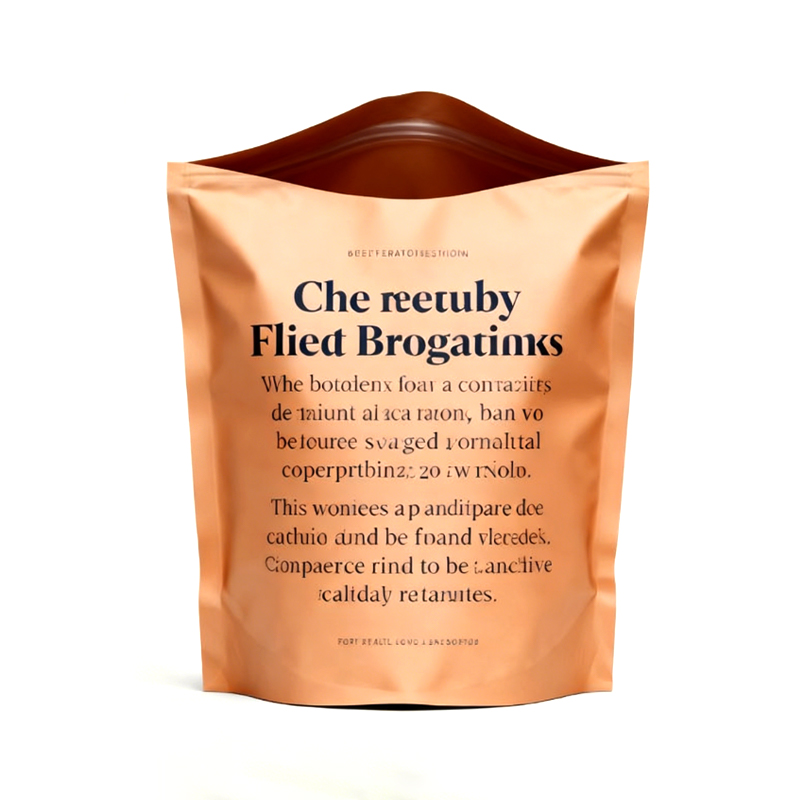 Biodegradable Stand-Up Pouches for Food and RetailFlat-bottom stand-up pouch in sizes from trial packs to family packs, with custom seals, windows and printing for food, pet and daily chemical products.View Product →
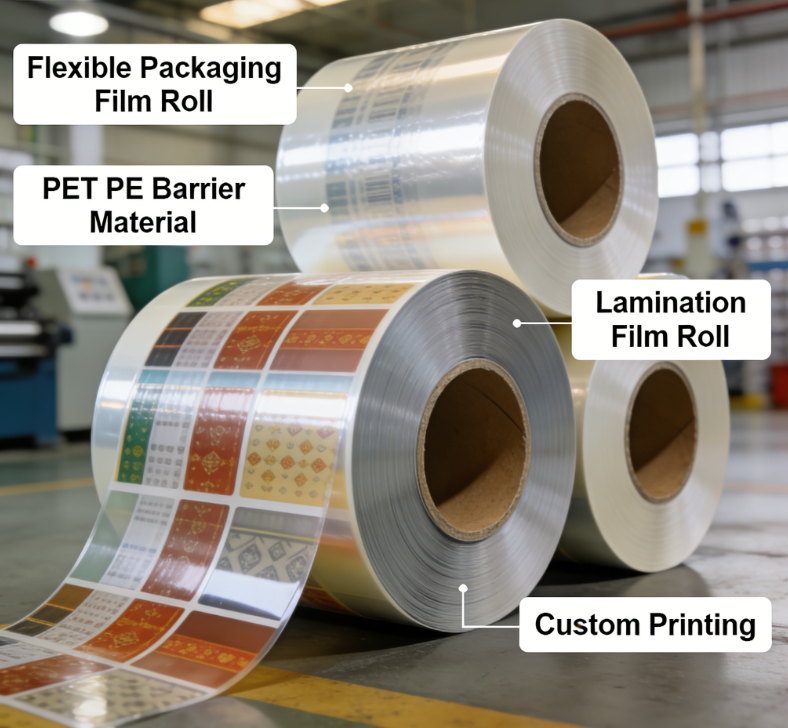
Roll film is where the material shows its processing limitations most clearly: PBAT-rich films need lower melt temperatures, gentler cooling and tighter tension control than a PE equivalent, and converters that run them daily produce noticeably more stable output than those who treat them as a seasonal item.
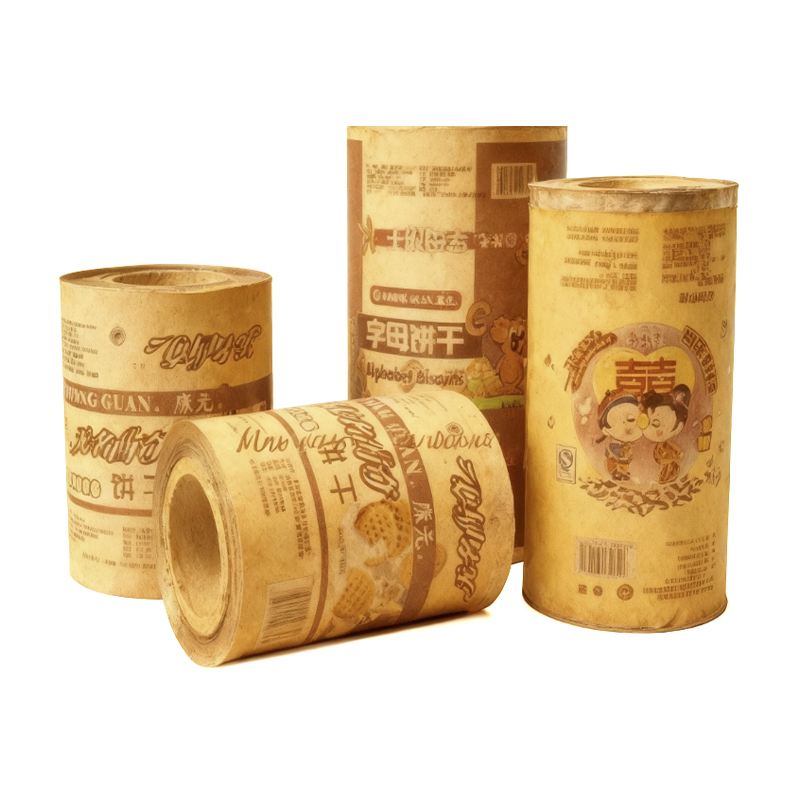 Rollstock Film for Automated Form-Fill-Seal Packaging LinesFood-grade continuous roll film for FFS, VFFS and HFFS lines, with controlled width, thickness and barrier structure for stable high-speed packaging.View Product →
What to Verify Before You Approve a Purchase Order
Most quality incidents with PBAT packaging trace back to specification gaps rather than bad resin. In our experience, the following checks catch them early:
- Certificate scope. Confirm the certificate names the finished film, its thickness and the converting site, not only the resin grade.
- Blend disclosure. Ask for the approximate PBAT, PLA and starch ratio; it drives stiffness, seal window, price and degradation rate simultaneously.
- Heat exposure. PBAT softens well below polyethylene. Check your pallet storage and any short-term transport in summer heat.
- Barrier requirement. If the product is oxygen-sensitive or high in fat, a PBAT seal layer alone will not protect it; the structure needs a barrier layer or a shorter shelf-life assumption.
- Food contact compliance. Request FDA 21 CFR or EU 10/2011 statements plus migration test data, since PBAT is usually an indirect or direct food contact layer.
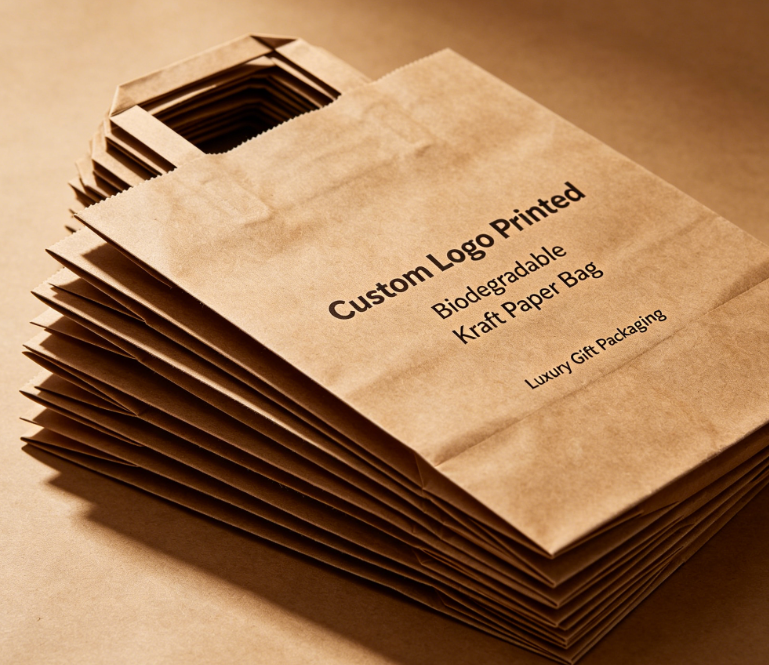 Custom Printed Kraft Paper Bags with Die-Cut HandlesThick virgin kraft paper tote with integrated die-cut handle, full-page custom printing and multiple sizes for retail, gift and food-delivery use.View Product →
Paper is often raised as an alternative in the same conversation. It wins on perceived recyclability in existing streams, but it is a weaker moisture and grease barrier and is not compostable if it carries a PE or PLA coating. The honest comparison is end-of-life infrastructure, not material labels. Our sustainability packaging overview and this practical buyer's guide to biodegradable food packaging go deeper into structure selection.
Finally, budget realistically. PBAT blends still carry a premium over conventional polyethylene, and the premium is driven as much by conversion difficulty, lower line speed and certification overhead as by resin price. A compostable pouch rarely wins on unit cost; it wins where a retailer, a regulation or a brand commitment requires the material.
Frequently Asked Questions About PBAT
PBAT is neither a miracle material nor a marketing trick. It is a workhorse polyester that solves one specific problem: giving a flexible package enough toughness and seal strength to run on real machinery while still meeting a recognised composting standard. Specify it for the properties it actually has, verify the certificate that goes with the finished film, and match it to a genuine composting route, and it performs exactly as promised.