

 LANGUAGE

 English
  Español
Biodegradable Food Packaging: A Practical Buyer's Guide for Food Brands
For a food brand manager, “biodegradable food packaging” sounds like a direct answer to the plastic problem. But the first step to a successful switch is understanding that biodegradable materials are not all the same. Some require industrial composters, some break down only in soil, and some are simply not suitable for moist or oily foods. The good news is that with the right material selection and a capable supplier, you can maintain product freshness and brand appeal while meeting your sustainability goals.
Content
- 1 What Does “Biodegradable” Actually Mean?
- 2 The Global Waste Problem—and Why It Matters
- 3 Key Materials in Biodegradable Food Packaging
- 4 How Biodegradable Materials Perform in Real Use
- 5 What to Check When Sourcing Biodegradable Food Packaging
- 6 How to Transition Your Packaging to Biodegradable Materials
- 7 Frequently Asked Questions
What Does “Biodegradable” Actually Mean?
Biodegradation is a natural process where microorganisms convert materials into water, carbon dioxide, and biomass. However, the conditions in which this happens vary a lot. A package may be certified as industrially compostable under standards like EN 13432 or ASTM D6400, but that does not mean it will decompose in a backyard bin. Industrial composting uses controlled temperature, humidity, and time. Home compostable materials need a slower, less controlled process. So when you see a “biodegradable” claim, ask: “In which environment, and in how long?”
The Global Waste Problem—and Why It Matters
Single-use food packaging is a major contributor to the plastic waste stream. The OECD Global Plastics Outlook 2022 shows that the world produces more than 350 million tonnes of plastic waste every year, and less than 10% is successfully recycled. The chart below illustrates the fate of global plastic waste.
Global Plastic Waste Disposal (OECD 2022)
Source: OECD Global Plastics Outlook 2022
Biodegradable food packaging helps brands avoid the landfill route. If a pouch can be composted instead of incinerated or buried, it reduces the amount of plastic that stays in the environment for centuries.
Key Materials in Biodegradable Food Packaging
There is no single “biodegradable” material. Each has its own properties and target use. Here is a quick comparison of the most common options for food packaging:
| Material | Source | Compostability | Best Use |
|---|---|---|---|
| PLA | Corn starch, cassava | Industrial only | Pouches, films, coated cups |
| PBAT | Fossil-based, biodegradable | Industrial only | Flexible films, lamination |
| Kraft paper | Wood pulp | Home compostable | Bags, wraps, pouches |
| Sugarcane bagasse | Agricultural residue | Home/industrial | Rigid trays, clamshells |
| Bamboo fiber | Bamboo | Industrial | Rigid containers, cutlery |
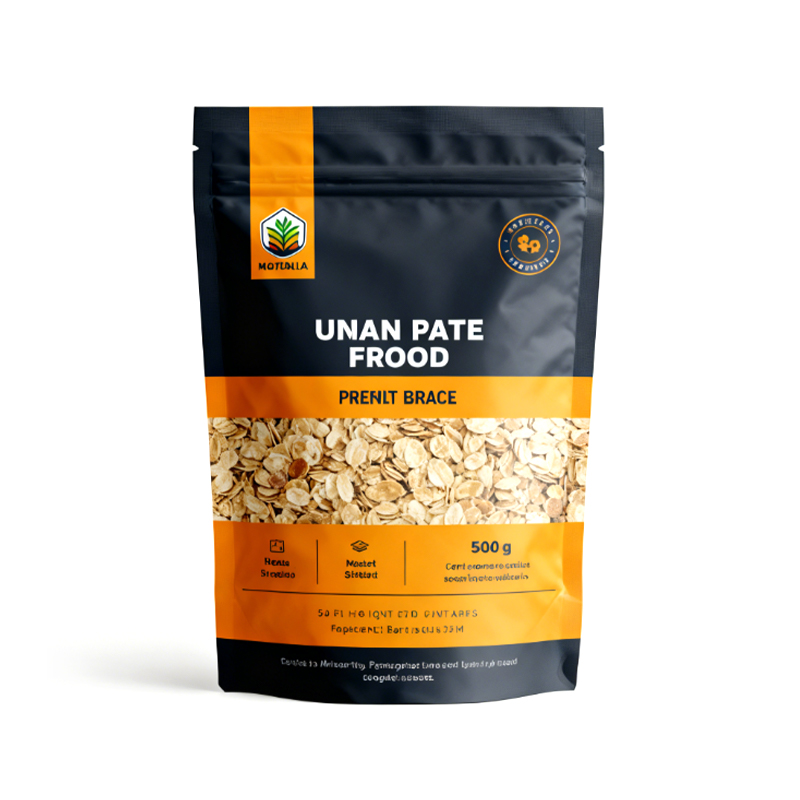
For flexible food packaging, the most practical combination is usually a paper or PLA outer layer with a PBAT-based sealant layer. This gives the pouch enough moisture resistance for dry goods and a strong seal for packaging lines. If you are packaging nuts, coffee, or dried fruit, our biodegradable stand-up pouches are designed with exactly this kind of structure.
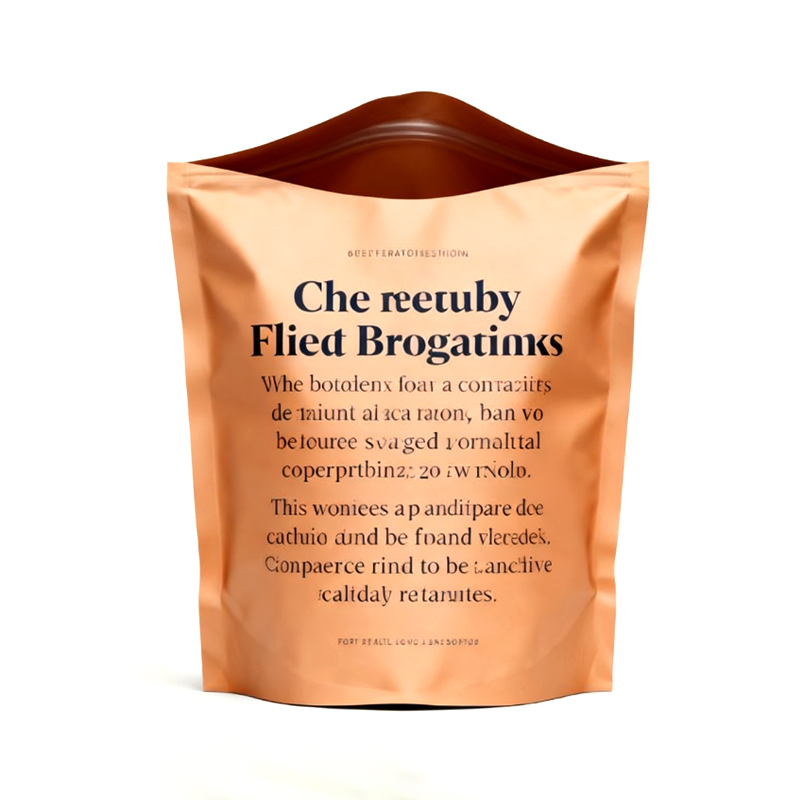 Biodegradable Stand-Up Pouch for Dry FoodsThis stand-up pouch features a biodegradable structure with a paper or PLA outer layer and a PBAT sealant. It stands independently, offers various sizes and closures, and is ideal for dry goods like nuts and dried fruit. Verify barrier performance for specific products.View Product →
How Biodegradable Materials Perform in Real Use
Once you move beyond the label, performance becomes the deciding factor. Biodegradable films often have lower moisture and oxygen barrier than conventional PET or aluminum laminates. This affects shelf life. For products with high oil content or long shelf life, you need to test the actual packaging under your expected storage conditions. Attention to detail matters: the thickness of the sealable layer, the printability of the outer surface, and even the type of zip closure can make or break the application. In practice, biodegradable packaging works well for dry foods, frozen items, and certain beverages. For high-fat or hermetically sealed products, you may need a hybrid structure that still offers barrier performance. Ask the supplier for documented barrier test results before committing.
What to Check When Sourcing Biodegradable Food Packaging
Choosing a supplier is a risk-management exercise. Here are the five factors we recommend evaluating before placing a purchase order:
- Certification chain: Verify that the packaging material and the finished pouch carry recognised compostability certificates. Check the certificate number, not just the claim.
- Barrier performance: Request film oxygen and water vapour transmission rate data. Compare them with the requirements of your product.
- Seal strength: Test the pouch on your own filling line. A weak seal leads to leakage, which is the most common reason brands revert to plastic.
- Print quality: Ensure the biodegradable base film accepts your brand colours without cracking or fading.
- Supplier capability: Look at the manufacturer's production environment. Our factory shows the equipment, quality control, and material handling processes that support reliable customisation.
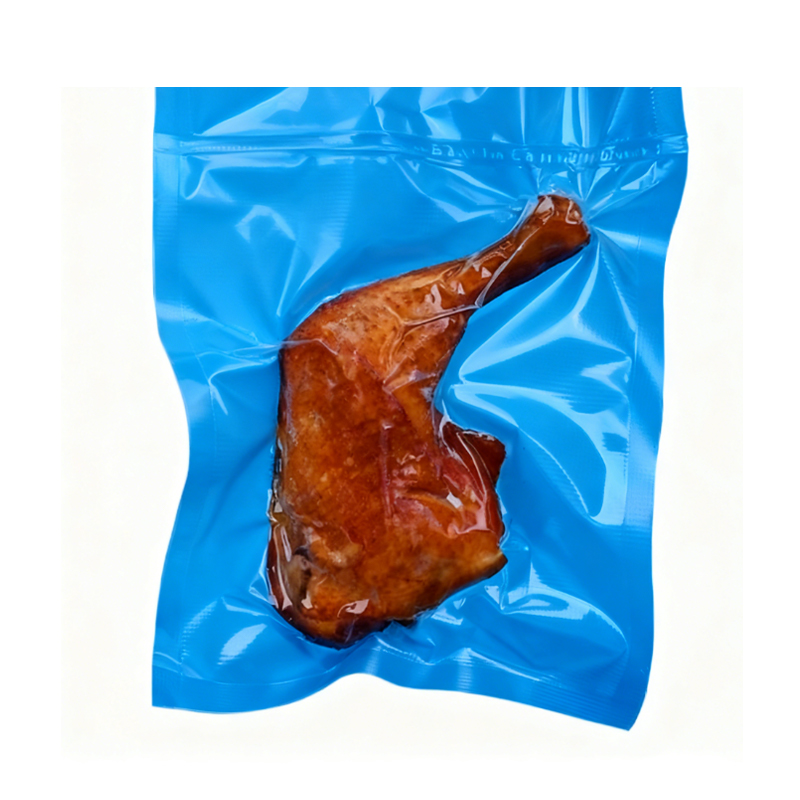
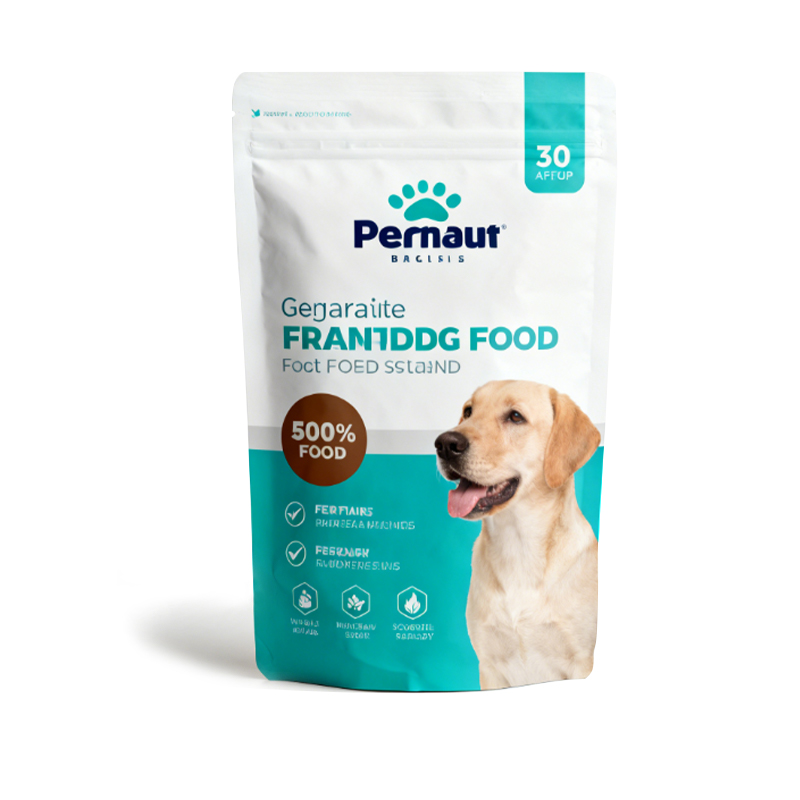
For a complete range of flexible packaging that meets food-grade requirements, our food packaging pouch bags give you the flexibility to choose between conventional and biodegradable film combinations.
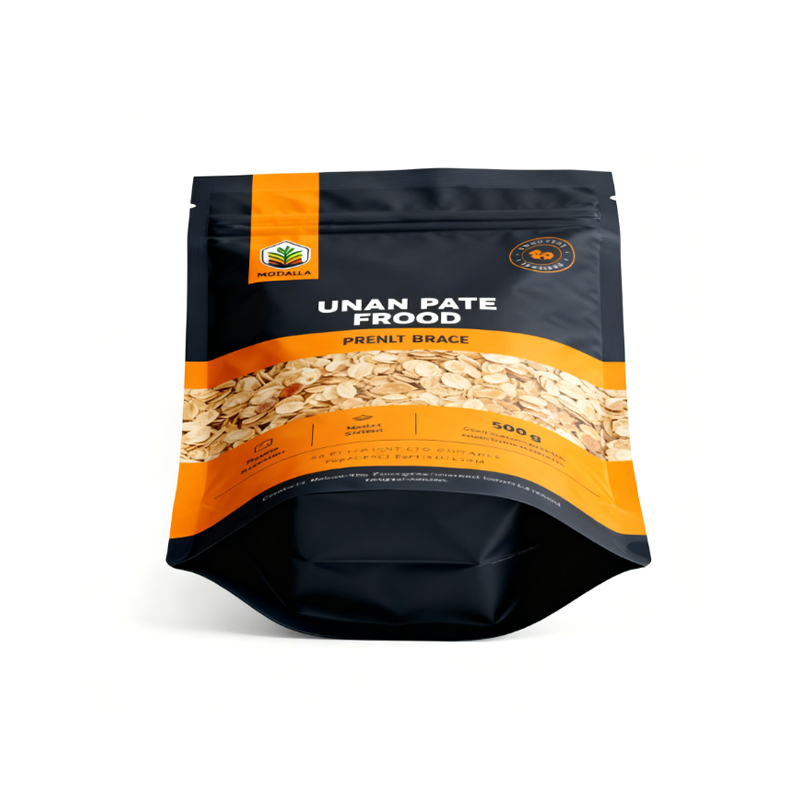 Food Packaging Pouch Bags for Diverse NeedsThese food-grade pouch bags come in multiple styles and sizes, supporting high-quality printing and customizable textures. They offer strong sealing and are suitable for granules, powders, liquids, and solids, with options for transparent windows and accessories.View Product →
How to Transition Your Packaging to Biodegradable Materials
Making the switch involves more than swapping the film. You need to design the right structure for your product. The diagram below shows a typical three-layer structure for a biodegradable stand-up pouch.
Isometric view of a three-layer biodegradable pouch structure
This outer layer provides printability and moisture resistance, the middle layer adds barrier, and the inner sealant layer ensures the pouch closes securely. After that, follow these steps:
- Run a shelf-life test with your product in the new packaging.
- Check the compatibility with your filling machine.
- Place a pilot order before large-scale production.
- Ask the supplier for a documented breakdown of compostability certification.
If your packaging includes paper elements, a compostable kraft paper bag can be a simple alternative for dry goods and retail packaging. Our biodegradable kraft paper bags are suitable for brands that want a natural, recyclable look without complex barrier requirements.
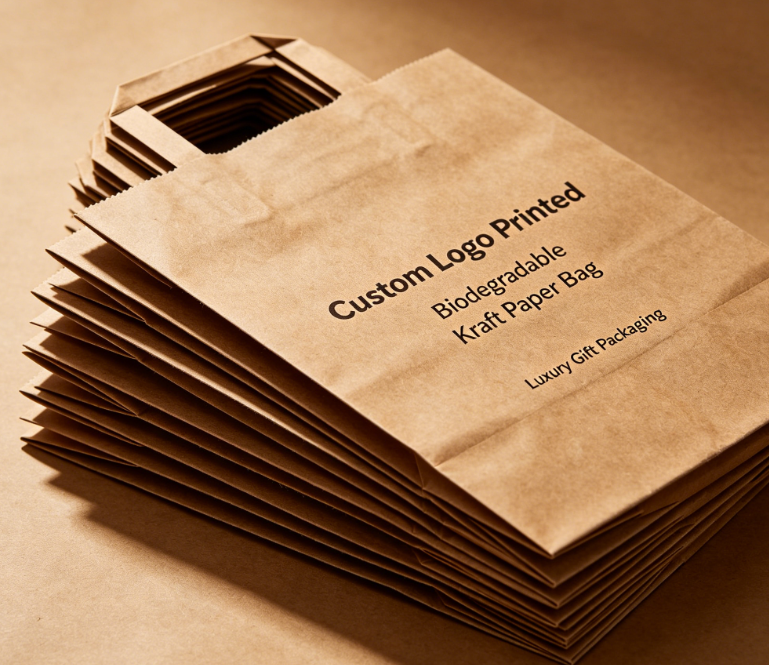 Biodegradable Kraft Paper Shopping BagThis kraft paper bag features a die-cut handle and is made from thick virgin paper. It is biodegradable, supports custom printing, and is available in various sizes. Ideal for retail, gifts, and food delivery, offering a natural and compostable look.View Product →
Frequently Asked Questions
These are the questions buyers usually ask when they compare biodegradable food packaging options.
Q1: Is biodegradable food packaging compostable?
Not necessarily. Most biodegradable materials are certified for industrial composting only. Always check if the label says “home compostable” or “industrially compostable”.
Q2: How long does it take to decompose?
In industrial composting, PLA and PBAT may take 6 to 12 weeks to disintegrate. In home compost, paper-based products break down in a few months, while some plastics may take years.
Q3: Can it hold hot foods?
Heat tolerance varies. PLA is generally not recommended for hot liquids above 45°C. Kraft paper and bagasse-based containers can tolerate higher temperatures.
Q4: What certifications should I look for?
Look for EN 13432 (EU) or ASTM D6400 (US) for industrial compostability, and OK compost home for backyard composting.
Q5: Does it cost more than plastic?
Yes, biodegradable films can cost 20–50% more than conventional plastic films. The gap narrows as production volume rises and with simpler structures.
Q6: Can it match plastic’s shelf life?
For dry products, yes. For high-moisture or high-fat products, you may need a reinforced structure that combines biodegradable films with barrier coatings.
Need more specific guidance? Check our complete frequently asked questions page for packaging-related answers.