

 LANGUAGE

 English
 Español

Sustainable Retail Packaging: Material Choices, Rules and Practical Specs
Your biggest retail account sends the packaging questionnaire back with one line flagged in red: "Provide evidence that this pack is recyclable in the PE film stream." The pouch is genuinely well engineered — high barrier, sharp print, six months of shelf life — but it is a PET/foil/PE laminate, and no datasheet will rescue it. That email is where sustainable retail packaging stops being a marketing conversation and becomes a purchasing problem.
The short answer: a retail-ready pack now has to pass three tests at the same time. It must be built for a recycling stream that actually exists, it must document its material footprint in layers and grams, and it must clear compliance dates that are already written into law. Shelf life, machinability and shelf appeal remain constraints — they are simply no longer the only ones.
Content
- 1 What Sustainable Retail Packaging Has to Prove
- 2 Four Levers That Actually Move the Needle
- 3 Material Options Compared
- 4 Where Flexible Structures Earn Their Keep
- 5 Design Details That Decide Whether It Gets Recycled
- 6 Certification and Supplier Due Diligence
- 7 Switching Without Losing Shelf Life or Margin
- 8 Frequently Asked Questions About Sustainable Retail Packaging
- 8.1 What is sustainable retail packaging?
- 8.2 Is flexible packaging more sustainable than rigid packaging?
- 8.3 Are compostable pouches accepted in retail recycling?
- 8.4 How much more does sustainable retail packaging cost?
- 8.5 Which certifications should a packaging supplier hold?
- 8.6 What is the EU PPWR deadline for recyclable packaging?
What Sustainable Retail Packaging Has to Prove
A pack is only credible on a retailer scorecard when three things line up: the material footprint, the end-of-life route, and the evidence behind both. Most grocery, fashion and cosmetics accounts screen a structure long before the artwork is discussed, and thin laminates with aluminium foil are usually rejected at that stage rather than at the price negotiation.
The legal floor has moved as well. The EU Packaging and Packaging Waste Regulation (PPWR) entered into force in February 2025 and applies from 12 August 2026; all packaging placed on the EU market must be recyclable by 2030 and recycled at scale by 2035. The UK Plastic Packaging Tax charges more than £200 per tonne on plastic packaging containing less than 30% recycled content, and five US states — Maine, Oregon, Colorado, California and Minnesota — have enacted packaging extended producer responsibility laws. What this means in practice is that the specification sheet, not the brand story, is where the argument gets won.
Buyers who want the paperwork side mapped out first can work through this walkthrough of packaging sustainability certification, which explains what each certificate actually verifies and what it leaves out.
Four Levers That Actually Move the Needle
In a flexible structure, the gains come in a predictable order. Working through them top-down usually beats jumping straight to an exotic resin.
- Source reduction. Downgauging a sealant by 15–20 microns or removing a secondary carton often delivers a bigger footprint drop than a material switch, and it costs less.
- Mono-material substitution. Replacing foil and PET with MDO-PE plus a thin EVOH barrier keeps the pack in one recycling stream at the cost of barrier headroom and a tighter sealing window.
- Recycled content. PCR-PE at 30% clears the UK tax threshold and satisfies most retailer scorecards — provided the grade is food-contact approved and the odour profile is acceptable for your product.
- Reuse and refill. Worth it only where the format genuinely gets reused: heavier films, real closures, and a refill habit the consumer already has.
Where plastic packaging waste ends up (global, 2019)
That 9% figure explains why "recyclable" and "recycled" are being separated in legislation. Packaging that is technically recyclable but too small, too dark or too layered to be sorted is treated as non-compliant in practice, whatever the certificate says.
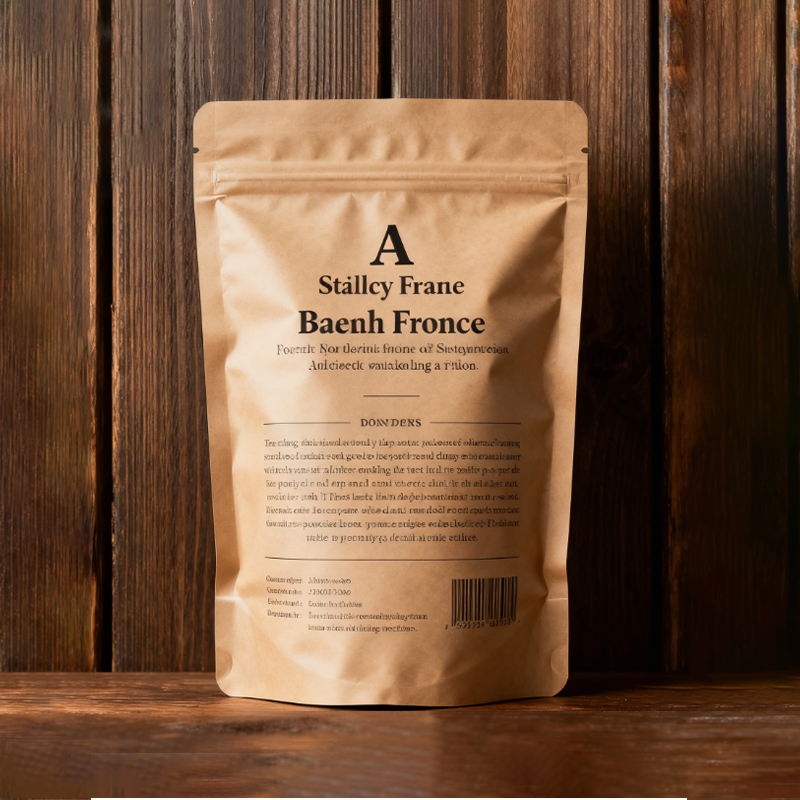
For retail carriers, gift formats and store-level packaging, a kraft paper carrier with a paper handle keeps the whole pack in one material stream and survives more than one trip to the till.
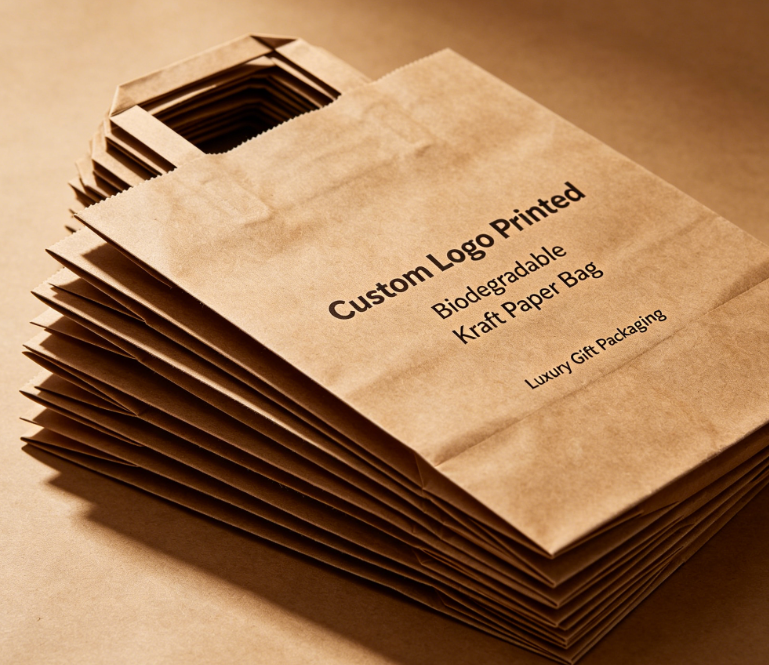 Custom Kraft Paper Die-Cut Handle Shopping BagsIntegrated paper-handle retail and gift carrier in thickened virgin kraft, with customizable printing and sizes for store-level packaging.View Product →
Material Options Compared
The table below is the shortlist most retail projects end up choosing between. Cost direction is indicative only — it shifts with volume, print coverage and barrier requirements — but the recyclability column rarely does.
| Structure | Design for recycling | Barrier | Cost direction | Typical use |
|---|---|---|---|---|
| Mono-material PE/PP with EVOH | Accepted in PE/PP film streams | Medium to high | Higher than standard laminate | Dry food, frozen, pet treats |
| PET / aluminium foil / PE | Not recyclable in most film streams | Very high | Baseline | Coffee, wet pet food, long shelf life |
| Paper with thin coating or PE layer | Depends on the local paper stream | Low to medium | Similar | Carriers, gifting, e-commerce |
| Compostable film (EN 13432) | Industrial composting only; contaminates PE recycling | Low to medium | Higher | Closed-loop events, food-contaminated packs |
| PE with 30%+ PCR content | Same stream as PE | Medium | Similar | Carriers, secondary packaging, non-food |
Two caveats decide most projects. Compostable film is not a drop-in answer for retail: EN 13432 proves industrial compostability, not home compostability, and the pack only works where the store or the municipality actually collects organics. Recycled content is limited by food-contact rules in some markets, so confirm the grade before committing to a 30% claim.
Where the collection route is genuinely closed — festivals, catering, staff canteens, branded cafés — a certified biodegradable stand-up pouch removes the food-contamination problem that blocks mechanical recycling of the same pack.
 Biodegradable Stand-Up Pouches for Flexible PackagingBiodegradable stand-up pouch suited to closed collection routes, with flat or octagonal bases, zipper seals, and trial-to-family-pack sizes.View Product →
Where Flexible Structures Earn Their Keep
Flexible packaging wins the material-efficiency argument almost by default. A stand-up pouch holding 500 g of coffee uses a fraction of the plastic a rigid jar or tin of the same fill volume needs, ships flat before filling, and puts more units on a pallet. Less material moved means less material emitted, which is usually the largest single line in a packaging carbon footprint.
The drawing above is the whole decision in one picture. Because the sealant usually dominates the weight, recyclability is decided by whether everything above it is compatible with PE. An EVOH barrier at 5% of total weight or less is broadly accepted in PE film recycling assessments; a 20-micron aluminium foil layer is not, and neither is a PET outer ply bonded with a solvent-based adhesive.
Design Details That Decide Whether It Gets Recycled
Most rejections happen in the details rather than in the headline resin choice. These are the points worth putting on the artwork approval checklist:
- Inks: avoid carbon black and heavy-metal pigments, which sorting equipment cannot read; specify low-migration, water-based or solvent-reduced systems for food.
- Adhesives: solvent-free laminating adhesives compatible with the carrier resin.
- Fitments: PE spouts and zippers on PE structures — a PP spout on a PE pouch creates a compatibility question the recycler has to answer.
- Barriers: EVOH at 5% or below; avoid PVC and PVDC entirely.
- Size: sachets below roughly 5 cm fall through sorting screens; bundle them or move to a larger format.
- Labels: where used, match the label film to the container resin and specify a washable adhesive.
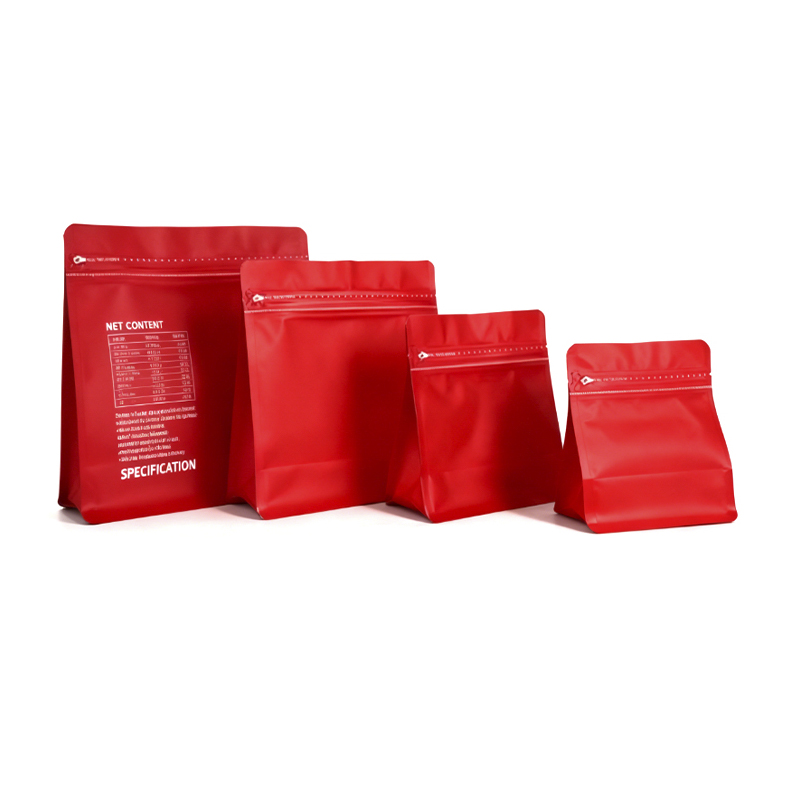
Where the pack is reopened repeatedly at home — coffee, pet treats, dry refills — a reclosable zipper pouch extends the use phase and removes the need for a secondary closure or an outer carton, which is a material saving that shows up directly on the scorecard.
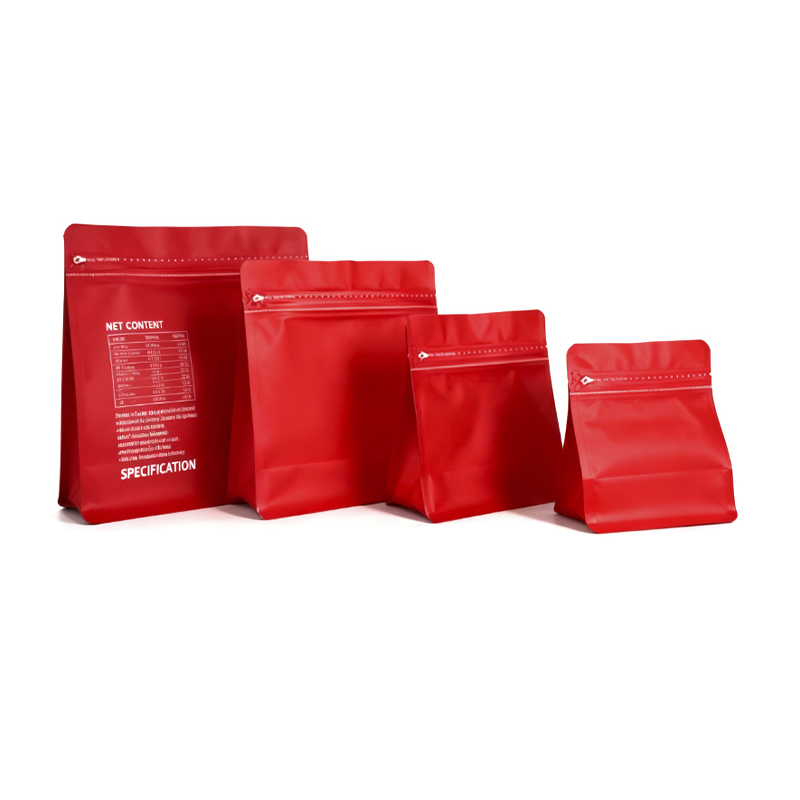 Reclosable Stand-Up Zipper Pouch BagsReclosable zipper pouches in stand-up, flat-bottom, and three- or four-side-seal styles, with custom zippers, windows, and sizes for repeat-use packaging.View Product →
Certification and Supplier Due Diligence
A logo on a website is not evidence. When you audit a converter, ask for the documents that sit behind the claim, and ask for them per structure rather than per company. Our own position on materials and end-of-life is set out in the sustainability programme pages, and the same six items are what any buyer should request:
- Layer-by-layer structure breakdown, by weight percentage.
- A recyclability assessment from RecyClass, the APR Design Guide or a recognised local equivalent.
- Food-contact declarations covering EU 10/2011 and FDA 21 CFR where relevant.
- EN 13432 certificates for any compostable claim — plus the actual composting route.
- FSC chain-of-custody documentation for paper-based formats.
- Site certificates: ISO 9001 for quality, ISO 14001 for environmental management, BRCGS for food-safety packaging.
Switching Without Losing Shelf Life or Margin
Mono-material conversions fail for boring reasons: the heat-seal window shifts, the oxygen transmission rate drifts, or the new film runs 8% slower on the filling line. Sequence the change to catch those before the first production order.
- Pilot one SKU with the highest volume or the loudest retailer pressure — not the whole range.
- Re-run the tests that matter: OTR and WVTR, seal strength, drop and compression, plus accelerated shelf life at your real storage temperature.
- Book a machine trial. Mono-PE structures typically need higher seal temperature and more dwell than a foil laminate, and the tolerance band narrows.
- Confirm MOQ, lead time and print minimums before you promise the retailer a launch date; recycled-content grades often carry longer lead times than virgin film.
Frequently Asked Questions About Sustainable Retail Packaging
What is sustainable retail packaging?
Packaging designed to use the least material that still protects the product, built for a recycling or reuse route that exists locally, and supported by documented evidence on material content and end-of-life.
Is flexible packaging more sustainable than rigid packaging?
Usually yes on material use and transport emissions — a pouch needs far less plastic per gram of product than a jar or tin. The gap narrows if the flexible pack cannot be sorted and ends up in landfill.
Are compostable pouches accepted in retail recycling?
No. Compostable films are not recyclable in PE streams and can contaminate them. They only make sense where an industrial composting collection exists and the pack is likely to be food-contaminated.
How much more does sustainable retail packaging cost?
Mono-material and recycled-content structures typically land within a few percent of a standard laminate at volume, while compostable films run higher. Tooling, print minimums and trial costs usually matter more than the film price.
Which certifications should a packaging supplier hold?
ISO 9001, ISO 14001 and a food-safety scheme such as BRCGS at site level, plus FSC chain of custody for paper and EN 13432 or a RecyClass assessment for the specific structure you are buying.
What is the EU PPWR deadline for recyclable packaging?
The regulation applies from 12 August 2026, with recyclability required for all packaging by 2030 and recycling at scale by 2035. Early compliance is usually cheaper than retrofitting a launched pack.