

 LANGUAGE

 English
 Español

Are Brown Paper Bags Recyclable? A Buyer's Guide to Kraft Bag Reuse and Disposal
Yes—most brown paper bags are recyclable. Clean, dry, unlaminated kraft bags are accepted in many curbside mixed-paper programs and at paper drop-off sites. The answer changes when the bag is greasy, wet, lined with plastic film, or fitted with mixed-material handles. Recycling facilities sort paper by fiber quality and contamination risk, not by color alone. A plain brown grocery bag and a brown gift bag can look similar and behave very differently in the paper stream.
For packaging buyers, the more useful question is not only “are brown paper bags recyclable?” but “which brown paper bag specification will still be recyclable after the customer uses it?” That shifts attention to fiber, coating, printing, handles, and the way the bag is filled and carried.
Content
- 1 The Short Answer: When Brown Paper Bags Are Recyclable
- 2 What Makes a Brown Paper Bag Recyclable?
- 3 Brown, White, and Printed Bags: Does Color Matter?
- 4 How Brown Paper Bags Move Through Recycling
- 5 Recycling Rules for Food-Service and Retail Bags
- 6 Design for Recyclability: What Packaging Buyers Should Specify
- 7 Supplier Checks for Recyclable Paper Bags
- 8 Common Recycling Mistakes to Avoid
- 9 Frequently Asked Questions
- 9.1 Q1. Are brown paper bags recyclable at curbside?
- 9.2 Q2. Can greasy brown paper bags be recycled?
- 9.3 Q3. Are brown paper bags with handles recyclable?
- 9.4 Q4. Are laminated or waterproof brown paper bags recyclable?
- 9.5 Q5. Are printed brown paper bags recyclable?
- 9.6 Q6. Are brown paper bags compostable?
The Short Answer: When Brown Paper Bags Are Recyclable
A brown paper bag is a good candidate for paper recycling when it is mostly clean paper fiber. Empty it, keep it dry, remove non-paper handles or attachments, and place it in the paper stream accepted by the local program. A bag that has held a greasy sandwich, leaked oil, or soaked up liquid is usually a poor fit for paper recycling because oil and moisture interfere with repulping and can contaminate other paper.
| Bag condition | Typical paper recycling answer | Practical action |
|---|---|---|
| Plain brown kraft bag, clean and dry | Usually accepted in mixed-paper recycling | Empty crumbs and keep dry |
| Grease-stained food bag | Not accepted in most paper programs | Use a compost program if accepted locally |
| Plastic-coated or waterproof bag | Often not accepted as paper | Check the supplier’s material declaration |
| Bag with plastic or rope handles | Paper portion may be accepted | Remove non-paper handles first |
| Gift bag with foil, glitter, or film window | Usually not accepted as paper | Reuse it or follow local mixed-material rules |
What Makes a Brown Paper Bag Recyclable?
Fiber quality and contamination
Kraft paper is made from wood fibers that can be repulped into new paper products. Brown grocery bags, retail bags, and uncoated takeaway bags usually share that basic fiber structure. The recycling process weakens fibers over time, so clean paper bags are more valuable than bags mixed with food residue, adhesives, or plastic film. A small amount of printing is generally not the main problem; heavy contamination and barrier layers are.
Coatings, liners, and handles
A bag described as “waterproof,” “grease-resistant,” or “leakproof” may contain a plastic coating, a laminated film, or a barrier layer. Those additions can block repulping or create a reject at the paper mill. Paper handles are usually part of the paper stream, while plastic, rope, and metal attachments should be removed. If a supplier cannot confirm whether a coating is repulpable, treat the bag as a mixed-material item rather than assuming it belongs in paper recycling.
Brown, White, and Printed Bags: Does Color Matter?
Color is not the deciding factor. Brown kraft and white kraft bags can both be recycled when they are clean and uncoated. The more important variables are fiber content, coating, and contamination. Printed bags with normal water-based inks are commonly handled in paper recycling, but metallic foil stamping, glitter, heavy film windows, and adhesive labels can complicate acceptance. For brand owners, it is better to specify a simple paper structure than to rely on a “recyclable” claim without checking the full construction.
How Brown Paper Bags Move Through Recycling
Paper bags do not recycle by themselves. They pass through collection, sorting, contaminant removal, and repulping. A bag that is wet, greasy, or combined with plastic can be pulled out before it reaches the pulper. That is why the same brown kraft bag can be recyclable in one household and not accepted in another if it is used for food waste or heavy takeaway.
Recycling Rules for Food-Service and Retail Bags
Grocery and takeaway bags
Empty the bag, shake out crumbs, and keep it dry. Remove receipts, napkins, and plastic cutlery before placing the bag in recycling. If the bottom is oily from takeaway food, do not put it in paper recycling. A clean paper bag used only to carry dry groceries is a much stronger recycling candidate than a bag that held a hot, greasy meal.
Retail shopping bags and gift bags
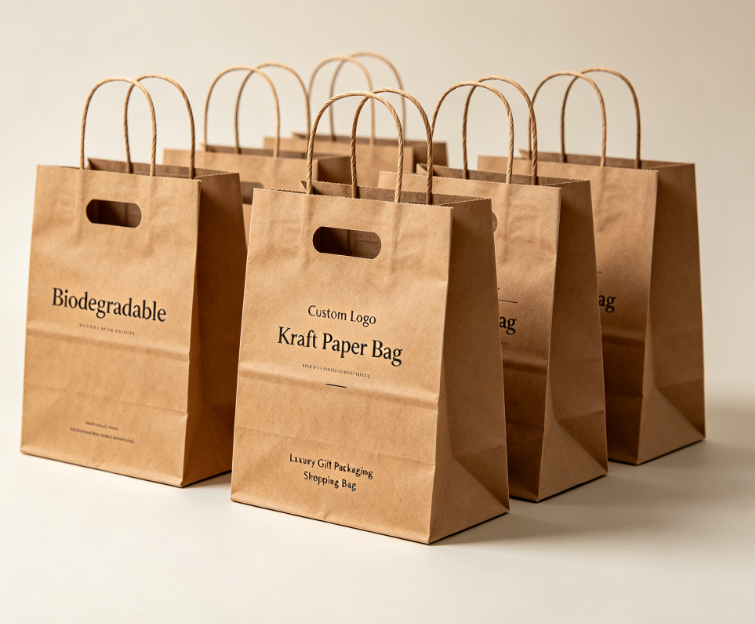
Retail bags often include handles, ribbons, foil logos, or laminated finishes. Remove paper handles only if the local program asks for it; remove plastic or rope handles in most cases. Gift bags with glitter, metallic foil, or a plastic window are usually better reused than recycled. For brands that want a simple paper bag for retail use, the construction matters as much as the brown color.
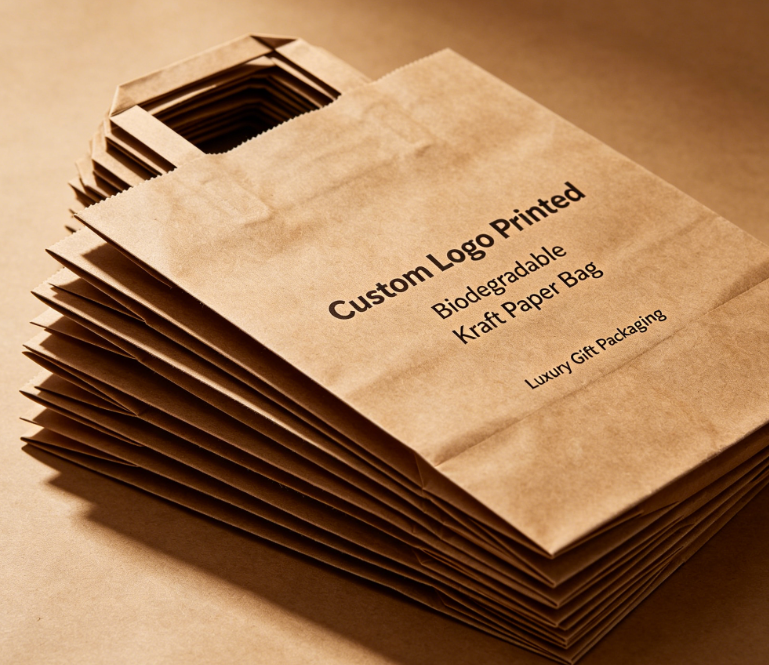 Custom Die-Cut Handle Kraft Paper Shopping BagsA one-piece kraft tote with punched handle and customizable printing, suited to retail and gift use where simple recyclable construction matters.View Product →
Design for Recyclability: What Packaging Buyers Should Specify
If recyclability is a requirement, write it into the specification rather than adding it as a marketing claim later. Buyers can ask for uncoated kraft paper, paper-based handles, water-based inks, and a clear material declaration for any coating or window film. Request a repulpability statement when a supplier proposes a grease barrier or moisture barrier. Also confirm whether the bag will carry a food-contact application, because food-safe performance and recyclability must be evaluated together.
- Choose uncoated or lightly coated kraft paper where barrier performance allows.
- Avoid plastic film windows, metallic foil, and glitter on paper bags intended for recycling.
- Specify paper handles or detachable handles that the customer can remove easily.
- Ask for basis weight, handle strength, print method, and coating details in the quotation.
- Review the local recycling program before making an on-pack recyclability claim.
Our sustainability page outlines how material choices and packaging design can be reviewed at the specification stage. A paper bag does not need to be complicated to perform well; it needs a clear material structure and realistic use case.
 Custom Paper Food Packaging and BagsA range of paper bags, boxes, cups and containers for foodservice and retail, with custom printing, food-safe coatings and OEM/ODM options.View Product →
Supplier Checks for Recyclable Paper Bags
When evaluating a paper bag manufacturer, ask for the full bill of materials, not just the bag color. Confirm the paper grade, coating type, handle material, printing process, and any adhesive used at the handle or window. A factory that works with food packaging should also be able to explain food-contact compliance and batch consistency. For custom printed kraft bags, request samples that match the proposed paper and coating, then test handle strength, print adhesion, and moisture resistance before mass production.
Production control matters because a recyclable paper bag can become a mixed-material reject through a small change in lamination or handle attachment. Clear incoming material checks, in-process inspection, and final batch review help keep the specification stable. For buyers comparing suppliers, the useful questions are whether the factory can document material composition and whether it can hold that specification across repeat orders.
Common Recycling Mistakes to Avoid
- Putting a greasy food bag into paper recycling because it is still brown and looks like paper.
- Assuming “biodegradable” or “compostable” means the bag belongs in the paper recycling bin.
- Leaving plastic handles, rope handles, or film windows attached when the local program rejects mixed materials.
- Placing wet bags in recycling, where moisture can damage other paper.
- Treating a supplier’s general recyclability claim as proof without checking the coating and local acceptance rules.
Frequently Asked Questions
Q1. Are brown paper bags recyclable at curbside?
Usually yes, if the bag is clean, dry, and not coated with plastic film. Curbside programs vary, so check whether mixed paper is accepted in your area.
Q2. Can greasy brown paper bags be recycled?
Most paper recycling programs do not accept greasy bags because oil contaminates the paper fiber. Use a local compost program if it accepts food-soiled paper.
Q3. Are brown paper bags with handles recyclable?
Paper handles are usually acceptable with the paper bag. Remove plastic, rope, or metal handles first, and follow the local program’s rules on mixed materials.
Q4. Are laminated or waterproof brown paper bags recyclable?
They are often not accepted in paper recycling because the plastic or barrier layer can interfere with repulping. Ask the supplier for coating details and repulpability information.
Q5. Are printed brown paper bags recyclable?
Most normal printed paper bags can go into paper recycling. Heavy metallic foil, glitter, film windows, and some adhesives are more likely to cause rejection.
Q6. Are brown paper bags compostable?
Plain, uncoated paper may compost in a commercial facility, but coated, printed, or laminated bags may not. Do not assume a paper bag is compostable without checking the program.
If you are sourcing custom kraft paper bags for retail, grocery, or gift use, contact our packaging team to review paper grade, handle type, printing, and recyclability requirements before quoting.