

 LANGUAGE

 English
 Español

Biodegradable Poly Bags for B2B Buyers: Materials, Certifications, and Sourcing
Biodegradable poly bags are easiest to buy when the request starts with the end-of-life route, not the adjective. A bag described as biodegradable may be intended for industrial composting, home composting, anaerobic digestion, or a landfill where biological activity is limited. For B2B buyers, the useful question is: which standard applies in the destination market, in which disposal environment, with what strength and barrier targets, and what evidence will the supplier provide? This guide explains how to specify and compare biodegradable poly bags without treating “compostable” and “biodegradable” as interchangeable.
Content
- 1 Start With the Disposal Route and the Standard
- 2 Match the Polymer Blend to Strength, Heat, and Barrier Needs
- 3 Format, Thickness, and Converting Details That Affect Performance
- 4 How to Verify a Supplier Before You Approve Artwork
- 5 Cost, MOQ, and Customization: Where Quotes Really Differ
- 6 A Practical Buyer Checklist
- 7 Frequently Asked Questions
Start With the Disposal Route and the Standard
“Biodegradable” is a process claim, not a material name. A film can biodegrade under industrial composting conditions and still fail in a home compost bin or a landfill. In Europe, packaging marketed as industrially compostable is typically tested against EN 13432; in the United States, ASTM D6400 is the relevant specification for municipal and industrial composting. Home compostability is a separate claim and should be backed by a recognized scheme such as OK compost HOME or AS 5810 in Australia. If the target market has restrictions on oxo-degradable plastics, a supplier’s “degradable” additive is not a substitute for a compostability certificate.
Request evidence for the finished article, not just the resin. The certificate should identify the film thickness, color, printing inks, adhesives, and any lamination. A compostable film with a conventional adhesive or non-compliant ink may not meet the same claim. Also confirm whether the certificate covers the complete bag, including zippers, valves, or windows. If the supplier cannot connect the certificate to the exact SKU, treat the claim as unverified.
| Claim | What it usually means | Evidence to request |
|---|---|---|
| Biodegradable | Material may break down biologically, but the environment and timeframe are often undefined. | Test report and certificate linked to the finished bag, thickness, and print. |
| Industrially compostable | Designed for municipal or industrial composting conditions. | EN 13432 or ASTM D6400 certificate with scope covering inks, adhesives, and add-ons. |
| Home compostable | Designed to break down in a home compost system, which is a different claim. | Recognized home-compost certification and clear disposal instructions. |
| Oxo-degradable | Often fragments rather than composts; restricted in some markets. | Avoid when compostability is required; ask for a compliant alternative. |
Match the Polymer Blend to Strength, Heat, and Barrier Needs
Most compostable flexible films are not a drop-in replacement for polyethylene. Formulators combine polymers to balance stiffness, toughness, sealability, and cost. PLA contributes stiffness and print quality but has limited heat resistance. PBAT adds flexibility and tear resistance. Starch blends can reduce material cost but are more sensitive to moisture. PBS and other polyesters may improve processing or heat performance, depending on the structure. The right blend depends on whether the bag carries apparel, dry food, pet treats, coffee, or a liquid pouch.
Use application testing to set the specification. A flat poly bag for apparel may prioritize clarity, puncture resistance, and a soft hand. A food pouch may need grease resistance, an oxygen or moisture barrier, a strong seal, and food-contact compliance. Adding barrier layers can improve shelf life but may complicate compostability unless the complete structure is certified. Discuss the fill weight, product chemistry, storage conditions, and expected shelf life with the converter before choosing a thickness or film structure.
| Material | Useful property | Watch-outs |
|---|---|---|
| PLA | Stiffness, gloss, and print quality | Limited heat resistance; can be brittle in some structures |
| PBAT | Flexibility, tear resistance, and sealability | Cost and certification scope vary by blend |
| Starch blends | Renewable content and cost control | Moisture sensitivity and batch consistency |
| PBS and other polyesters | Processing balance and heat performance | Availability, food-contact status, and compostability evidence |
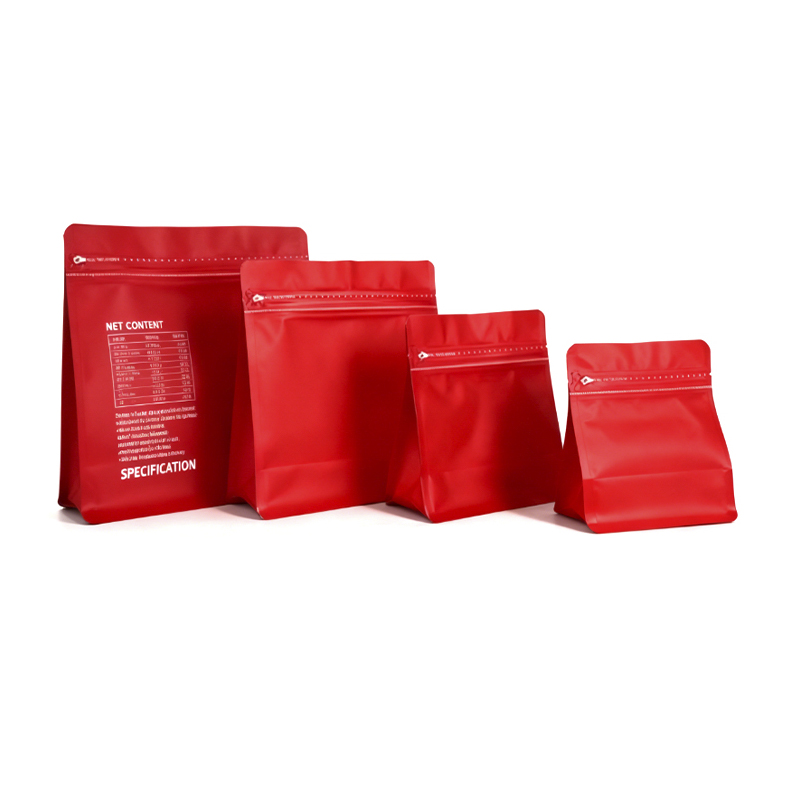
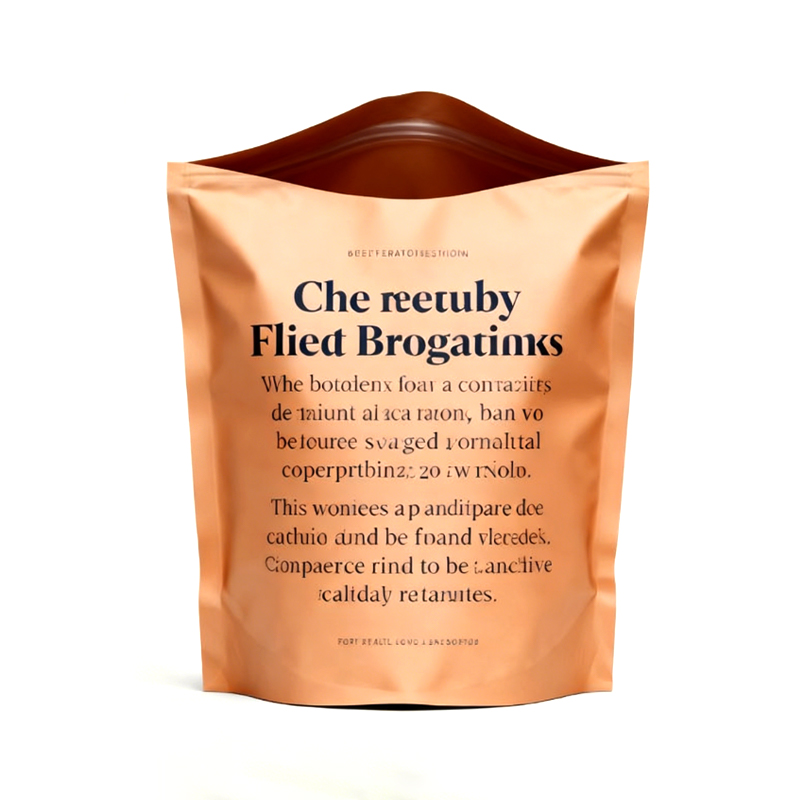 Customizable Biodegradable Stand Up PouchCustomizable stand-up pouch with flat bottom, zipper or heat-seal options, and mini to family-pack sizes; review film structure, barrier, and end-of-life route.View Product →
If the program also has broader green packaging and sustainability commitments, align the bag specification with the disposal infrastructure where the product is sold. A material that works in an industrial composting facility may not be accepted in a region without collection, so the packaging brief should name the market, retail channel, and end-of-life route.
Format, Thickness, and Converting Details That Affect Performance
Biodegradable poly bags can be converted as flat bags, side-gusset bags, stand-up pouches, flat-bottom pouches, or rollstock film. The format changes the stress on the film. A stand-up pouch needs strong bottom seals and stiffness at the base; a side-gusset bag needs clean gusset formation; rollstock needs consistent tension and seal windows on the filling line. Thickness alone is a weak specification: resin grade, orientation, sealant layer, and bag geometry often matter more than a single micron number.
Print and lamination deserve early review. Solvent-based inks may not suit a compostable structure, and heavy coverage can affect seal integrity or certification. Ask for a print proof on the proposed film, not on a generic sample. For food packaging, confirm that inks, adhesives, and coatings meet the relevant food-contact requirements for the destination market. A pilot run should check seal strength, drop performance, puncture resistance, opening force, and aging under the intended storage conditions.
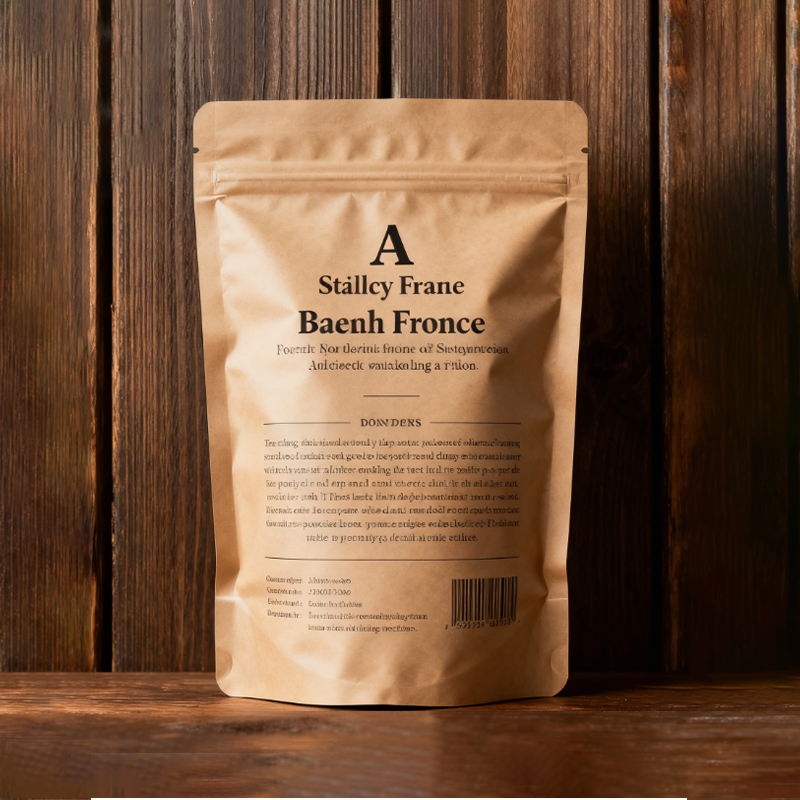 Custom Stand Up Pouches for Food PackagingSelf-supporting food pouches with resealable zippers, barrier options, and custom printing; useful when reviewing print, lamination, seal strength, and supplier documentation.View Product →
How to Verify a Supplier Before You Approve Artwork
A credible supplier should separate quality management from product claims. ISO 9001 supports process control, ISO 14001 supports environmental management, and BRC is relevant for food packaging hygiene and safety. These certifications are useful, but none of them proves that a specific bag is compostable. Zhiwei Packaging’s ISO 9001, ISO 14001, and BRC certifications are relevant starting points for a supplier review; the compostability dossier still has to be checked for the exact film and print specification.
Ask for the certificate scope, test laboratory, report date, film thickness, and a link between the certificate and the production batch. Review incoming material records, ink and adhesive controls, seal parameters, and change-control procedures. If the bag will be used in food packaging, request food-contact declarations and migration test information for the finished structure. For a factory audit, review the manufacturer’s factory and production controls and confirm who handles converting, printing, and quality release.
Sample evaluation should be practical. Fill the bag with the real product or a representative weight, seal it on the same type of equipment if possible, and store it under expected conditions. Check whether the film blocks, wrinkles, or loses seal strength over time. A supplier that can explain the failure mode and adjust the structure is more useful than one that only sends a certificate PDF.
Cost, MOQ, and Customization: Where Quotes Really Differ
Quotes for biodegradable poly bags vary because buyers are not always comparing the same structure. Resin grade, film thickness, barrier layer, print colors, cylinder or digital setup, zipper or valve, certification scope, and waste allowances all change the cost. Compostable resins can also have different supply and shelf-life profiles from conventional polyethylene, so MOQ and lead time may depend on the film width and print method. Ask for a quotation that states the structure, thickness, bag dimensions, print process, certification to be supplied, and Incoterm.
Custom manufacturing should begin with a written brief: product type, fill weight, bag format, barrier target, disposal route, destination market, artwork, and expected annual volume. If the project needs OEM or ODM support, clarify who owns the artwork, who approves the print proof, and who is responsible for certification testing. Avoid approving a “compostable” bag on a resin datasheet alone; the finished bag, print, and any add-ons must be included in the review.
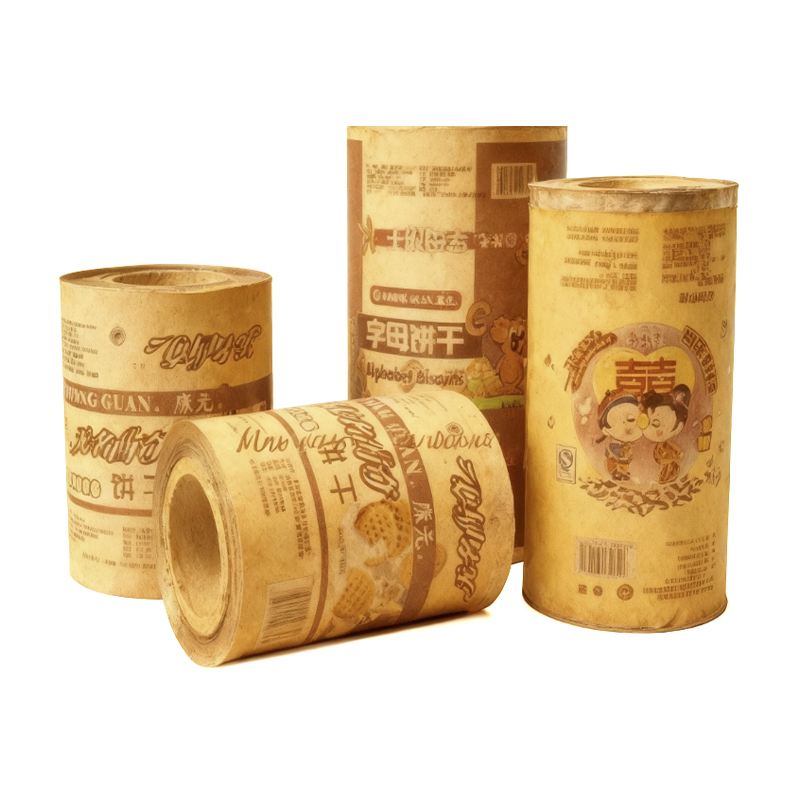 Flexible Packaging Roll Film for Automatic LinesContinuous-roll film for FFS, VFFS, and HFFS lines, with barrier, sealing, and print options; confirm finished structure and compostability claims against the intended route.View Product →
A Practical Buyer Checklist
- Define the disposal route and the standard required in each destination market.
- Write a product brief with fill weight, product chemistry, shelf life, and barrier targets.
- Request the full film structure, thickness, sealant, and any barrier or coating.
- Confirm that certification covers the finished bag, including print and add-ons.
- Test seal strength, drop performance, puncture resistance, and aging with real samples.
- Review batch records, change control, and food-contact declarations where relevant.
- Compare MOQ, lead time, Incoterm, and certification responsibilities before approving artwork.
Frequently Asked Questions
Q1. Are biodegradable poly bags compostable?
Not automatically. Compostability depends on the material, thickness, additives, print, and disposal environment. Ask for a certificate that matches the finished bag and the intended composting route.
Q2. Which standards should buyers request?
For industrial composting, request EN 13432 or ASTM D6400 as applicable. For home composting, ask for a recognized home-compost certification. Match the standard to the market where the bag will be sold.
Q3. Can biodegradable poly bags be used for food packaging?
Only when the finished structure meets food-contact requirements for the destination market. Check migration data, ink and adhesive compliance, and barrier performance for the specific food product.
Q4. Do biodegradable bags break down in landfill?
Do not assume so. Landfill conditions vary and may not support biodegradation. If the product will be disposed of in landfill, avoid making a compostability claim and confirm the local waste route first.
Q5. What affects the price of biodegradable poly bags?
Resin grade, film thickness, barrier layers, print colors, zippers or valves, certification scope, MOQ, and waste allowances all affect the quote. Compare suppliers using the same written specification.
Q6. Can bags be customized?
Custom sizes, formats, print, and film structures are possible, but MOQ, lead time, and certification scope must be confirmed against the exact specification and destination market.