

 LANGUAGE

 English
  Español
Packaging Sustainability Certification: A Practical Guide for Packaging Buyers
Imagine you are sourcing a coffee pouch with a one-way degassing valve. The supplier says the film is "green," "eco-friendly," and "sustainable." Your procurement team wants proof. What do you ask for? Not another brochure. You ask for a packaging sustainability certification issued by an independent body.
In short, a packaging sustainability certification is a third-party verification that a material, product, or facility meets a defined environmental standard. It converts a marketing claim into a documented, audited specification. This guide explains the certifications that matter, how to read them, and what to verify before you approve a new package.
Content
Why Certification Matters to Packaging Buyers
Certification matters because unverified claims fail audits. Retailers increasingly require documented evidence that packaging complies with recycling, extended producer responsibility, and restricted substance rules. By 2026, sustainability documentation is often part of supplier onboarding, especially for packaged food, pet food, cosmetics, and medical products.
A certificate gives your quality team a document they can file, check, and verify. It also gives the marketing team a legal basis for saying "contains recycled content" or "compostable film." Without that basis, a simple wording change can become a packaging claim dispute.
For a sector-specific example, see how to verify sustainability credentials in coffee bag packaging.
What Different Certifications Actually Verify
There is no single certificate called "sustainable packaging." Certification schemes are divided by material, claim, and scope. The table below groups the ones packaging buyers encounter most often.
| Claim | Common certification schemes | What to check |
|---|---|---|
| Forest and paper sourcing | FSC, PEFC, SFI | Chain-of-custody evidence that fiber comes from responsibly managed forests; recycled or mixed percentages are stated. |
| Recycled content | GRS, RCS | Traceable claims about recycled material in the supply chain, including input verification and mass balance. |
| Compostability | BPI, TUV Austria OK Compost, ABA | Tests that materials biodegrade under industrial or home composting conditions, usually using standards such as EN 13432 or ASTM D6400. |
| Environmental management | ISO 14001 | Facility-level system for managing environmental responsibilities; this is not a product label, and the audit scope covers the production site. |
| Recyclability communication | How2Recycle | Labeling rules that tell recyclers and consumers how to sort the package; not a material certification by itself. |
One common credential is BRC. It is primarily a food safety and quality certification, but many food brands place it on the same supplier checklist because it demonstrates that production hygiene, traceability, and documentation systems are under control.
Management-system certificates such as ISO 9001 and ISO 14001 are not product labels. They describe how a factory manages quality and environmental obligations. They make it easier for a supplier to support chain-of-custody or product-level certifications.
Bars show the number of schemes named in this guide; other recognized programs exist in each category.
How to Read a Packaging Certification Like a Buyer
Check the scope, not just the logo
A certificate is valid for a defined scope: product lines, materials, locations, and activities. A supplier may hold FSC chain-of-custody for paper bags but not for rollstock film. Ask for the certificate scope sheet.
Look for the standard and test method
Compostable claims are only meaningful when tied to a test method. For example, BPI certifies against ASTM D6400 for industrially compostable plastics; TUV Austria OK Compost also checks impact on plant growth and ecotoxicity.
Check the audit date and validity
Certifications expire or are audited annually. An old certificate may not reflect current production. Ask when the last audit took place and whether corrective actions were issued.
Flexible Packaging Can Be Certified, Too
Many buyers assume certification works only for paper boxes. In flexible packaging, certification is usually split across materials and components:
- FSC or PEFC for paper labels, cartons, and outer bags.
- GRS or RCS for films and resins containing recycled content.
- BPI or TUV Austria OK Compost for certified compostable films.
- How2Recycle for disposal messaging on pouches and rollstock.
For dry snacks and sachets, a biodegradable stand-up pouch can replace a conventional laminate in applications where barrier requirements allow. It is a practical first project for a brand that wants to test certified material without rebuilding the entire packaging line.
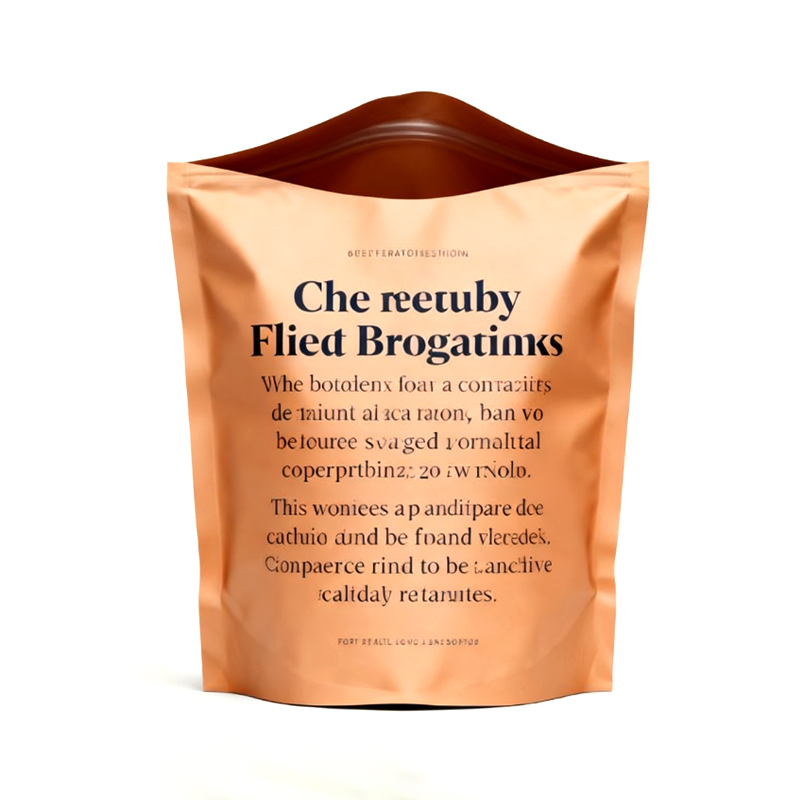 Biodegradable Stand-Up Pouch with Customizable Shapes and SizesThis biodegradable stand-up pouch suits dry snacks and sachets where barrier needs allow, offering certified material testing without full line changes. Its flat base, easy-tear opening, and optional windows support shelf display and brand differentiation.View Product →
For retail, food service, and gift packaging, paper-based structures are another route. Kraft paper bags and custom printed paper bags can combine a renewable outer panel with a water-based coating or a liner that meets recycled-content documentation requirements.
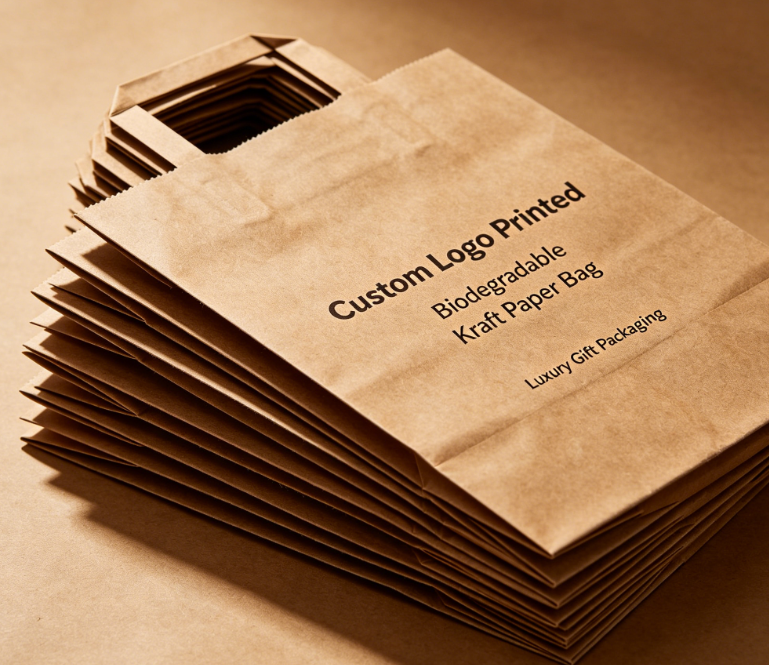 Custom Logo Die Cut Handle Kraft Paper Gift Shopping BagThis kraft paper bag with die-cut handles is biodegradable and customizable in printing and size, ideal for retail, food service, and gifts. It pairs well with the preceding paper-based packaging discussion and can be backed by audited certifications.View Product →
Hangzhou Zhiwei Packaging, a subsidiary of the Fengda Group, has produced flexible packaging in Longgang since 1989. The plant holds ISO 9001, ISO 14001, and BRC certifications, so product-level certifications can be supported by audited documentation flows.
The isometric diagram below shows where certification evidence is typically needed on a flexible stand-up pouch: the film, the label, and the recycled-content declaration.
Fig. 2 — An isometric view of a flexible stand-up pouch showing where certification evidence is usually needed.
Minimum Checklist for Your Next Supplier Audit
- Ask for the certificate scope.
- Verify the standard name and test method.
- Check the audit date and renewal cycle.
- Confirm whether the certificate covers the exact product type.
- Keep a paper trail of material composition and invoices.
- Allow margin in your label claims based on what the certificate permits.
If you are working on a new structure and need help mapping certificates to your product range, ask the factory team directly.
Frequently Asked Questions
Q1: What is packaging sustainability certification?
It is third-party verification that a package or production facility meets a defined environmental standard, such as responsible fiber sourcing, recycled content, compostability, or environmental management.
Q2: Is FSC the same as compostable certification?
No. FSC verifies that paper fiber comes from responsibly managed forests. Compostable certifications verify that a material breaks down under composting conditions.
Q3: What does "biodegradable" mean in certified packaging?
Biodegradable is a less specific claim. In certified packaging, look for compostable standards such as EN 13432 or ASTM D6400, which specify time, temperature, and ecotoxicity limits.
Q4: Can flexible plastic pouches be certified sustainable?
Yes. Flexible packaging can use GRS or RCS recycled-content certification for films, BPI or TUV Austria compostability, or paper labels with FSC certification. No single certificate covers every component.
Q5: How do I verify a packaging supplier's certification?
Request the certificate scope, standard, site address, and audit date. Check that the certificate number corresponds to the exact product and manufacturing site you are buying from.
Q6: Which certifications should I prioritize for food packaging?
For food safety, start with ISO 9001 and BRC. For environmental claims, prioritize FSC or PEFC for paper, GRS for recycled content, and BPI or TUV Austria for compostable films.