

 LANGUAGE

 English
  Español
FDA-Approved Packaging Materials: 21 CFR Compliance Guide for Food Brands
In a routine retail audit, a snack manufacturer had an entire pallet of granola pouches placed on hold because the flexible film carried no documentation linking the packaging to a specific 21 CFR regulation. The converter had marketed the material as “food grade,” yet could not name the regulation that made it compliant. That situation repeats across the industry far more often than buyers expect.
The conclusion is straightforward: FDA-approved packaging materials are not a marketing sticker. They are a legal and technical status defined by Title 21 of the U.S. Code of Federal Regulations (21 CFR) and by Food Contact Notifications (FCNs). Understanding what that status requires — and how to verify it — protects your brand from rejected shipments, recall risk, and last-minute packaging redesigns.
Content
- 1 What “FDA Approved” Packaging Materials Actually Means
- 2 Common FDA-Compliant Materials and Their Limits
- 3 Compliance Is About the Whole Structure, Not Just One Layer
- 4 How to Verify a Supplier’s FDA Compliance
- 5 Common Pitfalls in FDA-Compliant Packaging Procurement
- 6 Frequently Asked Questions About FDA-Approved Packaging Materials
- 6.1 Is FDA approval required for food packaging materials?
- 6.2 What does 21 CFR mean in food packaging?
- 6.3 Which plastics are FDA approved for food contact?
- 6.4 What is the difference between FDA approved and FDA compliant?
- 6.5 Is “food grade” the same as FDA approved?
- 6.6 Can recycled packaging materials be FDA compliant?
What “FDA Approved” Packaging Materials Actually Means
The FDA does not issue a single “approval” document for a finished pouch or film. Instead, the agency regulates food contact substances (FCS) — the materials and components that can migrate into food. A substance is lawful for a specific use when it is cleared under one of three pathways:
- Pre-existing clearance under 21 CFR Parts 174–179. Polymers, paper, adhesives, and coatings are listed as indirect food additives. Part 177 covers polymers, Part 176 covers paper and paperboard, and Part 175 covers adhesives and coatings.
- Food Contact Notification (FCN). For a new substance not already listed, a manufacturer submits data to the FDA; once effective after the review period, the FCN authorizes that notifier’s product for the stated conditions. It is not a general approval for other suppliers.
- Threshold of Regulation (TOR) exemption. A substance that migrates below 0.5 parts per billion and raises no carcinogenicity concern can be exempted from food additive regulation under 21 CFR 170.39.
So when a supplier says a material is “FDA approved,” translate that into a precise question: “Under which 21 CFR section or FCN is this cleared, and for what food types, temperatures, and contact times?” A compliant answer is always specific.
Common FDA-Compliant Materials and Their Limits
Most food packaging uses a short list of polymers with long histories of safe use. Each resin offers a different balance of barrier, heat resistance, machinability, and cost — which is why the material decision should start with your product’s chemistry, not with a packaging catalog.
| Material | Common packaging uses | 21 CFR section | Key characteristics |
|---|---|---|---|
| HDPE | Bottles, caps, films, bags | 177.1520 | Moisture barrier; moderate heat resistance |
| LDPE / LLDPE | Sealant layers, bags, films | 177.1520 | Heat-sealability; weaker aroma barrier |
| PP | Hot-fill containers, retortable films | 177.1520 | High heat resistance; steam-processable in many formats |
| PET | Trays, beverage bottles, clear films | 177.1630 | Clarity and stiffness; paired with barrier coatings |
| Nylon (PA) | Retort and vacuum pouches | 177.1500 | Puncture resistance; strong oxygen barrier |
| EVOH | Barrier layer in coextruded films | 177.1365 | Excellent oxygen barrier; needs a protected position |
| Paper / paperboard | Cartons, liners, composite cans | 176.170 | Coverage includes wet-strength resins, sizes, and coatings |
Resin cost is one reason converters build multilayer structures instead of relying on a single expensive material. The chart below shows the relative price position of common packaging resins; barrier, clarity, and sealing behavior then decide which combination fits your product.
Compliance Is About the Whole Structure, Not Just One Layer
Flexible packaging is rarely a single material. A typical laminated pouch combines an outer print film, adhesive, a barrier layer, tie layers, and a heat-sealable inner film. Because food can reach any of these layers at seal edges or through pinholes, every layer that can migrate into food must be cleared. Inks and adhesives fall under 21 CFR 175.105 and 175.300, while paper-based materials are covered by 21 CFR 176.170.
The exploded view above is how a compliance conversation should begin: layer by layer. A converter that controls each layer and its raw material suppliers can trace inks, adhesives, resins, and process additives back to the applicable regulation. For a closer look at how these structures are combined, our guide to flexible food packaging breaks down common film constructions and their purposes.
How to Verify a Supplier’s FDA Compliance
Start with the conclusion: never accept a generic “FDA approved” certificate. Demand documentation that names the material, the regulation, and the conditions of use. A complete compliance file includes:
- A Declaration of Compliance (DoC) or Letter of Guarantee citing the exact 21 CFR sections or FCN numbers for every layer and additive.
- Migration test reports from an accredited laboratory — overall migration plus specific migration of additives, antioxidants, and process aids.
- Food-safety management certifications such as ISO 9001, ISO 14001, or BRC; our complete certification records are published on the company profile and updated after every audit.
- A written statement of the intended conditions of use: food type (aqueous, acidic, fatty, dry), filling temperature, and maximum storage temperature.
Conditions of use matter because a film approved for a dry snack at room temperature will not automatically comply for hot-filled sauce or retorted pet food at 121°C. Align the supplier’s declared limits with your own process parameters before signing off.
The radar profile above illustrates why material selection is a compromise: polyethylene offers moisture resistance and low cost, polypropylene adds heat resistance, and PET brings clarity and stiffness. A multilayer structure combines those strengths while keeping every component inside the approved substances listed in the CFR.
For brand owners who want both documented compliance and consistent converting quality, the practical route is to work with a manufacturer that builds compliance into the structure. As a flexible packaging producer with more than three decades in food and beverage packaging, we keep FDA documentation on food packaging pouches for retail-ready bags:
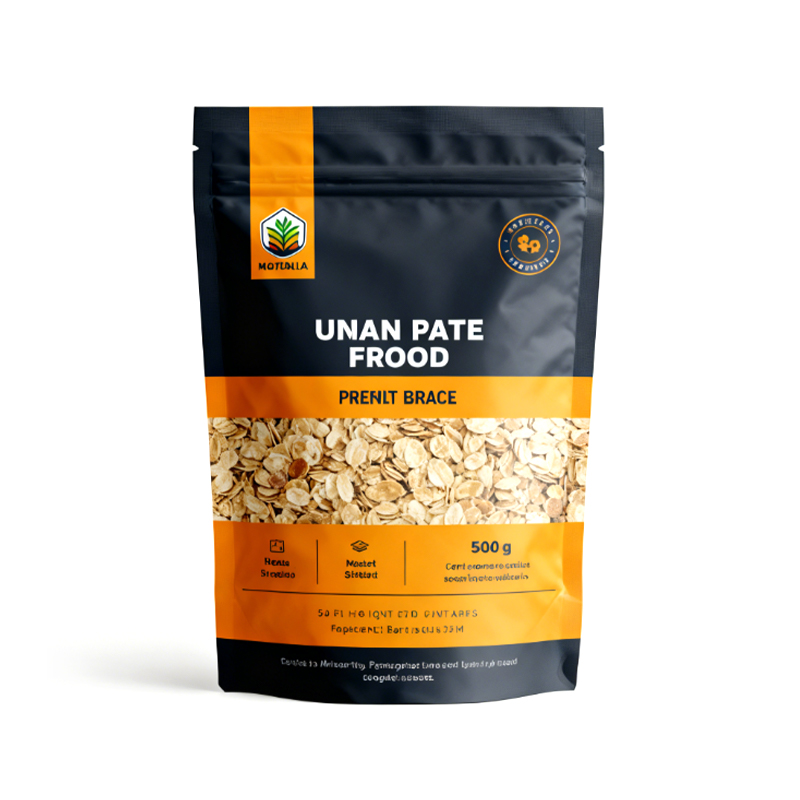
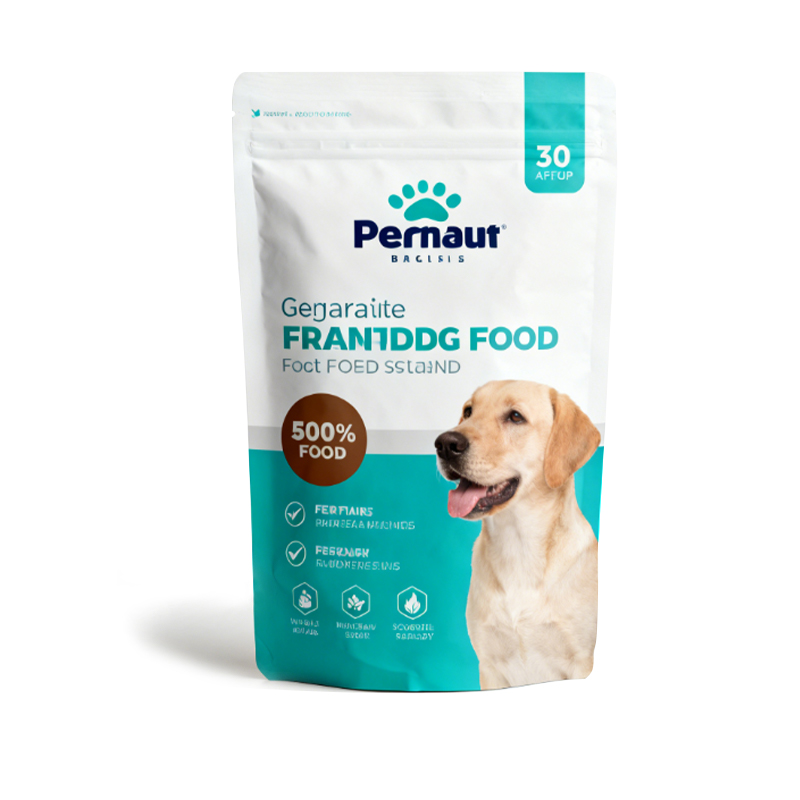
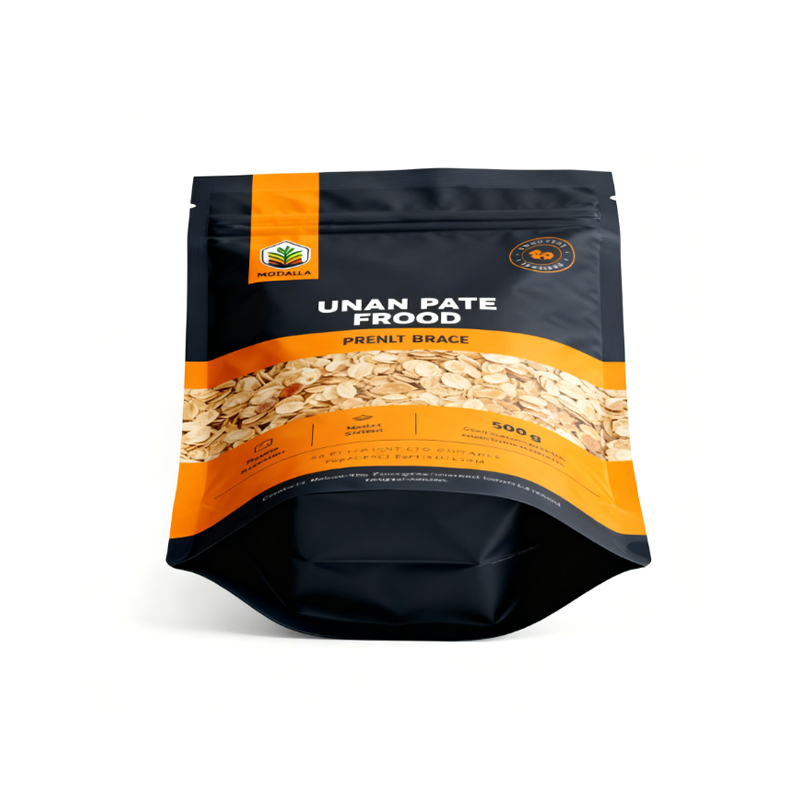 FDA-Documented Food Packaging Pouch Bags for Retail-Ready PackagingThis supplier offers food-grade pouch bags in multiple forms, including stand-up, flat-bottom, and shaped options. Sizes range from small trial packs to large family packs, with printing and lamination features that suit brand-focused retail displays.View Product →
High-barrier composite roll films serve automated form-fill-seal lines:
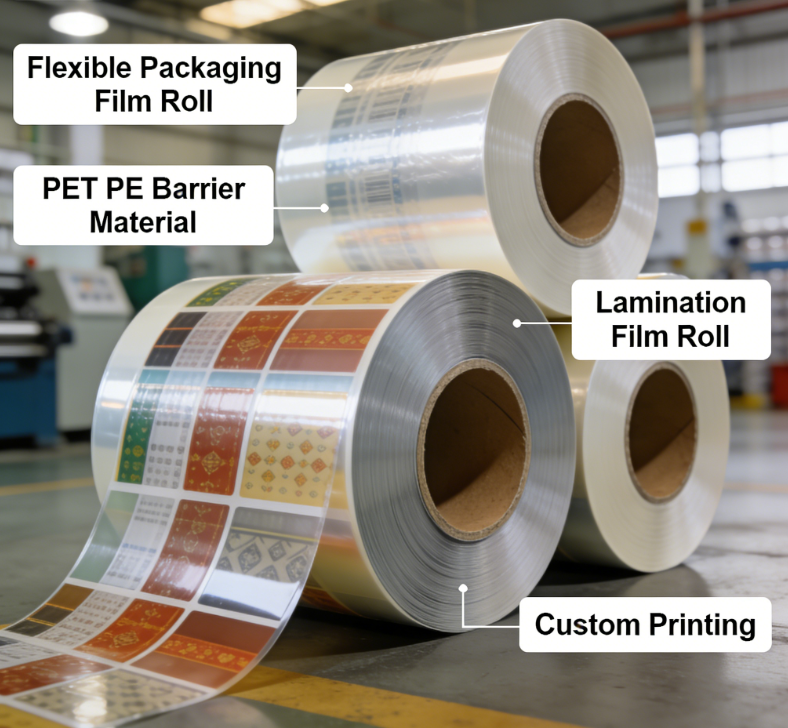
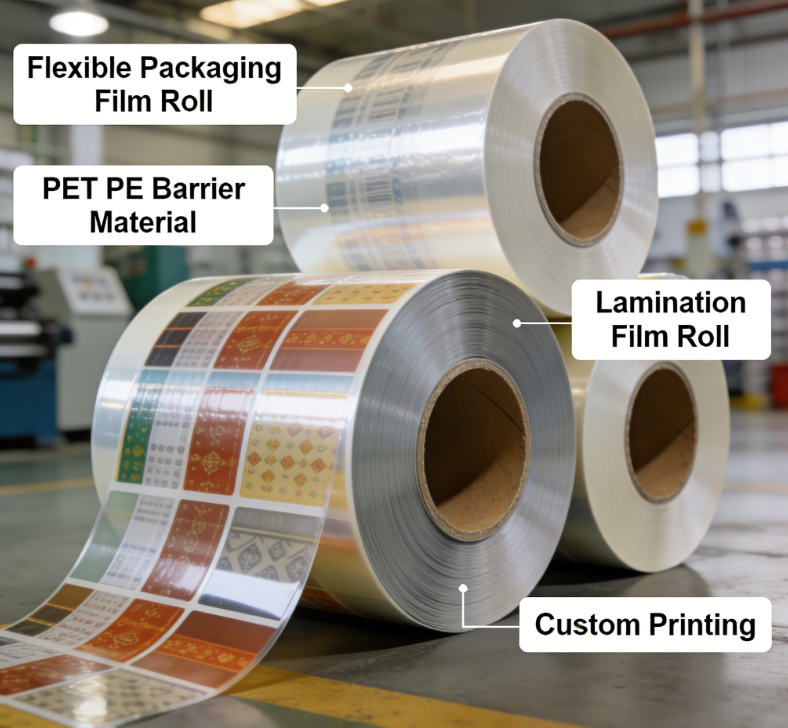 Custom Printed BOPP Lamination Film Rolls for Automatic PackagingThis roll film uses multi-layer co-extrusion with food-contact materials and supports full-color gravure printing. It is suited for vertical and horizontal form-fill-seal machines across pet food, beverages, snacks, and daily chemical packaging.View Product →
Biodegradable stand-up pouches support sustainability-led brand launches.
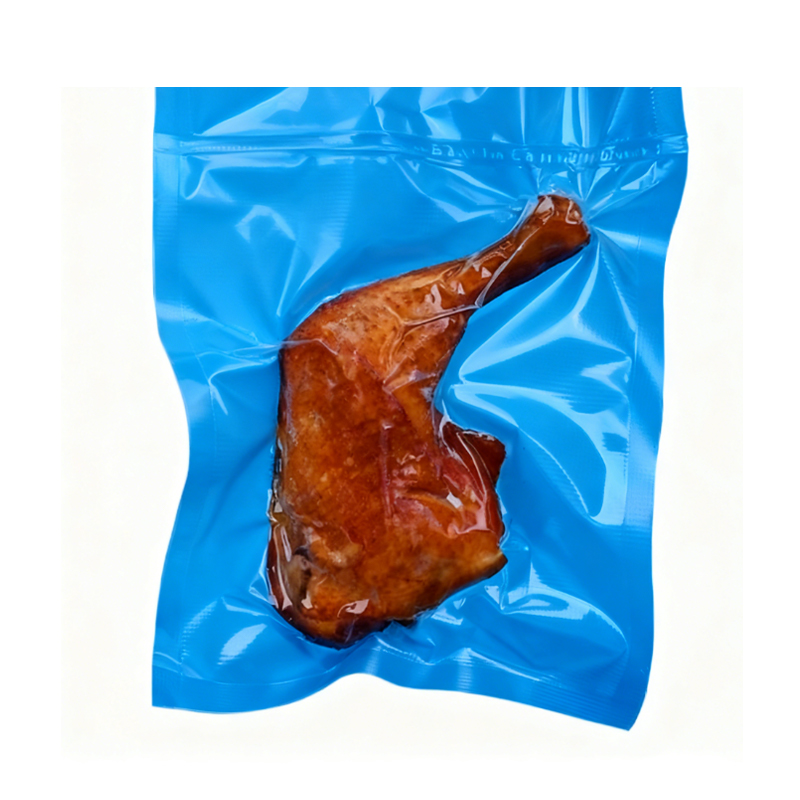
 Biodegradable Stand-Up Pouches for Sustainability-Led Brand LaunchesThese stand-up pouches feature a flat sturdy base for independent standing and come in ordinary or octagonal styles. Options include zipper seals, easy-tear openings, transparent windows, and printing for certifications or QR codes.View Product →
Common Pitfalls in FDA-Compliant Packaging Procurement
- Confusing “food grade” with FDA compliance. “Food grade” is a marketing phrase; compliance is a regulation-specific status that must be documented.
- Assuming one approval covers every food type. Fatty, acidic, aqueous, and dry foods migrate differently, and the CFR often sets different limits for each.
- Ignoring recycled content. Recycled resin in food contact requires its own evaluation through an FCN or FDA guidance; a virgin-resin CFR listing does not automatically extend to recycled feedstocks.
- Overlooking inks, coatings, and adhesives. These are packaging components under 21 CFR Parts 175–176 and can become the weak link in an otherwise compliant structure.
- Failing to update paperwork after raw material changes. If a converter switches resin supplier or ink system, the Declaration of Compliance should be revalidated. An old letter is not evidence of current compliance.
Frequently Asked Questions About FDA-Approved Packaging Materials
Is FDA approval required for food packaging materials?
The FDA does not pre-approve packaging like it approves drugs. The brand owner and the converter share responsibility for ensuring the finished packaging complies with applicable regulations, typically under 21 CFR Parts 174–179 or an effective FCN.
What does 21 CFR mean in food packaging?
21 CFR is Title 21 of the U.S. Code of Federal Regulations, covering food and drugs. Parts 174–179 address indirect food additives, which is where packaging materials, adhesives, and coatings are regulated.
Which plastics are FDA approved for food contact?
HDPE, LDPE, PP, PET, nylon, and EVOH are among the common polymers with CFR listings under Part 177. Whether one is compliant for your use depends on food type, temperature, and contact time.
What is the difference between FDA approved and FDA compliant?
“FDA compliant” is the accurate term: a material formulated and used within the limits of a specific CFR section or FCN. “FDA approved” is common shorthand but has no single certificate behind it.
Is “food grade” the same as FDA approved?
No. “Food grade” is not a legal term with a defined scope under FDA rules. Always request the specific 21 CFR citation that supports the claimed use.
Can recycled packaging materials be FDA compliant?
Yes, but only after additional evaluation. Recycled content in food packaging generally requires an FCN or compliance with FDA recycled-plastics guidance; a standard virgin-resin CFR listing is not sufficient.