

 LANGUAGE

 English
  Español
carbon footprint of packaging: Applications, Selection Criteria, and Practical Guidan
If you want to reduce the carbon footprint of packaging, the quickest lever is usually material weight. A flexible pouch can protect the same product as a rigid jar or can while using far less material, and that weight saving appears in both manufacturing and transport emissions. The catch is that weight alone does not tell the full story. You also need to check how the film is made, whether the structure can be recycled, and whether the packaging actually prevents food waste.
This article explains what packaging carbon footprint means, where the emissions come from, and how a sourcing team can compare materials, formats, and suppliers without getting lost in vague sustainability claims.
Content
- 1 What the carbon footprint of packaging measures
- 2 Where packaging emissions actually come from
- 3 Lightweight design is the first decarbonisation lever
- 4 The hidden carbon lever: preventing food waste
- 5 Material choices: compare the full life cycle, not the label
- 6 What to ask your packaging supplier
- 7 Understanding the structure behind the footprint
- 8 FAQs: carbon footprint of packaging
- 8.0.1 Q1. What is the carbon footprint of packaging?
- 8.0.2 Q2. What is sustainable packaging?
- 8.0.3 Q3. Are biodegradable materials always better?
- 8.0.4 Q4. How can flexible packaging reduce carbon footprint?
- 8.0.5 Q5. Does recyclability affect carbon footprint?
- 8.0.6 Q6. What should I ask a packaging supplier?
What the carbon footprint of packaging measures
In simple terms, the carbon footprint of packaging is the total greenhouse gas emissions released across the packaging life cycle, expressed in carbon dioxide equivalent (CO2e). A complete measurement normally includes four stages:
- Raw material extraction: producing resin, film, aluminum, paper, or other substrates.
- Manufacturing and converting: printing, laminating, slitting, and bag making.
- Distribution and filling: moving empty packaging and filled packages to the point of sale.
- End of life: recycling, composting, incineration, or landfill.
For a meaningful comparison, the footprint should be calculated per function, such as one filled pouch, 1,000 packs, or one kilogram of packaged food delivered. Comparing two materials only by weight can mislead you because a heavier material may still have a lower CO2e number per kilogram.
Where packaging emissions actually come from
Many buyers assume the biggest carbon problem is the packaging staring back from a shelf. In most flexible packaging life-cycle studies, raw material and film production dominate the footprint. Converting, transport, and disposal add a smaller but still relevant share.
This is why substituting one green polymer can fail. If the new film needs more material, a heavier truck load, or a different waste stream, the apparent benefit disappears. The larger opportunity is usually to remove material while keeping shelf life and protection.
Lightweight design is the first decarbonisation lever
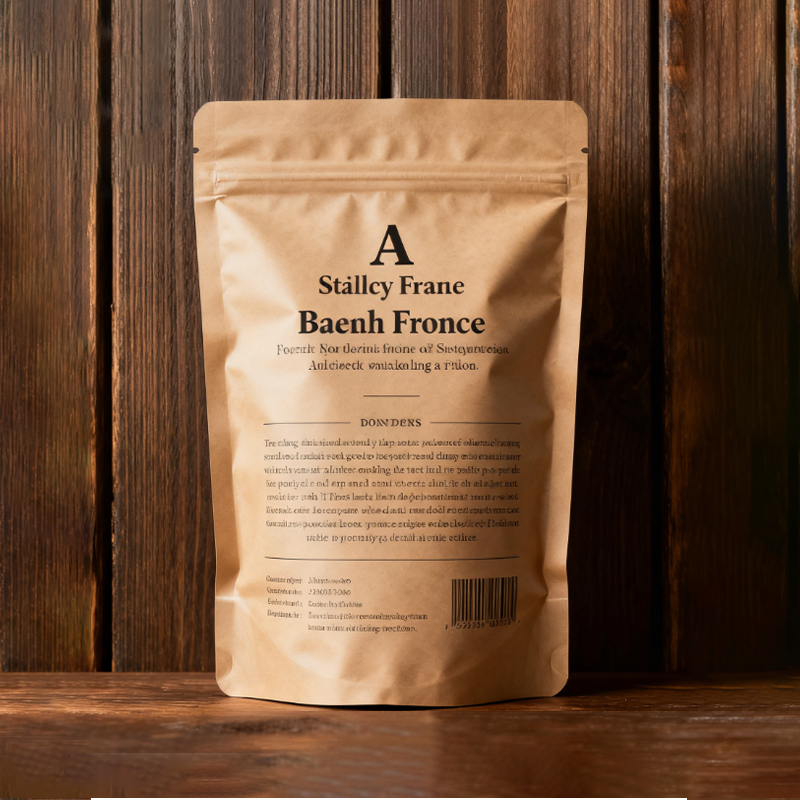
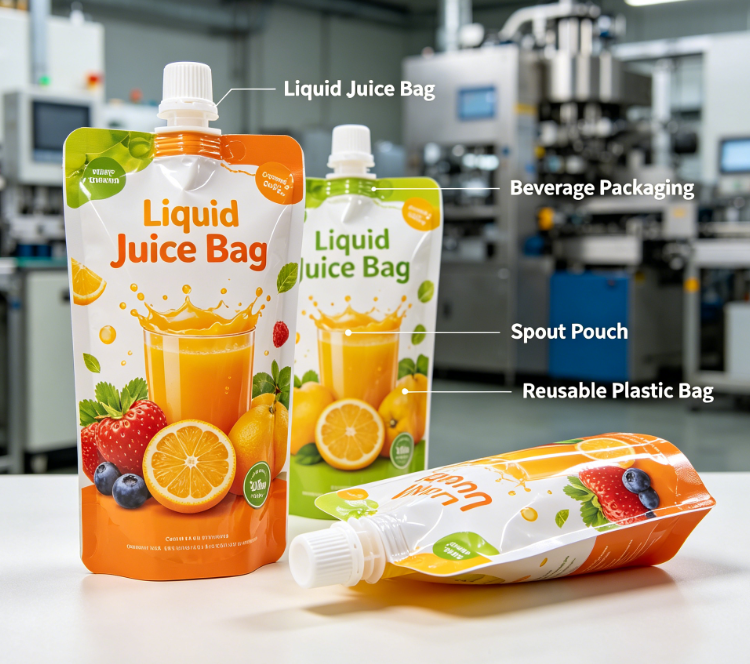
Design decisions set the ceiling for emission reductions. A stand-up pouch can replace a rigid jar in many products, often cutting packaging material by more than half without reducing the portion size. The result is lower resin consumption, smaller cartons, and more products per truck. For dry goods, powders, snacks, and pet food, this is usually the most cost-effective change a brand can make.
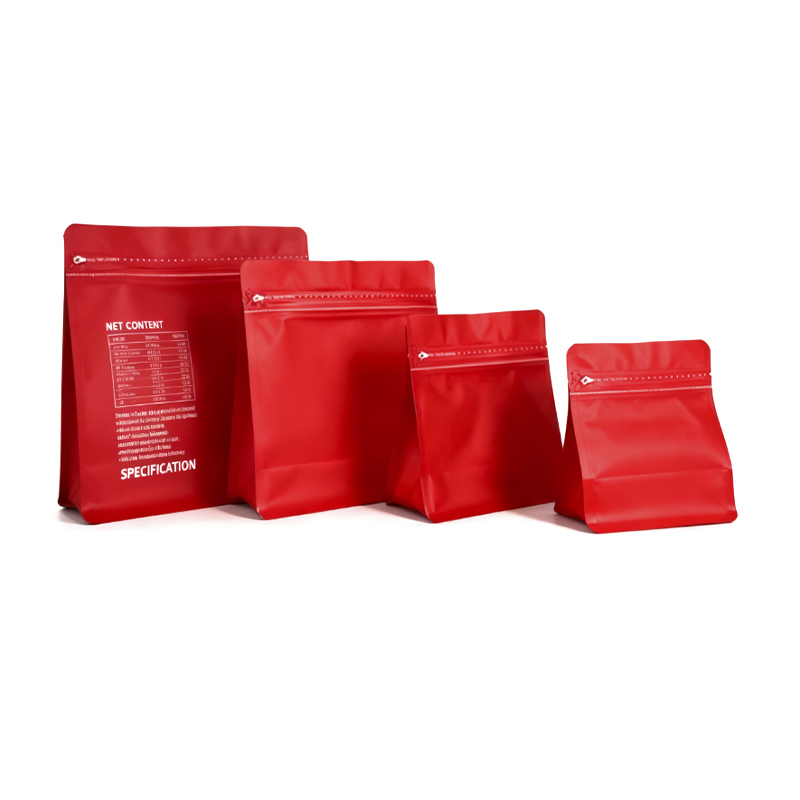
Flat bottom pouches combine the storage efficiency of flexible packaging with a stable shelf presence. They use noticeably less material than a carton of the same capacity and can be designed with a zipper for resealability.
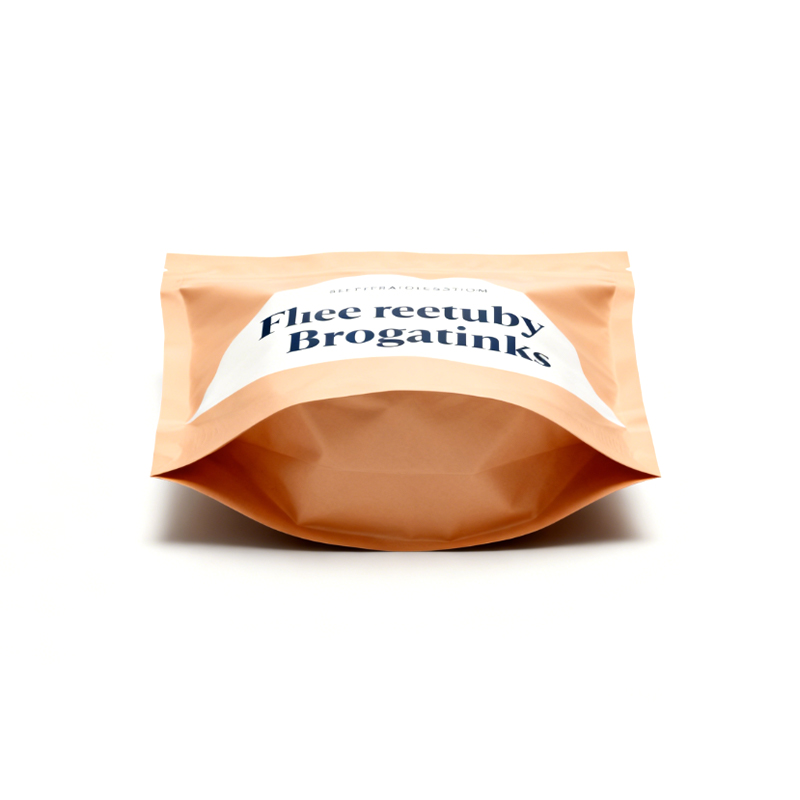 Flat Bottom Pouch Bags with Custom Printing and Zipper OptionsThis flat bottom pouch offers a stable shelf presence while using less material than equivalent cartons. Its customizable printing, resealable zipper, and easy-tear opening make it a practical choice for brands aiming to reduce packaging weight and cost.View Product →
Another practical step is right-sizing. A smaller but correctly sized pouch reduces both material and freight cost while still meeting the required fill volume.
According to the Food and Agriculture Organization, around one third of food produced for humans is lost or wasted. For perishable products, the carbon footprint of the food itself is usually many times larger than the packaging protecting it. A package that extends shelf life from a few days to a few weeks can therefore reduce net emissions compared with a lighter package that lets food spoil.
Vacuum pouches are a clear example. Digital printing on a vacuum pouch lets brands launch small batches with shorter lead times, reducing overproduction while the same pouch keeps meat, fish, cheese, or coffee fresher for longer.
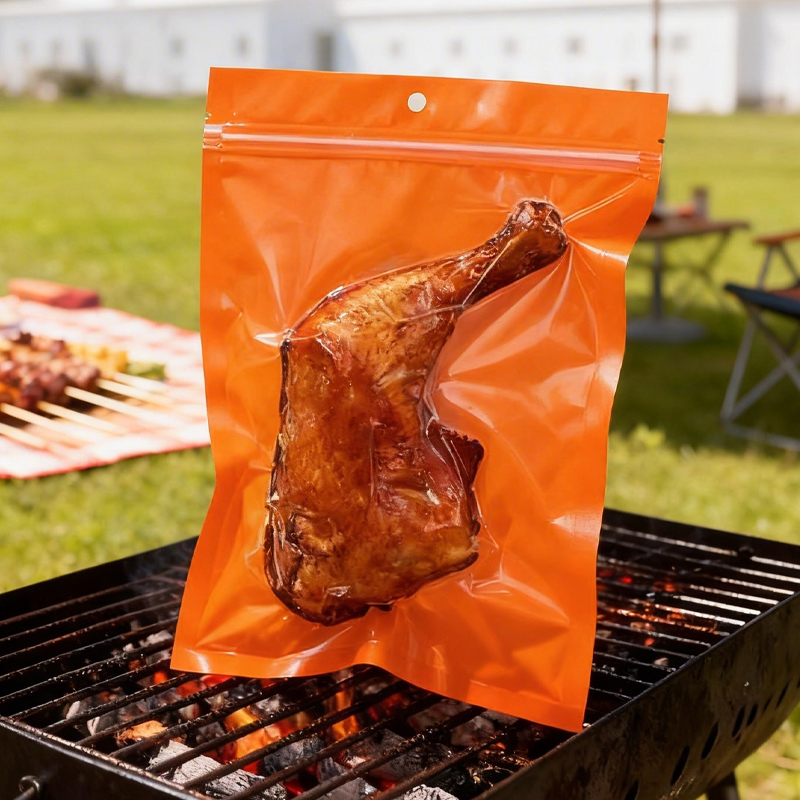 Digitally Printed Vacuum Food Pouches for Freshness and Small BatchesDigitally printed vacuum pouches allow brands to launch small batches with shorter lead times, reducing overproduction while preserving freshness for meat, fish, cheese, or coffee. The film structure affects shelf life, so asking for performance data is important.View Product →
When you evaluate packaging, ask for shelf-life data from the actual film structure. A small loss in recyclability can be justified if the package reliably prevents much larger food emissions.
Material choices: compare the full life cycle, not the label
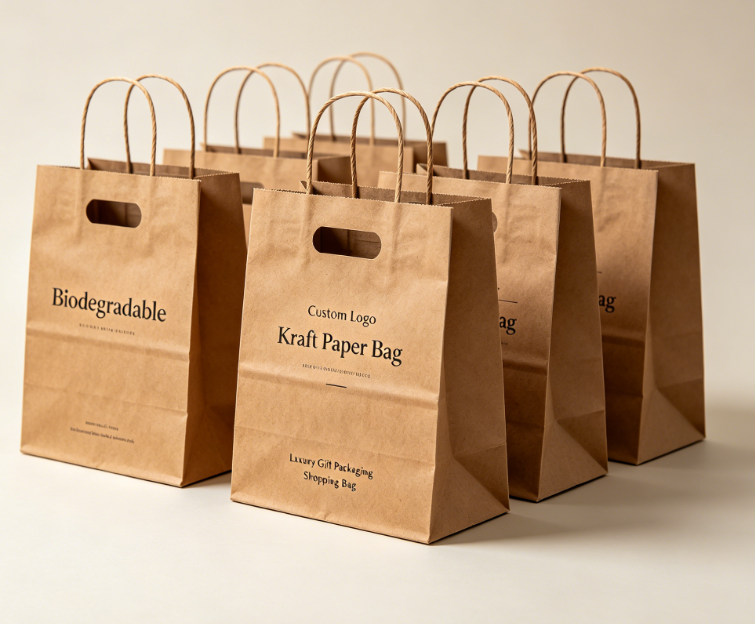
Sustainability claims on packaging can sound reassuring, but the real carbon comparison depends on the whole system. A paper bag can have a low per-kilogram carbon number yet weigh enough to generate more freight emissions per pack. A polyethylene film may be made from fossil feedstock, but its light weight and recyclability can produce a lower per-pack footprint than a heavier bioplastic.
| Material | Typical per-kg carbon intensity | Key property | Recyclability |
|---|---|---|---|
| LDPE film | 1.5-2.6 kg CO2e/kg | Light, flexible, good moisture barrier | Recyclable in PE streams |
| PET film | 2.0-3.4 kg CO2e/kg | Stiff, printable, good oxygen barrier | Recyclable where PET is accepted |
| Kraft paper | 0.8-1.5 kg CO2e/kg | Renewable fiber, low barrier unless coated | Recyclable if clean |
| Aluminium foil | 10-15 kg CO2e/kg | Excellent oxygen, moisture, and light barrier | Hard to separate from multilayer film |
For brands that need a certified compostable option, a biodegradable stand-up pouch can work when the local collection system accepts it. Without that end-of-life pathway, recycling a lightweight mono-material film may create a lower footprint.
 Biodegradable Stand Up Pouch for Certified Compostable PackagingThis biodegradable stand-up pouch is designed for brands that have access to a certified compostable collection system. Without such an end-of-life pathway, a lightweight mono-material film may offer a lower environmental footprint, so consider your local recycling infrastructure.View Product →
Globally, only about 14 percent of plastic packaging is collected for recycling, according to the Ellen MacArthur Foundation's New Plastics Economy research. That is why a design intended for an existing recycling stream is usually more effective than a material that is theoretically compostable.
What to ask your packaging supplier
A lower carbon footprint is not a single spec line; it is the result of material, structure, production, and logistics decisions made together. A reliable supplier should be able to show evidence for each layer of the claim.
- Ask for a product-specific LCA or at least a documented carbon footprint calculation.
- Check environmental management certification such as ISO 14001, along with quality and safety certifications like ISO 9001 and BRC.
- Ask whether the structure is mono-material or designed for an existing recycling stream.
- Confirm how the packaging performs on your filling line; rejected packs add hidden emissions.
- Review transport weight and cube efficiency per 1,000 pieces, not only material cost.
Hangzhou Zhiwei Packaging has produced flexible packaging for more than 30 years and holds ISO 9001, ISO 14001, and BRC certifications. Its factory in Longgang, the city known as China's printing capital, is close to Shanghai and Ningbo ports, which shortens international freight routes and gives customers better control over delivery-related emissions.
Send your current drawings or finished measurements to the supplier's contact page to get a design review that includes material reduction possibilities. You can also check the packaging FAQ page for sampling, lead-time, and certification details before you place an order.
Understanding the structure behind the footprint
Flexible packaging often uses several layers that each perform a job: printability, barrier, adhesion, and sealing. More layers usually mean more material and more complexity at end of life. One of the best ways to reduce carbon is to simplify the structure without losing performance.
Ask your film supplier how many layers are truly needed. If a two-layer structure is enough, adding a third layer can increase the footprint significantly without adding real value.
FAQs: carbon footprint of packaging
Q1. What is the carbon footprint of packaging?
A1. It is the total greenhouse gas emissions from packaging across its life cycle, measured in CO2e, including raw materials, manufacturing, transport, and disposal.
Q2. What is sustainable packaging?
A2. Sustainable packaging protects the product, keeps costs realistic, and uses recycled, recyclable, or renewable materials without increasing the total carbon footprint.
Q3. Are biodegradable materials always better?
A3. No. They reduce carbon only if local facilities actually compost them. Otherwise, a lightweight recyclable mono-material film can have a lower footprint.
Q4. How can flexible packaging reduce carbon footprint?
A4. It lowers material weight, improves truck load efficiency, and helps prevent food waste, which are all major emission sources in the supply chain.
Q5. Does recyclability affect carbon footprint?
A5. Yes. Recycling avoids virgin material production and disposal emissions, but the package must actually enter a working recycling stream to deliver that benefit.
Q6. What should I ask a packaging supplier?
A6. Ask for LCA data, mono-material options, ISO 14001 and BRC certifications, shelf-life test results, and a clear description of the recommended waste stream.