

 LANGUAGE

 English
  Español
Compostable Food Packaging: What Works, What Doesn't & How to Choose a Reliable Supplier
Compostable food packaging sounds like the perfect solution—until you learn that most of it never actually breaks down in a landfill or home compost bin. Industry reports from the Ellen MacArthur Foundation and BioCycle indicate that less than 10% of compostable packaging in the U.S. reaches an industrial composting facility. For food brands, this means choosing the wrong material or supplier can waste money, frustrate customers, and undermine sustainability claims. The key lies in understanding which materials are certified, how they perform under real conditions, and partnering with a manufacturer that has the experience to deliver packaging that works as promised.
Content
What Is Compostable Food Packaging?
Compostable food packaging is designed to break down into carbon dioxide, water, and biomass within a specific timeframe under controlled conditions. To be called “compostable,” the packaging must meet international standards such as EN 13432 (Europe), ASTM D6400 (U.S.), or AS 4736 (Australia). These standards require that at least 90% of the material disintegrates into fragments smaller than 2mm within 12 weeks in an industrial composting facility, and that the resulting compost is non-toxic to plants.
Key Certifications to Look For
| Certification | Region | Standard | Composting Environment |
|---|---|---|---|
| OK Compost INDUSTRIAL | Europe | EN 13432 | Industrial (58°C, high humidity) |
| BPI Compostable | North America | ASTM D6400 | Industrial (58°C, high humidity) |
| Home Compostable (TÜV) | Europe | NF T51-800 / AS 5810 | Ambient (20–30°C) |
| ABA (Australasian Bioplastics) | Australia/New Zealand | AS 4736 (industrial), AS 5810 (home) | Both |
Without one of these logos, “compostable” is just a marketing claim. Always verify that your packaging carries a valid certification from an accredited body.
Comparing Common Compostable Materials
The most widely used compostable materials for food packaging include PLA (polylactic acid), PBAT blends, paper-based laminates, and starch-based compounds. Each has trade-offs in heat tolerance, barrier performance, cost, and end-of-life requirements.
PLA alone offers good clarity and stiffness but low heat tolerance (around 55°C). Blending with PBAT improves flexibility and heat resistance—ideal for hot-fill applications like soups or sauces. Paper-based packaging is renewable and compostable if not heavily laminated, but needs a thin bioplastic coating for grease resistance, which may affect compostability. Starch-based compounds are home-compostable but have weaker moisture barriers.
For dry foods such as granola, coffee, or snacks, paper-based pouches with a compostable inner seal layer can perform well. For liquids or high-moisture products, PLA/PBAT laminates offer better protection. The right choice depends on your product's shelf-life requirements and the disposal infrastructure available to your customers.
Real-World Challenges and How to Work Around Them
Even with certification, compostable packaging faces three main hurdles: industrial composting availability, consumer confusion, and performance trade-offs. According to the Composting Consortium, less than 3% of U.S. households have access to curbside organics collection that accepts compostable packaging. Most end up in landfills, where lack of oxygen prevents breakdown.
Solutions for brands include:
- Choosing home-compostable certified materials when your customer base does not have industrial composting access.
- Using clear on-pack labeling (e.g., “Industrial compostable – check local facilities”) with a QR code linking to a drop-off locator.
- Partnering with a manufacturer that offers customized structures to balance compostability with shelf-life and machine performance.
At Hangzhou Zhiwei Packaging, we manufacture flexible packaging that meets certified compostability standards. Our 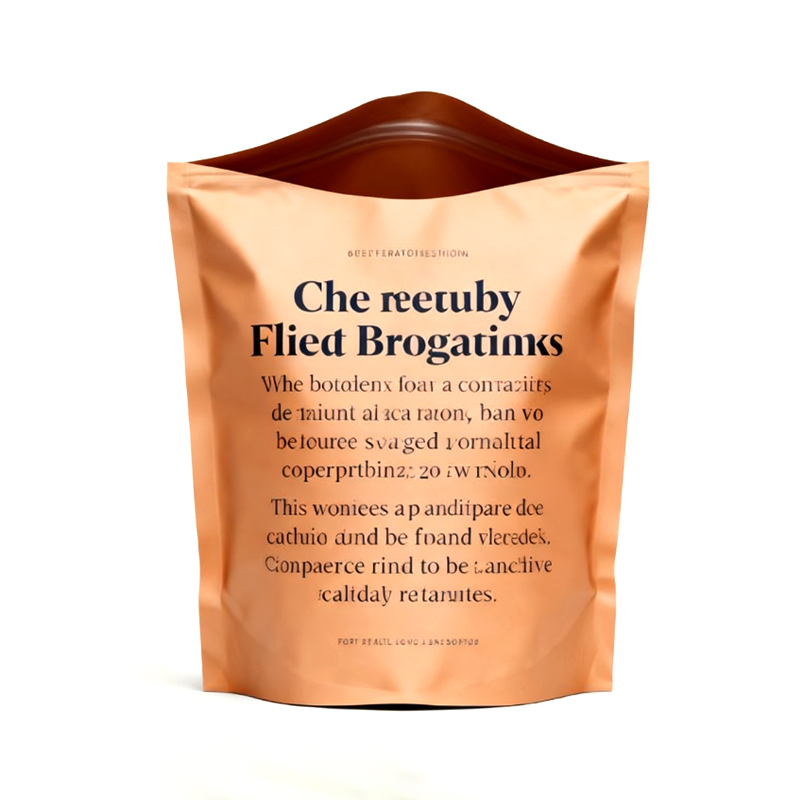 Biodegradable Stand Up Pouch for Dry Foods and SnacksThis self-standing pouch is ASTM D6400 certified for compostability, with customizable shapes and sizes from 5g to 10kg. Ideal for granules, powders, or solids, it enhances shelf visibility while meeting eco-friendly packaging standards.View Product → is designed for dry foods and snacks, featuring a biodegradable structure that passes ASTM D6400 testing. For retail paper bag needs, our
 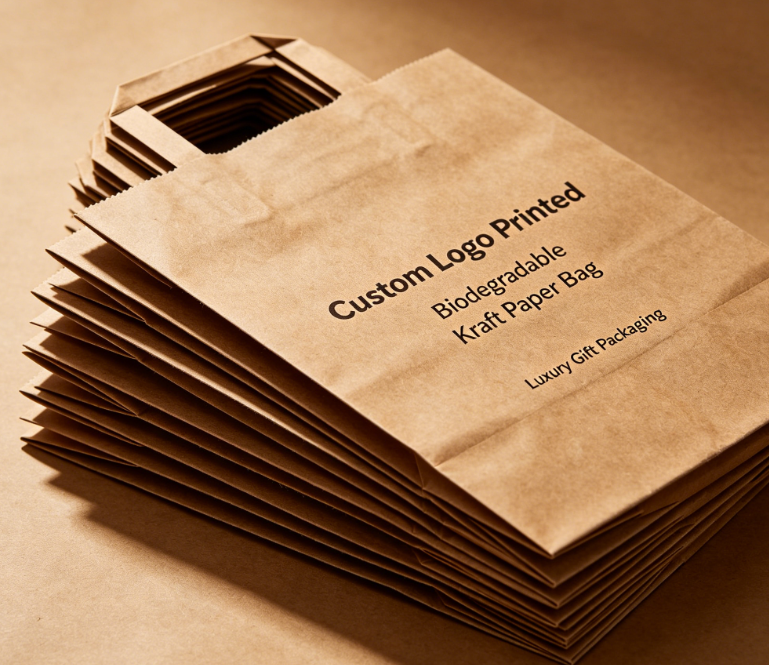 Custom Logo Biodegradable Kraft Paper Gift Shopping BagMade from thickened virgin kraft paper with a die-cut handle, this bag supports full-color printing and is naturally biodegradable. Perfect for retail, gifts, or food delivery, it combines durability with an eco-conscious design.View Product → offers a kraft paper base with compostable coating, ideal for bakery and grocery items.
These products are manufactured in our ISO 9001 and BRC certified facility, where every batch is tested for seal strength, thickness, and material composition—giving you confidence that your packaging will perform on your filling line and in the environment.
How to Choose a Compostable Packaging Supplier
Selecting the right partner is as important as selecting the right material. Here are five criteria to evaluate:
- Certifications: Does your supplier hold BPI, OK Compost, or home compostable certifications for their materials? Request certificates and test reports.
- Customization ability: Can they tailor barrier properties, thickness, print, and dimensions to your product? Look for manufacturers with in-house R&D.
- Quality control: ISO 9001 and BRC for food contact are minimums. Ask about incoming material inspection and in-process quality checks.
- Lead time and logistics: Are they located near major ports? Hangzhou Zhiwei, based in Longgang (near Shanghai and Ningbo ports), can offer efficient global delivery.
- Track record: With 30+ years in flexible packaging, Zhiwei has supplied food brands worldwide. You can read more about practical considerations in our buyer’s guide for biodegradable food packaging.
A supplier that can provide both performance data and end-of-life data will help you make defensible claims.
Frequently Asked Questions
Q1: Can compostable packaging go in the recycling bin?
No. Compostable packaging should not be recycled with conventional plastics. It belongs in industrial composting streams. Check local labeling.
Q2: How long does compostable food packaging take to break down?
In an industrial facility (58°C, high humidity), certified packaging typically degrades within 12 weeks. Home compostable versions may take 6-12 months.
Q3: Is PLA compostable or biodegradable?
PLA is compostable only in industrial facilities. It is not biodegradable in soil or marine environments. Look for “OK Compost” or BPI logos.
Q4: Does compostable packaging contain PFAS?
Some older paper-based compostable containers used PFAS for grease resistance. Today, certified compostable packaging must be PFAS-free (e.g., EN 13432 excludes PFAS).
Q5: Can I microwave compostable food packaging?
Not usually. Most compostable materials have low heat tolerance. PLA softens above 55°C. Check the supplier’s specifications for temperature limits.
Q6: What is the difference between biodegradable and compostable?
Biodegradable is a vague term; compostable is a certified standard that requires complete breakdown within a specific time and no toxic residues.