

 LANGUAGE

 English
 Español

Recyclable Food Packaging: Materials, Design Rules, and Supplier Checks
A snack brand's procurement lead searched for "recyclable food packaging" and got back a quote for a glossy, metallised pouch printed with a leaf icon. Six months later, a UK materials recovery facility screened the entire batch into energy-from-waste. The label was not the problem. The structure was.
That is the uncomfortable reality of recyclable food packaging: it is a materials-science and local-infrastructure question first, and a marketing question a distant second. Get the order wrong and you will buy a package that never enters a recycling stream, no matter how green the artwork looks.
This guide is written for food brands, co-packers and procurement teams that need packaging which performs on shelf and survives an honest sustainability claim. It covers what different structures actually do, the design rules that decide the outcome, and the questions worth asking before you sign.
Content
- 1 What "Recyclable" Actually Means in Practice
- 2 Why Laminated Structures Still Dominate — and Why They Fail
- 3 Materials That Survive Real Recycling Streams
- 4 Design Rules That Decide Whether Your Package Gets Recycled
- 5 Compostable Is Not the Same as Recyclable
- 6 Paper-Based Options: What the Fibre Stream Will Actually Take
- 7 Six Questions to Verify a Supplier's Recyclability Claim
- 8 Frequently Asked Questions About Recyclable Food Packaging
What "Recyclable" Actually Means in Practice
The word covers at least three different claims, and mixing them up is where most buying mistakes start.
- Technically recyclable — the material can be reprocessed under the right conditions, usually demonstrated in a laboratory.
- Practically recyclable — collection, sorting and end markets for it genuinely exist in the country where the product is sold.
- Legally recyclable — the claim meets labelling rules such as the U.S. FTC Green Guides or the EU Packaging and Packaging Waste Regulation.
A package can pass the first test and fail the other two. If a supplier says only "recyclable" without naming which test it passed, ask them to put the answer in writing.
Fibre packaging leads because curbside paper collection has been standard for decades. Soft plastics have no equivalent network. Multi-layer laminate recovery sits close to zero — not because consumers fail to sort, but because no process separates PET, aluminium and PE at a cost anyone will pay.
Why Laminated Structures Still Dominate — and Why They Fail
A PET/AL/PE pouch is genuinely excellent at its job. The PET outer layer resists abrasion and takes high-quality print. The aluminium foil holds oxygen transmission close to zero. The PE inner layer seals at low temperature and stays food-contact safe. That combination has kept shelf-stable food moving for three decades.
The failure point is hidden in the name: the adhesive. Bonding incompatible polymers together means recyclers cannot separate them economically, and no end market wants the mixed output. A facility that tries to run laminate through a film line usually ends up with contaminated pellets it cannot sell.
There is a second problem — geometry. Light, flat films are difficult to sort. Many facilities rely on near-infrared scanners and size screens, and a pouch smaller than roughly 5 by 5 centimetres often falls through the screen before it is ever identified.
None of this means laminate should disappear. For long-shelf-life ambient foods it is often the only structure that holds quality for 12 months or more. It simply should not be marketed as recyclable when it is not.
Materials That Survive Real Recycling Streams
The practical alternative is a mono-material structure — a pouch built from a single polymer family so it can be reprocessed without being taken apart first.
| Structure | Typical recycling stream | Oxygen and moisture barrier | Best-fit products | Main watch-out |
|---|---|---|---|---|
| Mono-PE (MDO-PE / PE) | PE film streams in parts of Europe; still limited in the U.S. | Medium | Dry snacks, frozen foods, sachets | Limited heat resistance; print less vivid than PET |
| Mono-PP | PP rigid and film streams | Medium to high | Retort pouches, savoury snacks | Stiffness and print finish need extra work |
| High-PET PET/PE | PET bottle streams where density separation is available | Medium to high | Ambient dry foods | Adhesive choice and density sorting decide the outcome |
| Paper and fibre-based | Paper and board | Low to medium | Dry powders, tea, coffee beans | Barrier coatings can block repulping |
| PLA or compostable film | Industrial composting only | Varies by grade | Short-shelf-life foods | Contaminates mechanical recycling streams |
No single structure wins everywhere. The right answer depends on your shelf-life target, the sorting infrastructure in your destination market, and the pouch format. Rollstock film matters especially on high-speed automatic lines, because seal windows and web stiffness drive downtime as much as barrier data does.
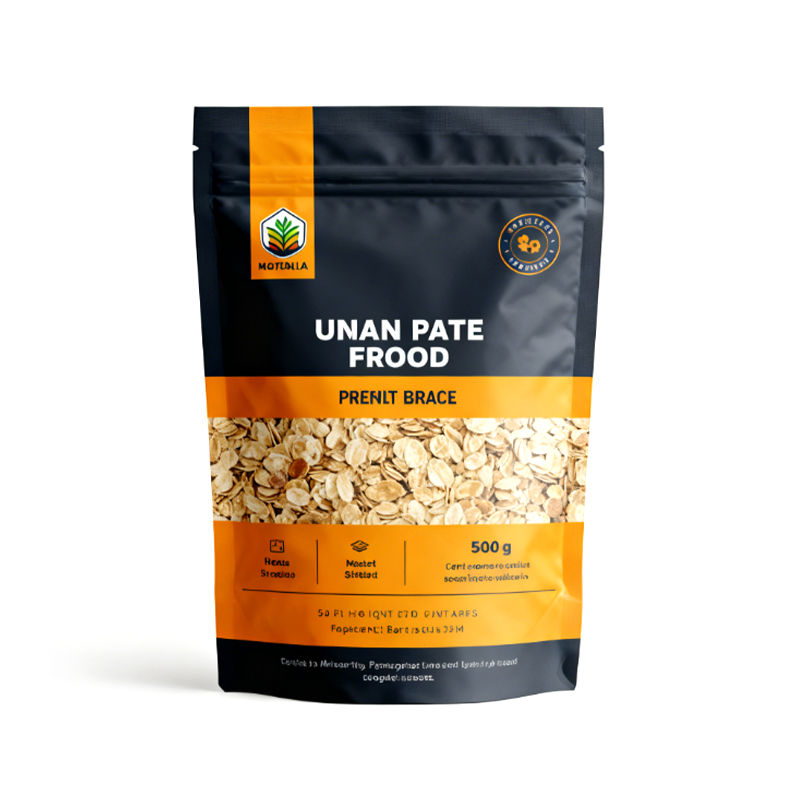
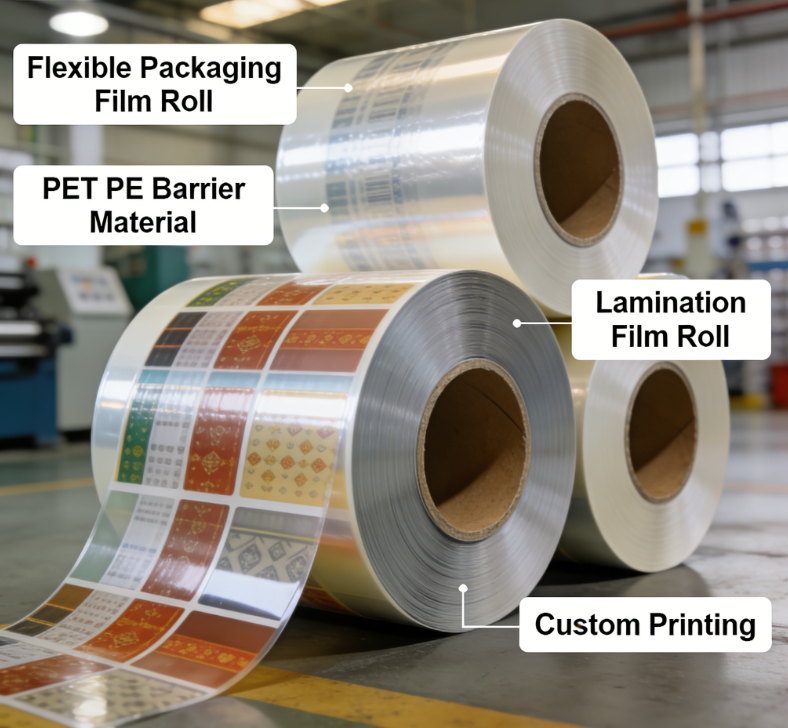
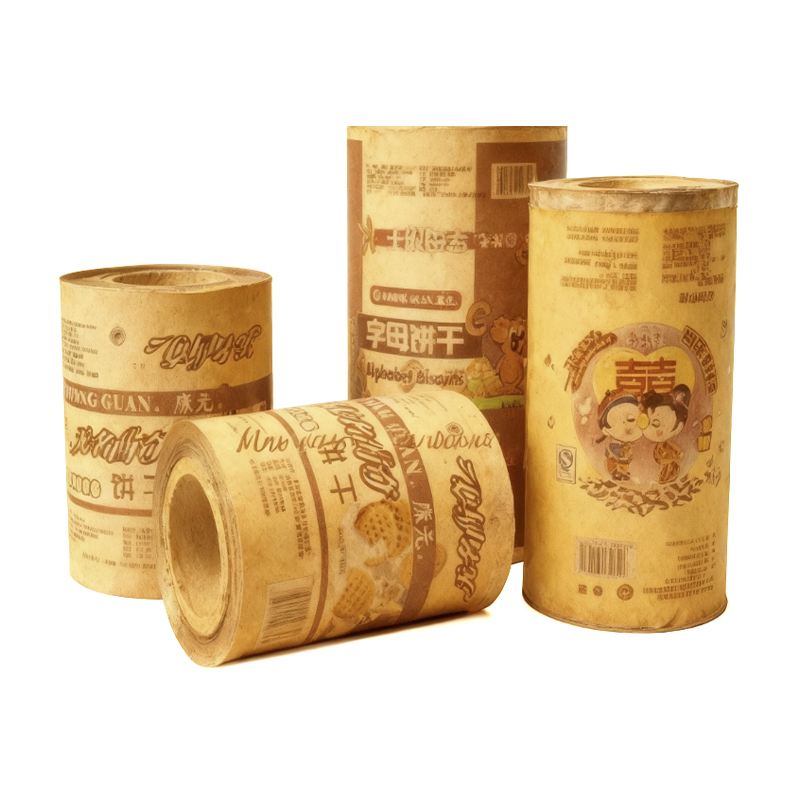 Rollstock Packaging Film for FFS, VFFS, and HFFS LinesFor high-speed automatic lines where seal windows and web stiffness affect downtime, this roll film covers compatibility, barrier protection, print quality, and recyclable mono-material options.View Product →
Design Rules That Decide Whether Your Package Gets Recycled
Recyclability is rarely lost at the printing stage. It is lost earlier, in decisions that were locked in before artwork was ever discussed.
- Choose a single polymer family. If you cannot name one polymer, you do not have a recyclable structure.
- Keep the pack above the sorting threshold. Units under roughly 5 by 5 centimetres are screened out before identification.
- Replace metallisation with a coating where barrier allows. Metallised layers interfere with near-infrared sorting.
- Hold ink coverage under about 5 percent of pack weight and avoid carbon-black pigments, which most scanners cannot read.
- Match label, adhesive and closure material to the body polymer so the whole pack survives as one item.
- Design for emptying. Residual food is the single biggest reason packaging gets rejected at the sorting line.
These rules conflict with each other. Losing the aluminium layer usually costs barrier performance, which shortens shelf life. Compensating with thicker mono-material adds weight and cost. Treat recyclability as a constraint you design within, not a feature you add at the end.
Compostable Is Not the Same as Recyclable
This is the most common confusion in the category. A compostable pack is engineered to break down under industrial composting conditions — controlled heat, moisture and microbial activity over several weeks. That is a completely different pathway from mechanical recycling.
If a compostable pouch reaches a PE or PET recycling stream, it is a contaminant. Sorters have to remove it, and near-infrared detection of compostable films is not reliable enough to catch every one. For short-shelf-life products with a genuine, closed-loop composting collection route, compostable packaging can make sense. Without that route, it solves nothing.
EU PPWR now requires compostable packaging to state a clear disposal pathway, and the U.S. FTC Green Guides expect compostability claims to be backed by facilities that actually receive the material. If you are weighing both routes, a practical buyer's guide to biodegradable food packaging walks through the evidence a supplier should be able to produce.
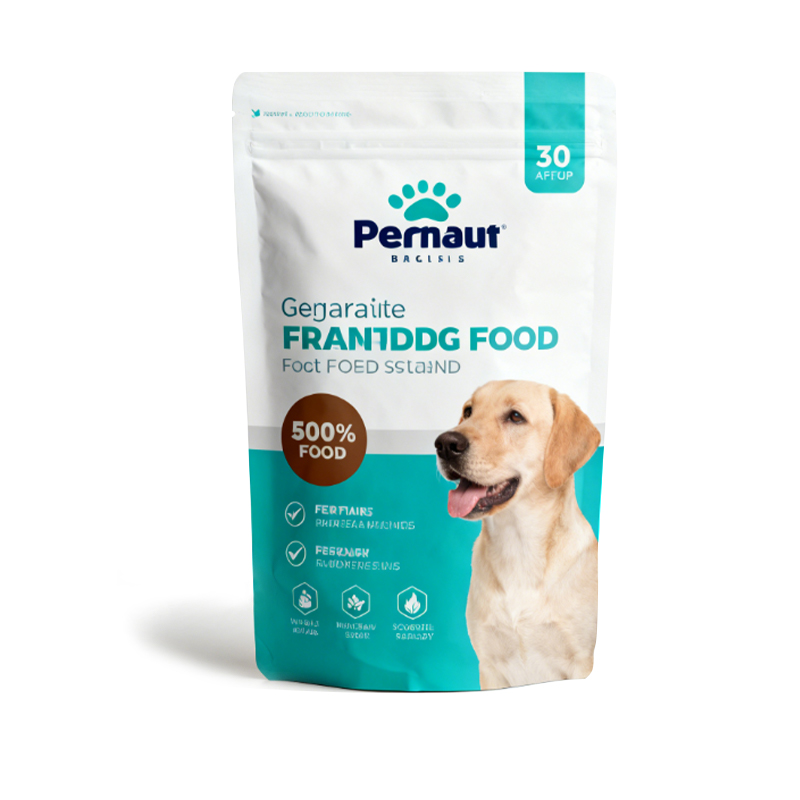
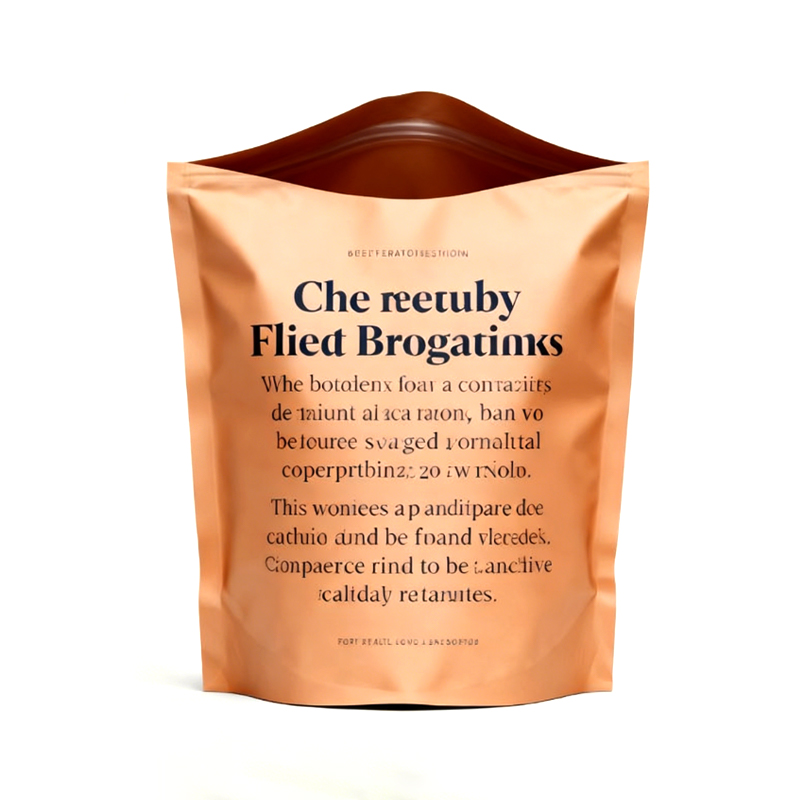 Biodegradable Stand-Up Pouch for Food and Snack PackagingView this biodegradable stand-up pouch where compostable packaging requires a clear disposal pathway; it offers custom sizes, zippers, easy-tear openings, and display windows.View Product →
Paper-Based Options: What the Fibre Stream Will Actually Take
Paper and fibre are the most readily recycled food packaging materials because curbside collection for them is mature. According to U.S. EPA figures, paper and paperboard recycling reached about 68 percent in 2018, several times the rate for plastic packaging.
The trade-off sits in the barrier layer. To make a paper pack sealable and moisture-resistant, converters usually apply a PE extrusion coating or a water-based dispersion coating. Once PE lamination passes roughly 5 percent of pack weight, many mills reject the bale — the plastic layer cannot be separated and fouls the pulping line.
So choose paper on the coating system, not the fibre alone. Water-based dispersion coatings repulp far more cleanly than PE extrusion. Uncoated bleached kraft is the easiest grade for mills to accept. Aluminium-foil-laminated paper, by contrast, has almost no path back into the fibre stream.
 Paper Food Packaging for Recyclable Bags, Boxes, Cups, and BowlsCompare paper packaging options where coating systems affect recyclability, including bakery bags, fast-food boxes, coffee cups, soup containers, and leak-resistant salad bowls.View Product →
Six Questions to Verify a Supplier's Recyclability Claim
Most recyclability claims collapse under a short conversation. These questions separate a verified structure from a marketing line.
- What is the exact layer structure, and what is the grammage of each layer?
- Which inks and adhesives are used, and how much do they add to total pack weight?
- Has the structure been assessed by a third party such as RecyClass or Cyclos-HTP?
- Which certifications does the plant hold — ISO 9001, ISO 14001, BRC?
- Have migration and food-contact tests been run for the destination market?
- Will you provide documentation that supports the labelling claim we intend to print?
If the answer to the first question is vague, the rest of the claim will not hold. A converter with a real quality system can usually show the certifications on file and match them to a specific structure within a day or two.
Frequently Asked Questions About Recyclable Food Packaging
Q1. Can all food packaging bags be recycled?
No. Stand-up pouches, retort pouches and metallised films usually are not accepted in curbside recycling unless they are mono-material and a matching stream exists locally. Paper and rigid PET travel far better.
Q2. Is recyclable food packaging more expensive?
Usually a little more. Mono-material films often need heavier sealants or dispersion coatings to replace lost barrier, and that shows up in unit cost. The gap narrows as mono-material capacity grows.
Q3. What is the difference between mono-material and multi-layer packaging?
Mono-material uses one polymer family throughout, so it can be reprocessed mechanically. Multi-layer bonds PET, foil and PE with adhesive, and those layers cannot be separated in a normal recovery facility.
Q4. Is compostable food packaging recyclable?
No. Compostable films are designed for industrial composting, not mechanical recycling. In a PE or PET stream they act as contamination and can cause a whole bale to be rejected.
Q5. How do I prove my packaging is actually recyclable?
Commission a third-party assessment such as RecyClass or Cyclos-HTP, which test sortability and recyclate quality. Then confirm that sorting facilities in your target market accept that specific structure.
Q6. Do I need certification to print a recyclable claim on food packaging?
In most markets, yes. The U.S. FTC Green Guides require competent and reliable evidence, and the EU PPWR expects substantiation for recyclability claims. Printing one without evidence is misleading advertising.