

 LANGUAGE

 English
 Español

Sustainable Ecommerce Packaging: Material, Barrier and Claim Checklist
Weigh the packaging on a 250 g bag of coffee. A steel tin adds roughly 90 g to the parcel, a glass jar closer to 200 g, and a valve-equipped stand-up pouch about 12 g. Same product, same shelf life, roughly one-seventh of the material on the lightest option.
That comparison is the most useful starting point for sustainable ecommerce packaging, because it shows where the leverage actually sits. Material reduction and single-material design do far more work than swapping in a fashionable film. The practical order is: right-size the pack, simplify the structure to one polymer family, and only then decide which claim you want to print on the front panel.
What follows is how that sequence plays out for real ecommerce ranges — what to specify, where the trade-offs bite, and which documents a buyer should hold before signing off artwork.
Content
- 1 Start with pack volume, not with the film sample
- 2 Pick one material family and design inside it
- 3 Where paper earns its place, and where it does not
- 4 Barrier is a number, not an adjective
- 5 Claims, certificates and the paperwork behind them
- 6 Cost, MOQ and lead time
- 7 Frequently asked questions
- 7.1 Q1. What is the most sustainable packaging material for ecommerce?
- 7.2 Q2. Are compostable mailers better than recyclable poly mailers?
- 7.3 Q3. What does mono-material packaging actually mean?
- 7.4 Q4. Does sustainable ecommerce packaging cost more?
- 7.5 Q5. Can stand-up pouches survive parcel shipping?
- 7.6 Q6. Which certifications should I verify with a packaging supplier?
Start with pack volume, not with the film sample
Most packaging decisions begin with a film swatch. That is the wrong end of the problem. Couriers bill on volumetric weight, so a mailer that is 30 mm deeper than it needs to be costs money on every parcel and drags extra void fill into the box. Shrinking a 250 × 180 × 40 mm mailer to 220 × 160 × 30 mm removes about 41% of internal volume — usually enough to eliminate a bubble-wrap step and often one billable weight band with it.
Format choice then compounds the saving. Industry estimates commonly put flexible pouches at 50–80% lower pack weight than rigid jars, tins or cartons holding the same fill volume. The catch is that a pouch on its own is rarely parcel-ready: it needs an outer mailer, a corner radius that survives sorting machinery, or both. A pack that arrives crushed has a worse footprint than the grams you saved, so damage rate belongs in the same spreadsheet as material weight.
Indicative packaging weight per 250 g coffee pack. Values are typical industry ranges, not measured test data.
- Run 20 filled units through your actual carrier mix before approving a format.
- Keep mailer sizes to three or four; too many SKUs destroys cube utilization.
- Check pouch seal width against drop height, not against the datasheet alone.
Pick one material family and design inside it
Once the pack is the right size, the structure becomes the deciding question. Multi-material laminates such as PET/foil/PE are excellent at keeping oxygen and moisture out, and almost impossible to recycle in kerbside systems because the layers cannot be separated at the mill. Mono-material designs — typically PE-based, with a thin EVOH layer or MDO-PE for stiffness — stay within one polymer family, so they can move through PE film collection where that stream exists.
The trade-off is real. Mono-PE runs at lower heat resistance, needs seal-temperature tuning on existing lines, and sometimes costs more per kilogram than a standard laminate. Those are engineering problems with known answers. The recyclability problem of a foil laminate has no answer at all in most markets.
| Structure | Barrier | Recycling route | Best for | Watch-outs |
|---|---|---|---|---|
| Mono-PE with EVOH | Medium | PE film streams | Snacks, refills, frozen goods | Lower heat resistance; seal tuning |
| PET / foil / PE | Very high | Rarely recycled | Coffee, powders, long shelf life | Foil blocks detection; higher conversion cost |
| Metallized PET / PE | High | Limited | Confectionery, dry snacks | Metallization reduces recyclability |
| Paper with barrier coating | Medium | Paper stream if repulpable | Tea, supplements, dry goods | Grease barrier needs the right coating |
| Compostable blends | Medium-low | Industrial composting only | Food-contaminated, closed-loop events | Needs EN 13432 infrastructure nearby |
Compostable films belong in a separate conversation. They only make sense where industrial composting genuinely exists and where the pack is likely to end up food-contaminated — a takeaway format, for example. "Biodegradable" alone is not a claim you can defend; the reference point is EN 13432 or an equivalent standard, and the disposal route has to be real.
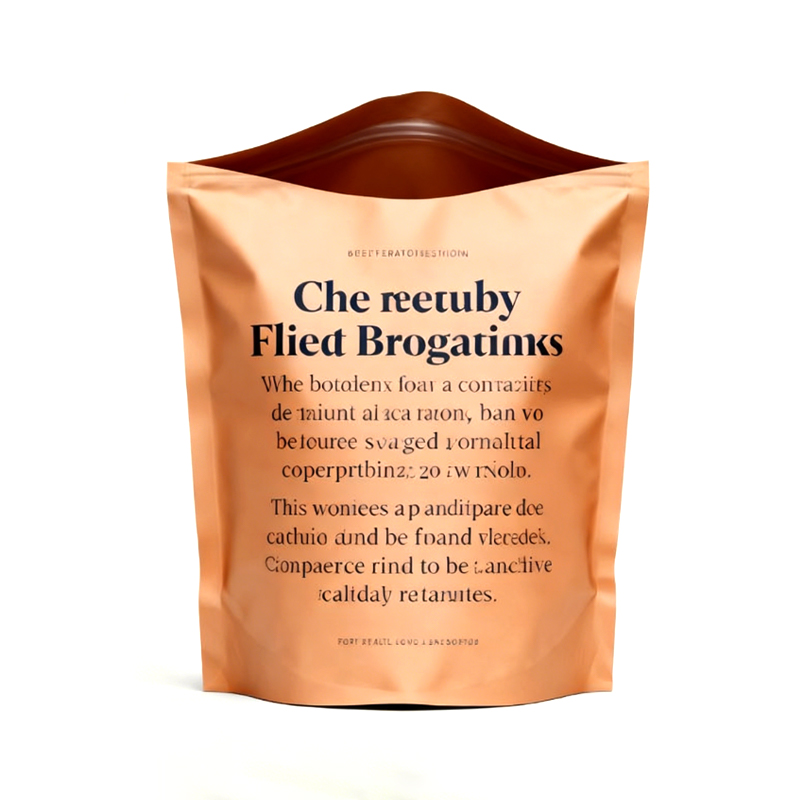 Biodegradable Stand-Up Pouch for Food and Snack PackagingCustomisable stand-up pouch with flat base and zipper options; check industrial composting availability and EN 13432 evidence before choosing it.View Product →
Qualitative scoring from 1 to 5. Barrier, recyclability and cost are indicative only — confirm against converter specifications and local collection streams.
Where paper earns its place, and where it does not
Paper and moulded fiber do their best work in ecommerce secondary packaging: mailers, kraft carry bags, gift boxes and returns packaging. Paper has the deepest collection and recycling infrastructure of any packaging material, which is why it scores well with customers even when the weight penalty per unit is higher than a film.
Approximate packaging recycling rates by material in the EU, circa 2021, based on Eurostat and industry association reporting.
The trap is coating. A paper bag with a heavy PE or foil liner is a paper bag in name only, because repulping mills either reject it or downgrade the output. Dispersion coatings and water-based grease barriers keep the pack inside the paper stream while still handling a buttered pastry or a cosmetic jar. Ask the converter for repulpability evidence rather than a marketing line.
 Food-Contact Paper Packaging for Bakery and TakeawayFood-contact paper bags, boxes, cups and bowls for bakery and takeaway; plan print areas early and request repulpability evidence for barrier coatings.View Product →
For gift-with-purchase and subscription unboxing, printed kraft carriers do a disproportionate amount of brand work for a modest material cost — provided the print area is planned before the dieline is signed off, not after.
Barrier is a number, not an adjective
Barrier performance gets argued in adjectives and specified in numbers. The layer stack below is typical for a mono-material pouch: a print layer carries the artwork, a structural core provides stiffness and puncture resistance, a thin EVOH layer does the oxygen work, and a sealant layer closes the bag.
Layer stack of a mono-material stand-up pouch. Actual structures vary by product, fill weight and shelf-life target.
Write the targets into the purchase order and into the approval protocol, so that a film substitution cannot quietly change the numbers you signed off:
| Parameter | Typical target | Reference method |
|---|---|---|
| Oxygen transmission rate | Below 5 cm³/m²/day at 23 °C, 50% RH | ASTM D3985 |
| Water vapor transmission | Below 5 g/m²/day at 38 °C, 90% RH | ASTM F1249 |
| Seal strength | 30 N/15 mm or higher | ASTM F88 |
| Leak integrity | No failure in dye penetration test | ASTM D3078 |
| Print registration | ±0.3 mm on repeated artwork elements | Visual gauge |
| Parcel durability | No leaks after drop sequence | ISTA 3A / 1A |
Resealability is worth specifying separately. A zipper or slider turns a single-use pack into a reusable one inside the customer's cupboard, which extends the useful life of the material without changing the film at all.
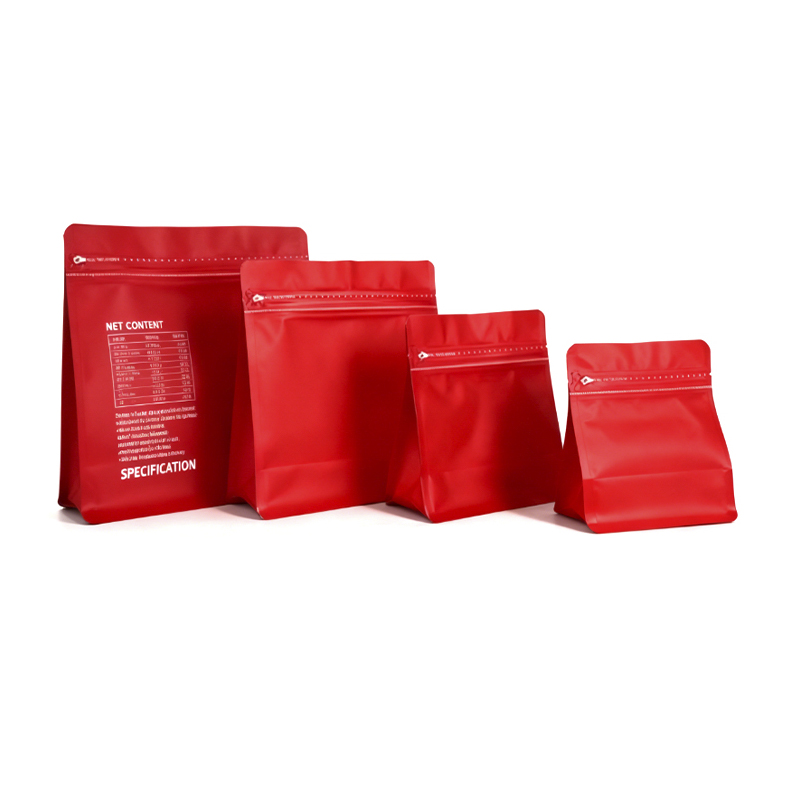
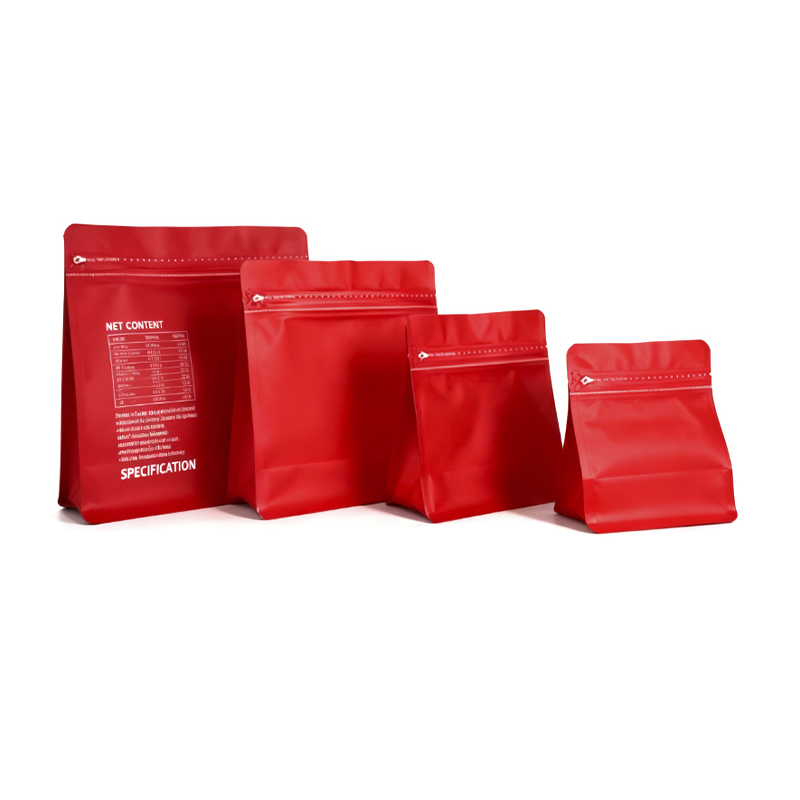 Stand-Up Zipper Pouches for Snacks and StorageCustomisable resealable stand-up pouches with zipper options for snacks and storage; review laminated structure recyclability against upcoming packaging rules.View Product →
Claims, certificates and the paperwork behind them
The regulatory floor is moving. Eurostat data show packaging waste generated per capita in the EU rising from roughly 155 kg in 2012 to around 186 kg a decade later, and extended producer responsibility fees are increasingly modulated by recyclability. The EU Packaging and Packaging Waste Regulation adds design-for-recycling requirements that phase in from 2030, alongside recycled-content targets for plastic packaging, so a structure approved today will be assessed against tomorrow's criteria.
Packaging waste generated per capita in the EU, kilograms — approximate trend derived from Eurostat reporting.
Practically, three documents matter more than any brochure claim:
- Certification scope. ISO 9001, ISO 14001 and BRCGS, with certificate numbers that can be checked against the issuing body rather than taken from a PDF cover page.
- Material declarations. Food-contact compliance to EU 10/2011 or FDA 21 CFR, plus migration test reports for the actual construction supplied.
- Recyclability evidence. A RecyClass or equivalent assessment, and a clear statement of which collection stream the pack is designed for.
Our own sustainability and materials programme is built around exactly those three items, and the certification record is published so that buyers can verify scope before a first order rather than after.
Cost, MOQ and lead time
Mono-PE structures typically price 5–20% above a standard PET/PE laminate of comparable thickness, and compostable films can run two to three times the cost of PE. The offsetting savings arrive through freight: every kilogram removed from a pack multiplies across thousands of parcels, and lighter formats often reduce damage claims at the same time.
Lead time is the part that catches teams out. A new structure needs artwork, a physical proof, print tooling and a production run, so plan four to six weeks for a first order and consider digital print for short runs and market tests. Approving the packaging after the launch date is fixed — rather than before — is the most common reason a film ends up over-specified and over-priced.
Frequently asked questions
Q1. What is the most sustainable packaging material for ecommerce?
There is no single winner. For dry goods, mono-material PE pouches and paper-based mailers usually win on weight and recyclability. The decisive factor is what your local waste stream actually collects.
Q2. Are compostable mailers better than recyclable poly mailers?
Only where industrial composting is available. A compostable film sent to landfill or incineration delivers none of its intended benefit, so check the EN 13432 certification and the disposal route together.
Q3. What does mono-material packaging actually mean?
It means the pack is built from one polymer family — for example PE with a thin EVOH layer — so it can be recycled in a PE stream instead of being separated layer by layer.
Q4. Does sustainable ecommerce packaging cost more?
Film cost often rises 5–20% for mono-PE and considerably more for compostable structures. Lower parcel weights, fewer void-fill steps and reduced damage claims frequently offset the difference.
Q5. Can stand-up pouches survive parcel shipping?
Yes, with the right construction: adequate thickness, a wide seal, rounded corners where the pack contacts the mailer, and ISTA 3A testing or an outer carton for fragile fills.
Q6. Which certifications should I verify with a packaging supplier?
ISO 9001, ISO 14001 and BRCGS for systems, plus EU 10/2011 or FDA 21 CFR declarations and migration reports for food contact, and FSC chain of custody where paper is used.