

 LANGUAGE

 English
 Español

Home Compostable Packaging: Standards, Materials, and a Buyer Checklist
A brand manager once showed me two pouches from the same production run. Both carried a compostable logo. One broke down in a garden heap in about four months; the other was still intact eighteen months later, in the same heap. The difference was not the marketing, it was the specification. One used a compostable sealant film but a conventional laminating adhesive and a metalised barrier layer.
So here is the short version before the detail: home compostable packaging is a certified system, not a single resin. Film, coating, ink, adhesive, zipper, valve and spout all have to meet the same standard, break down at ambient garden temperature (roughly 20-30°C), and pass an ecotoxicity test. Standards such as TÜV OK compost HOME, NF T51-800 and AS 5810 allow about 26 weeks for that to happen. If one component fails, the pack fails.
What follows is what that means in practice when you are sourcing: what the certificates really require, where these formats work, where they do not, and how to specify a pouch your customers can genuinely put in a garden bin.
Content
- 1 Home Compostable vs Industrial Compostable: Temperature Is the Whole Story
- 2 Four Layers That Decide Whether Your Pouch Passes
- 3 Where Home Compostable Packaging Works — and Where It Does Not
- 4 Barrier, Shelf Life and Cost: What You Are Trading
- 5 Specifying a Home Compostable Pouch: A Six-Point Checklist
- 6 Labeling and Claims: Getting the Wording Right
- 7 Frequently Asked Questions
- 7.1 What does home compostable packaging mean?
- 7.2 How long does compostable packaging take to break down at home?
- 7.3 Is home compostable packaging more expensive than plastic?
- 7.4 Can compostable pouches keep food fresh?
- 7.5 What certifications should I look for in compostable packaging?
- 7.6 Can compostable packaging go in the recycling bin?
Home Compostable vs Industrial Compostable: Temperature Is the Whole Story
Most packaging labelled "compostable" is certified for industrial composting, not home composting. That is not a technicality. It is the difference between a material that needs a commercial facility and one that works in a back garden.
EN 13432, the European reference standard for compostable packaging, tests disintegration at around 58°C over 12 weeks, mirroring a commercial windrow or in-vessel process. A garden heap rarely holds 30°C for long and often sits nearer 20°C. Home composting standards such as TÜV Austria's OK compost HOME (built on NF T51-800) and Australia's AS 5810 test at ambient temperature and allow a longer window, usually up to 26 weeks, plus earthworm and plant ecotoxicity checks.
The practical consequence: if a pouch is certified only to EN 13432 or ASTM D6400, telling customers to bury it in the garden is a claim that will usually fail in the real world.
Time allowed for disintegration, by standard (weeks)
Industrial standards (grey) allow 12 weeks at high temperature; home standards (green) allow roughly twice as long at ambient temperature.
| Standard | Intended environment | Test temperature | Disintegration window | Typical mark |
|---|---|---|---|---|
| EN 13432 | Industrial composting | Around 58°C | 12 weeks | Seedling, OK compost INDUSTRIAL |
| ASTM D6400 | Industrial composting | Around 58°C | 12 weeks | BPI Compostable |
| NF T51-800 | Home composting | 20-30°C | 26 weeks | OK compost HOME |
| AS 5810 | Home composting | Ambient | 26 weeks | Home compostable (ABA) |
Four Layers That Decide Whether Your Pouch Passes
The film is the easy part. In most failed compostability projects, the problem sits deeper in the layer stack or in the closures.
An isometric view of a three-layer compostable laminate: every layer, plus the ink and the closure, must sit inside the same certification scope.
- Substrate: paper, cellulose film or a certified compostable film. PLA is a common trap — it is generally certified for industrial composting and does not break down reliably at ambient garden temperatures.
- Barrier: aluminium foil, most metalised structures and typical EVOH or PVDC layers are not compatible with a home compostable claim. Where you need an oxygen barrier, you usually have to accept a thin compostable coating and a shorter shelf life.
- Inks: compostable, heavy-metal-free inks are required; some conventional pigments fail ecotoxicity testing even when the film passes.
- Adhesives and closures: laminating adhesive, zipper track, degassing valve and spout are the most frequent failure points. A compostable pouch with a standard zipper is not home compostable.
A supplier who can quote the adhesive and the closure on the certificate, not just the film, is worth more than one quoting the lowest unit price.
 Stand Up Pouch: Biodegradable Stand Up PouchThe mainstream styles are ordinary stand-up pouches (with accordion pleats at the bottom) and octagonal stand-up pouches (with an eight-sided three-dimensional design)...View Product →
Where Home Compostable Packaging Works — and Where It Does Not
These formats perform best when the product is dry, the shelf life is moderate, and the pack is small enough that a customer will actually handle it at home.
Good fits
- Coffee and tea in small packs, dry snacks, confectionery and dried fruit.
- Pet treats and dry pet food where the pack size is modest.
- Solid cosmetics such as soap bars and bath bombs.
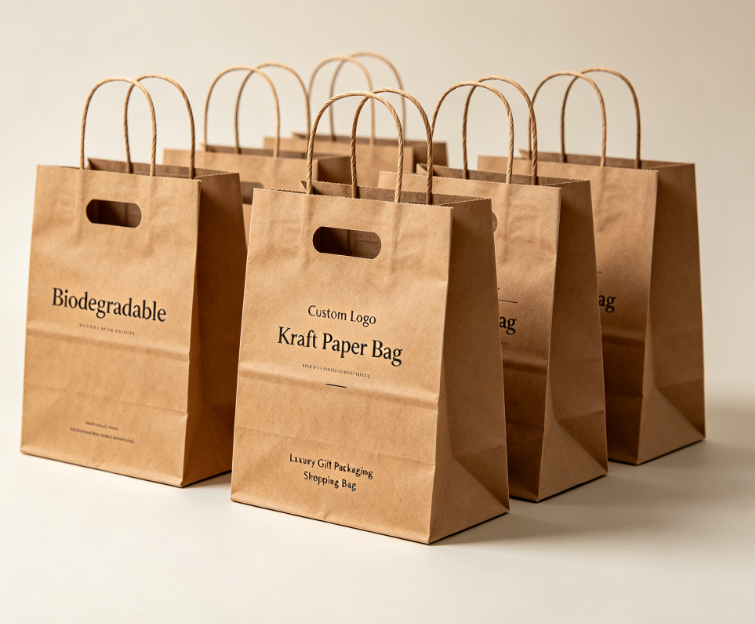
- Retail paper bags, mailers and counter bags made from kraft paper.
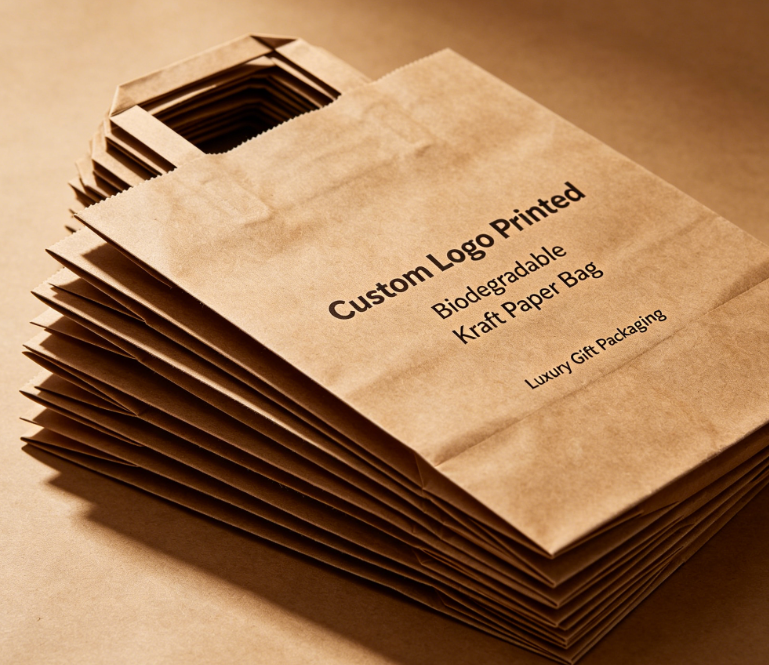 Custom Logo Biodegradable Die Cut Handle Kraft Paper Gift Shopping Bag1. Product Basic Description This kraft paper tote bag is made of thickened virgin kraft paper and features a die cut handle with punched holes, eliminating the need f...View Product →
Poor fits
- Wet, oily or high-fat products, and anything requiring retort or hot filling.
- Long-life oxygen-sensitive food, where an aluminium-foil laminate is still the only realistic option.
- Liquid formats where a high-barrier, rigid or semi-rigid pack is required.
One more constraint worth saying out loud: compostable film does not belong in the paper or plastic recycling stream, because it contaminates both. If your customers do not have a garden heap or a composting collection, the material will end up in general waste.
Barrier, Shelf Life and Cost: What You Are Trading
Moving from a PET/PE or foil laminate to a home compostable structure is a trade, not a free upgrade. Barrier performance drops, shelf life usually shortens, and the material cost per kilogram rises — the gap widens further once you add a high-barrier compostable coating.
Directional profile: home compostable vs conventional laminate
Directional comparison based on typical supplier datasheets; exact values vary by structure, thickness and print coverage.
Where brands get hurt is timing. A foil laminate may support a 12-18 month target on dry goods; a compostable structure often needs to be re-tested and re-planned around a shorter window. That is a conversation for your R&D and logistics teams before your marketing team writes the label.
Specifying a Home Compostable Pouch: A Six-Point Checklist
- Ask for the certificate, not the claim. You need the certificate number, the issuing body, the standard and the exact structure the certificate covers.
- Match the certificate to your real structure. Thickness, closure, valve and ink all sit inside or outside that scope.
- Test disintegration yourself. A small pilot run in a real garden heap for six months is cheap insurance before a full launch.
- Check ecotoxicity and heavy-metal limits. Compostability without plant-safe residue is only half a solution.
- Confirm the disposal route your customers actually have. Home heap, kerbside collection, or nothing at all — the answer changes the packaging brief.
- Print the claim honestly and keep the paperwork. Retailers and distributors increasingly ask for certificates before listing a product.
If you are weighing materials and need a starting point, our overview of eco-friendly food packaging materials and supplier selection walks through the performance trade-offs in more detail. When your structure is ready, send us your film spec, closure and target shelf life and we will come back with a workable laminate and a realistic timeline.
Labeling and Claims: Getting the Wording Right
Regulators have tightened the rules on environmental claims. The EU's green claims proposals require substantiation for words like "compostable" and "biodegradable", and several member states already have national rules for shopping bags and food packaging. In practice, that means naming the standard, showing the certification mark and number, stating the conditions required, and never using "biodegradable" on its own, because it says nothing about how long or in what environment. Keep certificates on file and make sure the artwork matches the certified structure exactly.
Frequently Asked Questions
What does home compostable packaging mean?
It is packaging certified to break down in a garden compost heap at ambient temperature, typically within 26 weeks, under a standard such as OK compost HOME, NF T51-800 or AS 5810. It must also pass ecotoxicity tests so the residue does not harm soil or plants.
How long does compostable packaging take to break down at home?
Certification allows up to about 26 weeks at 20-30°C, and real heaps run slower in winter. Thin film and paper usually disappear faster than thick laminates, and a pouch with a zipper or valve takes longer than the film alone.
Is home compostable packaging more expensive than plastic?
Yes. Compostable substrates, inks and adhesives generally cost more per kilogram than PET/PE laminates, and the premium grows where a high barrier is needed. Order volume, print method and closure choice move the price more than the film itself.
Can compostable pouches keep food fresh?
For dry goods such as coffee, tea, snacks and pet treats, yes — but expect a shorter shelf life than an aluminium-foil laminate. Wet, oily and oxygen-sensitive products are much harder, so shelf-life testing on your own product is essential before you commit.
What certifications should I look for in compostable packaging?
Look for the certificate rather than the logo: OK compost HOME, AS 5810 or an equivalent home composting certification, with a certificate number that covers your exact structure, including closures and printing inks.
Can compostable packaging go in the recycling bin?
No. Compostable films and paper laminates are not recyclable in normal paper or plastic streams and can contaminate them. They belong in a home compost heap or, where available, an industrial composting collection.