

 LANGUAGE

 English
  Español
Eco-Friendly Food Packaging: Materials, Performance & Supplier Selection Guide
Four months on the shelf, constant handling, and a customer who expects the package to look as fresh as the day it was sealed. That was the test one food brand owner described when we first discussed replacing conventional plastic film with an eco-friendly flexible pouch.
Here is the conclusion that matters: eco-friendly food packaging no longer means settling for weaker barriers or shorter shelf life. Modern bio-based and recyclable film structures, produced with the right lamination and printing technology, can protect flavour, moisture and aroma as effectively as traditional packaging - while cutting material weight and end-of-life burden at the same time.
Content
- 1 What does "eco-friendly food packaging" actually mean?
- 2 Sustainable food packaging materials compared
- 3 Barrier performance: can eco-friendly packaging protect food as well as conventional plastic?
- 4 How to choose a supplier for eco-friendly food packaging
- 5 Frequently asked questions about eco-friendly food packaging
- 5.1 What is eco-friendly food packaging?
- 5.2 Is biodegradable food packaging always compostable?
- 5.3 What is the most environmentally friendly food packaging?
- 5.4 Can eco-friendly food packaging be microwaved?
- 5.5 Does sustainable food packaging cost more?
- 5.6 How can I verify a supplier's eco-friendly claims?
What does "eco-friendly food packaging" actually mean?
A package does not earn that label simply because it contains plant material. In our daily work with food brands, we evaluate an eco-friendly claim against four criteria:
- Material source: renewable inputs such as kraft paper, bagasse, PLA or bio-based polyethylene, or at least a meaningful share of recycled content.
- Production footprint: solvent-free lamination, water-based inks, and a factory that operates under ISO 14001 environmental management rather than only paying lip service to being green.
- Weight and logistics: a lighter structure means less fuel per truck, per pallet and per delivery. Flexible pouches typically use a fraction of the material of rigid containers.
- End of life: the package must be recyclable in existing waste streams, or certified compostable under a recognised standard such as EN 13432 or BPI, with clear labelling so consumers know what to do with it.
This is why certifications matter. A biodegradable label tells you very little without defining how, where and how quickly the material breaks down. Compostability certification removes the guesswork and makes your claim defensible to retailers and regulators.
Sustainable food packaging materials compared
For food applications, practical choices fall into two camps: fibre-based formats for limited barrier needs, and coated or laminated flexible films for long-shelf-life products. The table below summarises the materials we most often recommend, and where each one fits.
| Material | Typical food applications | End of life | Main limitation |
|---|---|---|---|
| Kraft paper | Bakery bags, takeaway boxes, dry goods, retail carrier bags | Recyclable or home compostable | Low barrier to moisture and oxygen |
| Bagasse (sugarcane fibre) | Meal trays, takeaway clamshells, produce punnets | Commercially compostable | Grease and oil resistance needs a coating |
| PLA | Cold cups, produce film, deli containers | Industrially compostable | Heat sensitive above roughly 50 degrees C |
| Recycled PET (rPET) | Beverage and sauce pouches, sheet containers | Recyclable | Requires food-grade approval and barrier lamination |
| Biodegradable flexible film | Snack pouches, coffee bags, pet food bags | Industrially compostable in certified structures | Must specify the certified waste stream to the consumer |
Why does the material decision matter so much? Because packaging is the single largest category of municipal solid waste in many developed markets. In the United States, containers and packaging account for about 28 percent of all municipal solid waste generation, according to U.S. EPA data. Even small reductions in packaging weight - or a switch from non-recyclable multi-material structures to certified compostable ones - translate into measurable waste avoidance at city scale.
For takeaway chains and retail brands where the carrier bag is part of the customer experience, custom-printed kraft paper bags remain one of the most straightforward eco-friendly choices. They use renewable fibre, print well, and can carry labels that explain the recyclability story directly to the end consumer.
Barrier performance: can eco-friendly packaging protect food as well as conventional plastic?
The short answer, based on years of production testing: yes, if the structure is engineered properly. Shelf life is governed mainly by oxygen transmission rate (OTR) and water vapour transmission rate (WVTR). A standard kraft bag lets oxygen through very quickly. A laminated bio-based film with an EVOH or bio-polyethylene barrier layer performs far closer to conventional aluminium- or nylon-based laminates.
In practice, this structure means a certified compostable stand-up pouch can hold roasted coffee for more than twelve months when fitted with a one-way degassing valve, or keep dried fruit and snack mixes fresh for six to nine months without the heavy foil layers used in conventional packaging. Our production tests with certified biodegradable stand-up pouches show that shelf life is a function of material specification, seal quality and storage conditions - not whether the package happens to be eco-friendly.
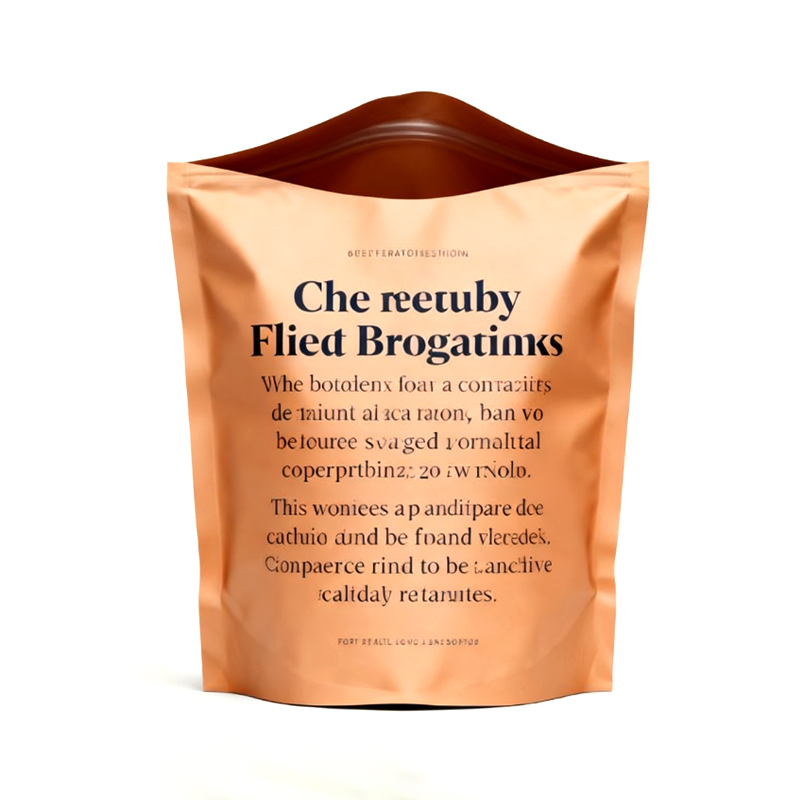 Stand Up Pouch: Biodegradable Stand Up Pouch Supplier & ODM Factory - Hangzhou ZHangzhou Zhiwei Packaging Technology Co., Ltd is a China Stand Up Pouch: Biodegradable Stand Up Pouch Supplier & Factory, we provide OEM ...View Product →
How to choose a supplier for eco-friendly food packaging
The material is only half of the equation. The other half is the supplier's ability to guarantee consistent quality across long production runs, because a single weak seal can destroy an entire batch of food. That is why we advise buyers to treat the factory audit with the same seriousness as the material specification.
- Ask for certificates: ISO 9001 for quality management, ISO 14001 for environmental management, BRC for food-safety packaging, plus third-party compostability certificates (EN 13432, BPI or OK Compost) for each material structure.
- Request a written specification with OTR and WVTR values for the finished film, not just a general claim about being eco-friendly.
- Check the printing and lamination process: water-based inks and solvent-free adhesives make a meaningful difference to both food safety and the supplier's environmental footprint.
- Ask for shelf-life test samples. A responsible manufacturer should be willing to produce pilot pouches and share seal-strength, leak and barrier test data before you commit to volume.
- Confirm lot traceability from film extrusion to the finished pouch, so any future quality issue can be traced back to the exact material batch.
If you are evaluating pouches against boxes or jars for the first time, our overview of what flexible food packaging is explains how the structures differ in weight, protection and per-unit cost.
Buying decisions are also being pushed by market momentum. Industry forecasts consistently project above-average growth for sustainable packaging through the second half of the 2020s. The chart below shows a typical published projection for the global market.
For a food brand that wants to move beyond single-material thinking, the most practical step is to work with one manufacturer that can supply kraft bags, certified compostable pouches and high-barrier food packaging pouch bags under the same quality system. This is the approach we take at Zhiwei Packaging: one quality system, one technical team, and a product range that covers film, pouches and paper formats.
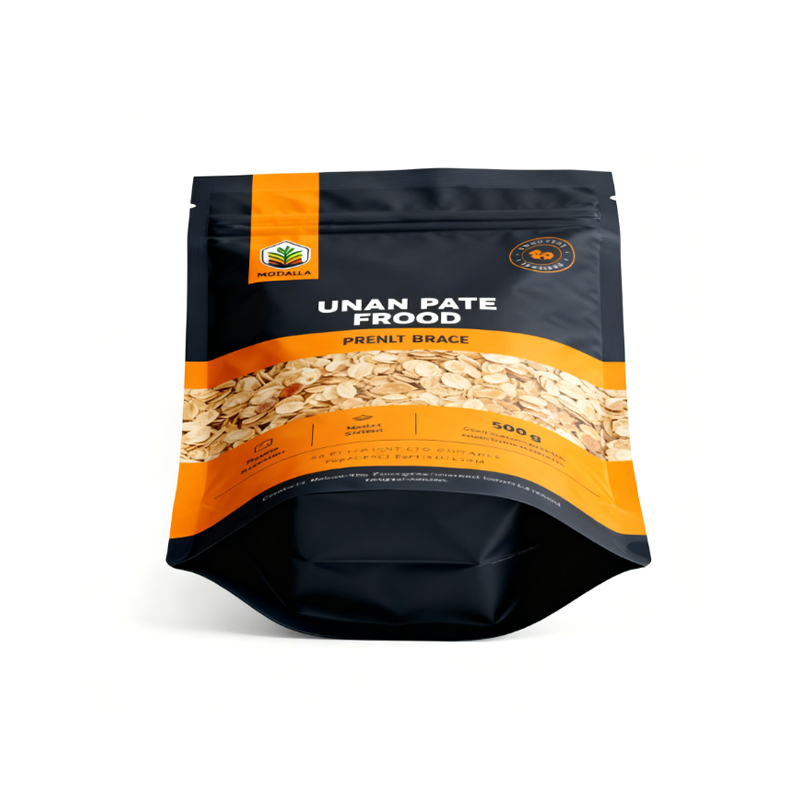 Food Packaging Pouch Bags Supplier & ODM Factory - Hangzhou Zhiwei Packaging TecHangzhou Zhiwei Packaging Technology Co., Ltd is a China Food Packaging Pouch Bags Supplier & Factory, we provide OEM & ODM design, print...View Product →
Located in Longgang, China's printing hub, and close to Shanghai and Ningbo ports, our factory combines certified production with efficient global delivery. Talk to our packaging engineers about your shelf-life target, your filling line and the waste-collection reality in your end market. With more than three decades of flexible packaging experience, we will recommend a structure that is defensible, affordable and built to run. Contact the Zhiwei Packaging team to start the conversation.
Frequently asked questions about eco-friendly food packaging
What is eco-friendly food packaging?
Food packaging made from renewable, recycled, recyclable or compostable materials, with a measurably lower environmental footprint across its life cycle. Credible claims are backed by third-party certifications.
Is biodegradable food packaging always compostable?
No. Biodegradable only means the material will eventually break down. Compostable is a certified standard such as EN 13432 with defined time limits and environmental conditions. Always check the certification.
What is the most environmentally friendly food packaging?
There is no single answer. For lightweight, long-shelf-life products, a certified compostable flexible pouch or a recyclable mono-material pouch often has a lower footprint than rigid containers. For fresh takeaway, bagasse or kraft containers can be a better fit.
Can eco-friendly food packaging be microwaved?
Some bagasse and coated kraft containers are microwave-safe, but PLA and many coated flexible films are not. Always confirm the temperature rating and the supplier's test data before using any package in a microwave.
Does sustainable food packaging cost more?
Unit cost typically runs 10 to 30 percent higher than conventional flexible packaging, depending on structure and volume. Lighter weight lowers freight cost, and consumer demand often improves sell-through enough to offset the premium.
How can I verify a supplier's eco-friendly claims?
Ask for third-party certificates (EN 13432, BPI, OK Compost), written OTR/WVTR specifications, material test reports and ISO 14001 plant certification. A reputable manufacturer will share these during sampling.