

 LANGUAGE

 English
  Español
Why use zipper pouches for food packaging?
Content
- 1 Why Zipper Pouches Are the Practical Choice for Food Packaging
- 2 How Zipper Pouches Preserve Freshness Longer Than Standard Bags
- 3 Material Options and Food Grade Compliance
- 4 Zipper Performance and Everyday Durability
- 5 Popular Zipper Pouch Styles for Food Brands
- 6 Stand-Up Pouches vs Flat Zipper Bags vs Kraft Paper Pouches
- 7 Applications Across Food Categories
- 8 Recyclability and Environmental Considerations
- 9 How to Choose a Reliable Food Zipper Pouch Manufacturer
- 10 About Hangzhou Zhiwei Packaging Technology
- 11 Frequently Asked Questions
- 11.1 Q1. What food zipper pouches are made of
- 11.2 Q2. Whether zipper pouches are food safe
- 11.3 Q3. Whether food zipper pouches can be recycled
- 11.4 Q4. Which material works best for food packaging
- 11.5 Q5. How zipper pouches keep food fresh
- 11.6 Q6. Whether stand-up pouches are better than flat bags
- 11.7 Q7. Whether food zipper pouches can be vacuum sealed
- 11.8 Q8. What a high barrier pouch means
- 11.9 Q9. Whether food zipper pouches are BPA free
Why Zipper Pouches Are the Practical Choice for Food Packaging
Zipper pouches keep food fresher for longer because the resealable closure blocks air, moisture and odor between every use. Snack brands, coffee roasters, spice blenders and bakery suppliers rely on resealable pouches to cut product waste after a pack is first opened, something a one-time heat seal without a reusable closure simply cannot do. For a purchasing team, the decision usually comes down to five practical concerns: how smoothly the zipper opens and closes, how well the seal locks in freshness, whether the material meets food contact requirements, how the pouch survives storage and shipping, and how easily the pack can be adjusted in size, printing and structure.
- Smooth, repeatable zipper performance - a well-built food zipper bag opens and closes hundreds of times without the track splitting or losing grip.
- Dual seal freshness protection - a zipper track paired with a heat sealed edge keeps oxygen and moisture out between openings.
- Food grade material compliance - pouches use materials suited for direct food contact, with no odor transfer or flavor tainting.
- Storage and handling durability - puncture resistant film and reinforced edges hold up to warehouse racking, freight handling and repeated home use.
- Flexible customization - size, thickness, zipper style, printing and pouch shape can all be adjusted, whether a buyer needs plain zip lock pouches or fully custom printed food zipper pouches carrying brand artwork.
How Zipper Pouches Preserve Freshness Longer Than Standard Bags
Once a standard heat sealed bag is opened, the original barrier is broken and cannot be restored. A resealable pouch works differently. Every time the zipper track is pressed closed, the pouch regains a working barrier against air and moisture, which is why food zipper bags tend to hold flavor, texture and aroma noticeably longer across repeated openings.
Dual Seal Construction Explained
Most food-grade zipper pouches combine two closure systems working together. The outer edges of the pouch are heat sealed once during production to lock the structure together, while the zipper track sits just below the opening as a reusable second seal. Inside, the film itself is typically layered: an outer print layer for graphics, a middle barrier layer that resists gas and moisture transfer, and an inner sealant layer that bonds cleanly during sealing without leaving gaps. This layered approach is what allows resealable pouches to protect delicate items such as roasted coffee, baked snacks and dried herbs through many open-and-close cycles.
Figure 1: Illustrative freshness retention pattern comparing a resealable zipper pouch against a bag with a single one-time seal
The pattern above reflects a common real-world observation from packaging teams: a resealable pouch tends to hold onto roughly 87 percent of its original freshness after four weeks of repeated opening, while a bag without a reusable closure often drops closer to half that level over the same period.
Material Options and Food Grade Compliance
Food-grade material simply means the film touching the product will not transfer odor, taste or harmful residue into what it holds, and can withstand oils, moisture and normal handling without breaking down. Several film families are common across the zipper pouch category, each suited to a different type of product.
| Material | Barrier Level | Appearance | Common Use |
|---|---|---|---|
| PE Single-Layer Film | Basic | Clear | Light snacks, short shelf items |
| PET or PE Laminate | Moderate to High | Clear or matte | Coffee, tea, granola |
| Kraft Paper Composite | Moderate | Opaque, paper look | Dried fruit, spices, baked goods |
| Foil or Aluminized Laminate | High | Opaque | Ground coffee, powders, moisture sensitive goods |
Figure 2: Relative barrier performance across common food pouch material families
Foil and aluminized laminates sit at the top of the barrier scale, which is why they are frequently chosen for ground coffee and powders where moisture and aroma control matter most. Kraft paper composite structures trade a small amount of barrier strength for a natural, paper-forward appearance that many bakery and snack brands prefer on the shelf.
Zipper Performance and Everyday Durability
A pouch that looks good on day one but fails after a dozen openings creates far more customer complaints than it saves in packaging cost. Durable food zipper bags are built around a few consistent checkpoints that hold up through storage, transport and repeated home use.
- Smooth track engagement with no snagging, gaps or chain breakage across hundreds of open and close cycles
- Puncture resistant film that resists tearing from sharp-edged contents such as granola clusters or nuts
- Reinforced seams and corners that hold weight without splitting during stacking or freight handling
- An easy-tear notch placed precisely so the first opening does not damage the zipper track underneath
- A stable stand-up base or flat-bottom gusset that keeps the pack upright on a shelf or in a cabinet
These details matter most for products that get opened and closed many times over a period of weeks, such as pantry snacks, coffee, pet treats and baking ingredients. A resealable pouch that keeps its shape and its seal after repeated handling protects both the product inside and the brand experience around it.
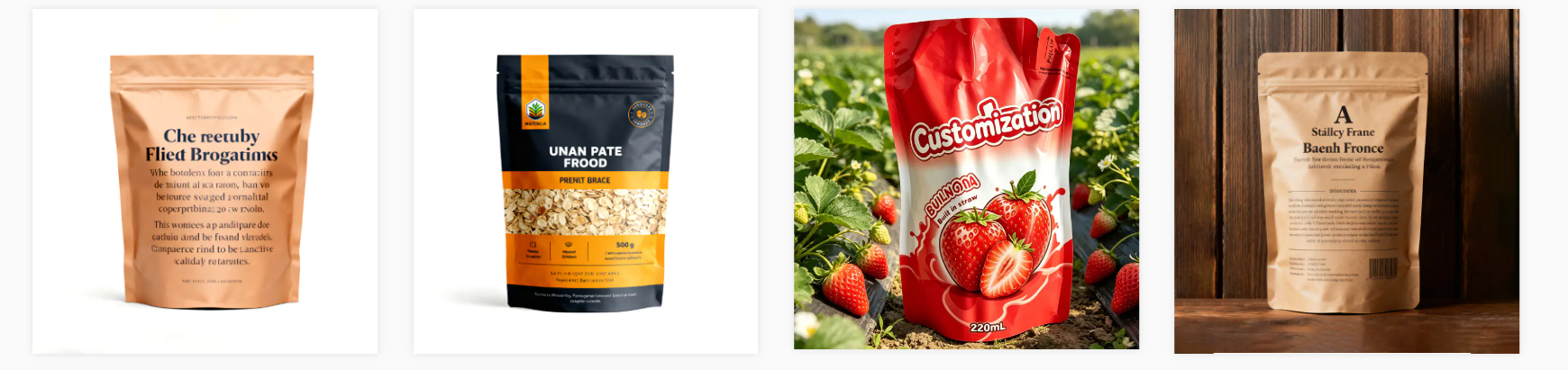
Popular Zipper Pouch Styles for Food Brands
Food brands rarely need just one pouch format. Depending on the product, the shelf environment and the way a customer will use the pack at home, a different structure often makes more sense.
-
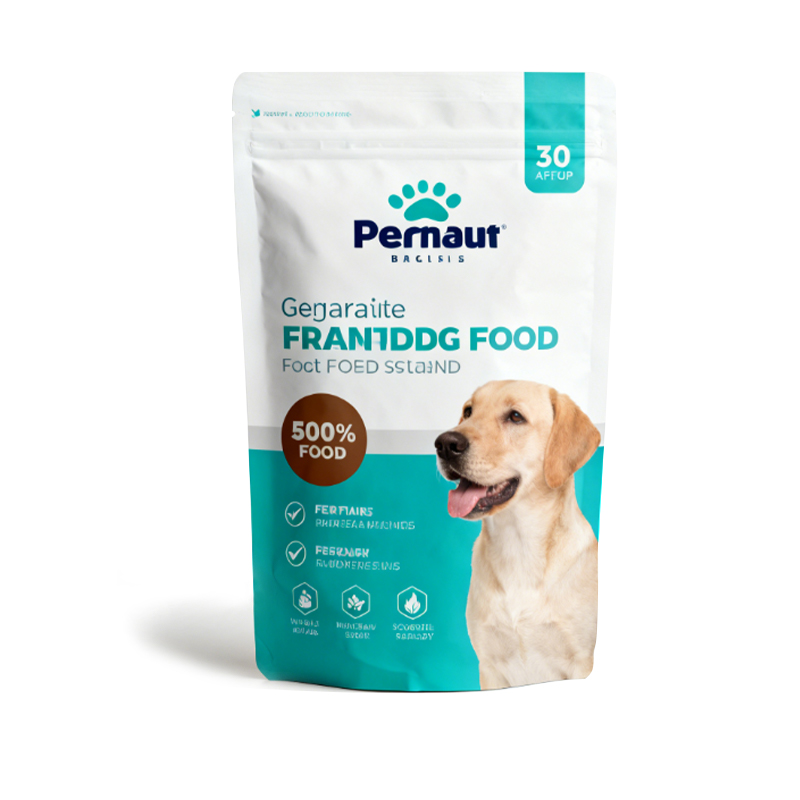
Stand-Up Zipper Pouch for Food
A gusseted base lets the pouch stand upright on a shelf, giving snacks, granola and pet treats strong visual presence and easy handling at home.
-
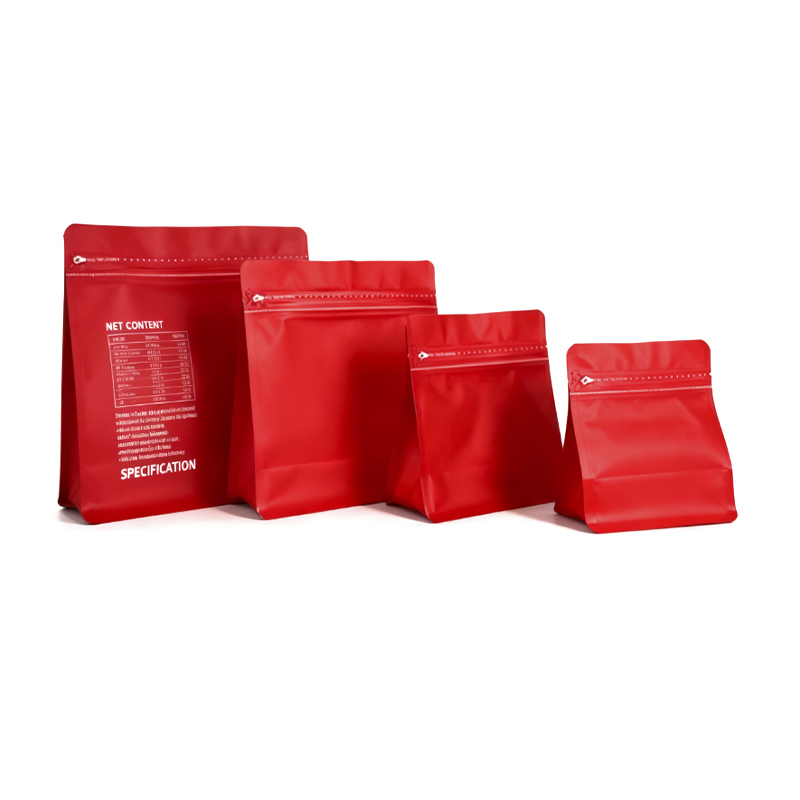
Flat Zipper Bag
A compact, economical format well suited to smaller portions such as spice blends, tea or single-serve snack refills.
-
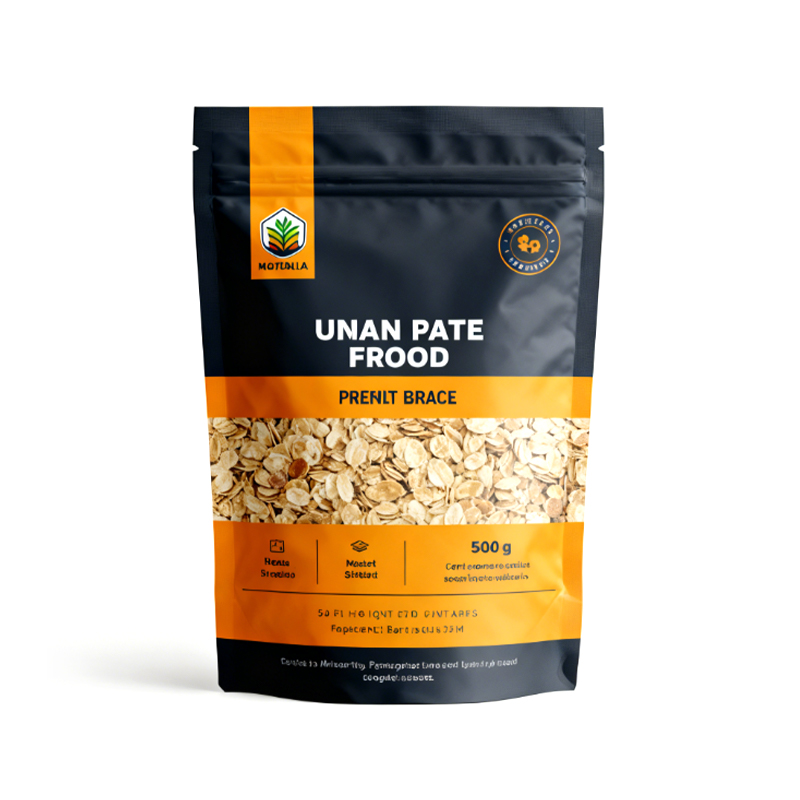
Food Zipper Pouch with Window
A clear panel lets shoppers see the actual product inside, a common choice for baked goods, dried fruit and mixed nuts.
-
Kraft Paper Zipper Pouch for Food
A natural paper-look exterior pairs well with coffee, granola and bakery items that lean into an artisanal presentation.
-
Custom Printed Food Zipper Pouches
Full surface printing across matte or gloss finishes gives a brand room to tell its story clearly on every panel of the pack.
-
Plain Zip Lock Pouches
Unprinted or lightly printed pouches used for bulk repacking, private label filling or general kitchen and pantry storage.
Stand-Up Pouches vs Flat Zipper Bags vs Kraft Paper Pouches
Each pouch style trades strength in one area for an advantage somewhere else. Comparing them across the same set of practical measures helps a buyer match the right format to the right product.
Figure 3: Comparative performance across five practical measures on a 0 to 10 scale
Stand-up zipper pouches score well on shelf appeal and freshness retention, which explains why they dominate the snack and pet food aisle. Flat zipper bags fold flat and stack tightly, giving them an edge in storage efficiency, while kraft paper zipper pouches balance shelf appeal with a paper-forward look that many bakery and coffee brands favor even with a slightly lower puncture resistance score.
Applications Across Food Categories
The same pouch style rarely fits every category equally well. Looking at how often each format is chosen across common food segments makes the pattern clear.
Figure 4: Illustrative distribution of zipper pouch usage across common food categories
| Food Category | Recommended Style | Key Priority |
|---|---|---|
| Snacks and Confectionery | Stand-Up Zipper Pouch | Shelf presence and puncture resistance |
| Coffee and Tea | Foil Laminate Stand-Up Pouch | High barrier against aroma loss |
| Dried Fruits and Nuts | Pouch with Window | Product visibility and freshness |
| Pet Treats and Food | Heavy-Duty Stand-Up Pouch | Weight-bearing and repeated access |
| Spices and Seasonings | Flat Zipper Bag | Compact storage and portion control |
Recyclability and Environmental Considerations
Recyclability for any flexible pouch depends heavily on the exact layer structure and on what a local recycling program is set up to accept, so it is worth checking with local waste guidance rather than assuming one rule applies everywhere. That said, a few general patterns hold across the category. Kraft paper zipper pouches for food lean into a paper-forward exterior, which can make them more compatible with paper-oriented recycling streams depending on how the inner layers are built. Mono-material film structures, where every layer is made from a closely related plastic family instead of mixing several different types together, are also becoming more common because they simplify sorting at recovery facilities. Buyers who want to move toward simpler, more consistent material structures can ask a supplier directly about mono-material film options alongside traditional laminates.
How to Choose a Reliable Food Zipper Pouch Manufacturer
Working with an experienced food zipper pouch manufacturer or food zipper pouch supplier saves a lot of trial and error later. A short evaluation process up front tends to prevent most of the common issues buyers run into after their first production run.
- Request pre-production samples and physically test the zipper track through repeated open and close cycles
- Ask a food packaging pouch manufacturer for the material data sheet covering the layers used in the film
- Confirm which structures are available, such as stand-up, flat, windowed or kraft paper pouches
- Check whether a food stand up pouch supplier can support the size range and thickness your product needs
- Review printing samples closely if you plan to order custom printed food zipper pouches, checking color accuracy and edge sharpness
- Ask about typical production lead times and how consistently they are met on past orders
A supplier that answers these questions clearly and backs them up with physical samples is usually easier to work with long term than one that only discusses specifications in general terms.
About Hangzhou Zhiwei Packaging Technology
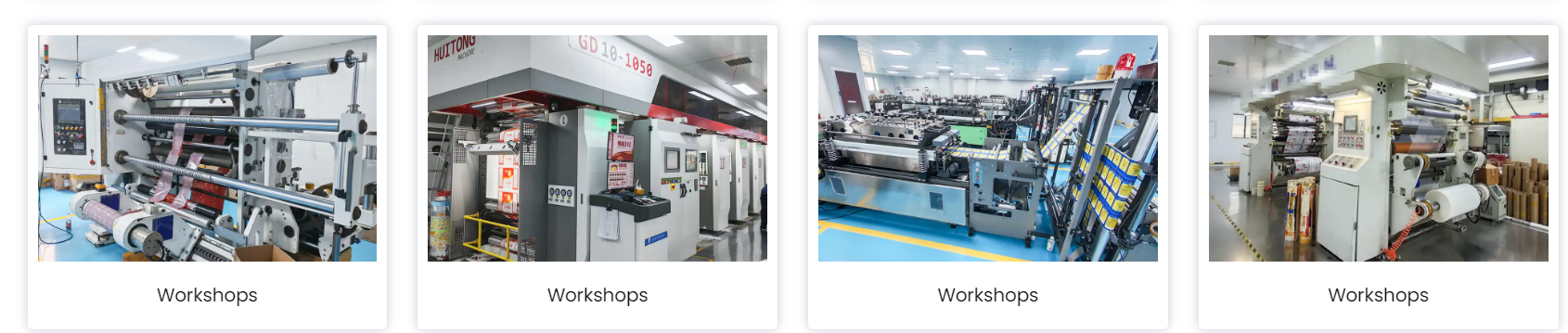
Hangzhou Zhiwei Packaging Technology Co., Ltd is based in Longgang, Wenzhou, an area widely known within China as a center for printing and flexible packaging production. The team traces its roots back to 1989, growing from an early color printing workshop into a manufacturer focused specifically on flexible food packaging, including stand-up pouches, flat zipper bags, windowed pouches, kraft paper pouches and custom printed food zipper pouches. Production runs through a dust-free workshop environment built to keep output consistent from batch to batch.
The pouches are built around the same five concerns a buyer usually has in mind: smooth, repeatable zipper performance, a dual seal system combining zipper and heat sealing for freshness protection, food-grade materials free of odor or unwanted migration, practical durability that includes puncture resistance and weight-bearing strength, and flexible customization across zipper style, size, thickness and printing. Buyers can adjust hidden or visible zipper styles, choose upright or flat-bottom formats, and work through sample rounds before committing to a full production run.
Frequently Asked Questions
-
Q1. What food zipper pouches are made of
Most are built from layered films such as PE, PET or PE laminates, kraft paper composites, or foil laminates, chosen based on the barrier level a product needs.
-
Q2. Whether zipper pouches are food safe
Pouches intended for direct food contact use films designed to avoid odor transfer, flavor tainting or unwanted material migration into the product.
-
Q3. Whether food zipper pouches can be recycled
It depends on the exact layer structure and on local recycling capability, with kraft paper and mono-material film options generally easier to route into existing recycling streams.
-
Q4. Which material works best for food packaging
There is no single best material for every product. Foil laminates suit moisture-sensitive powders, while PET or PE laminates and kraft composites often suit snacks, coffee and bakery items well.
-
Q5. How zipper pouches keep food fresh
A dual seal system combining a reusable zipper track with an outer heat seal restores the barrier against air and moisture every time the pouch is closed again.
-
Q6. Whether stand-up pouches are better than flat bags
Stand-up pouches offer stronger shelf presence and freshness retention, while flat zipper bags are more compact and efficient for storage, so the right choice depends on the product.
-
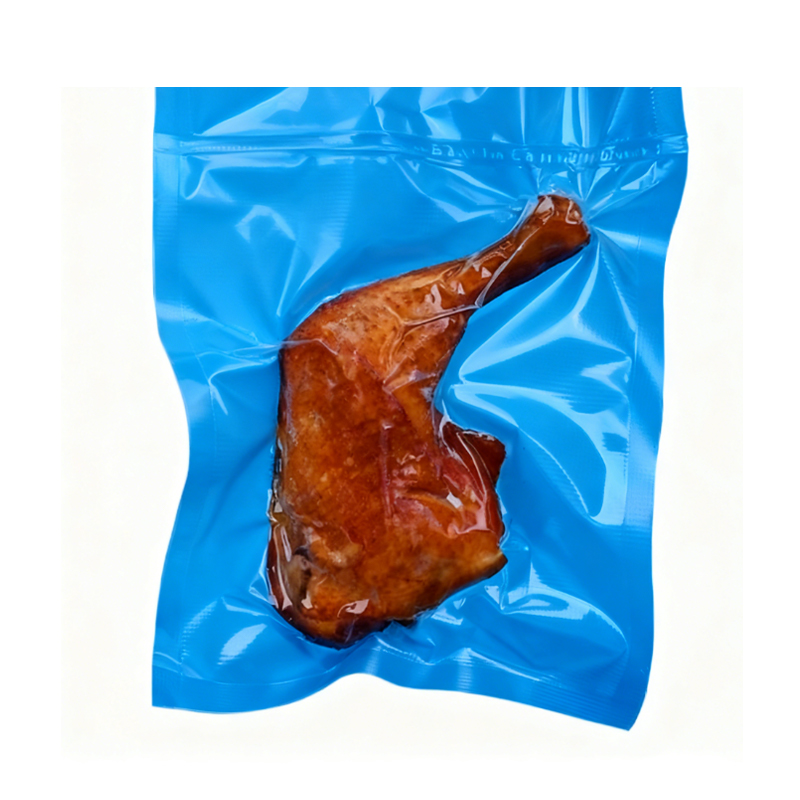
Q7. Whether food zipper pouches can be vacuum sealed
Many zipper pouch structures can be adapted for light vacuum sealing, though the film and zipper design need to be matched to that process during production.
-
Q8. What a high barrier pouch means
A high barrier pouch uses layers, often including foil or specialized coatings, that significantly slow the passage of oxygen, moisture and aroma through the film.
-
Q9. Whether food zipper pouches are BPA free
Standard food-grade films used in zipper pouches are generally formulated without BPA, though buyers can confirm the specific material data sheet for any given order.