

 LANGUAGE

 English
  Español
What Are Vacuum Packaging Bags? Complete Guide for Food Manufacturers
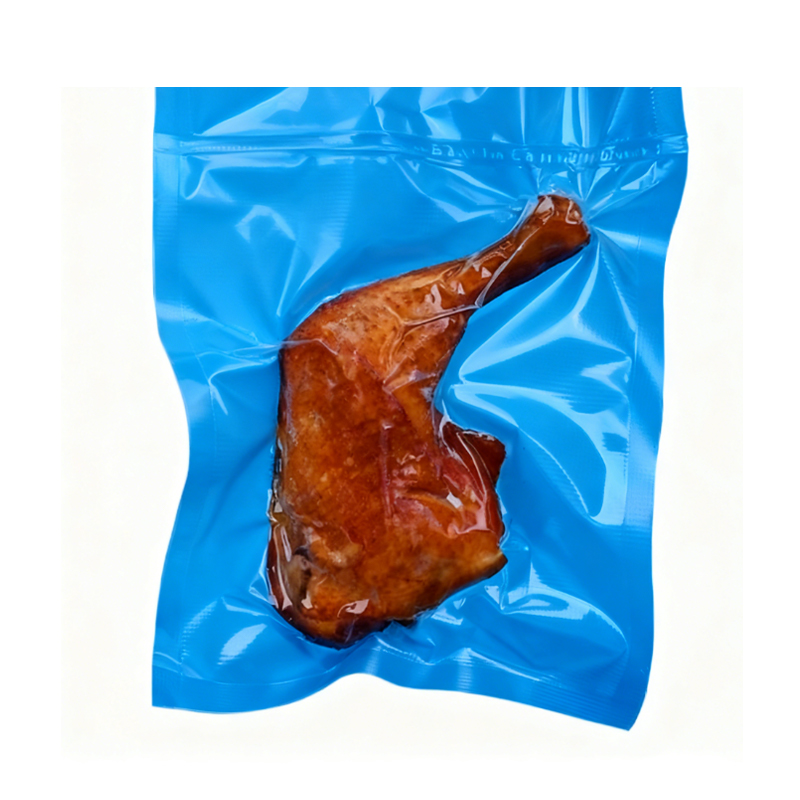
Vacuum packaging bags are flexible, multi-layer pouches designed to remove air from the package before sealing. This oxygen-depleted environment dramatically slows microbial growth and oxidative rancidity, making them indispensable for food manufacturers. In 2025, the global vacuum packaging market was valued at USD 32.91 billion and is projected to reach USD 56.88 billion by 2034, expanding at a CAGR of 6.34% (Fortune Business Insights). Within this landscape, vacuum pouches and vacuum seal bags represent the fastest-growing segment, driven by rising consumer demand for fresh, minimally processed foods.
This guide delivers a complete, data-backed walkthrough of vacuum packaging bags—covering material science, barrier performance, thickness selection, customization, frozen-food applications, and supplier evaluation. Whether you are a production manager or a procurement specialist, you will gain actionable insights to optimize your packaging line.
Content
- 1 1. Global Market Snapshot: The Rise of Vacuum Packaging Bags
- 2 2. Core Functions: How Vacuum Seal Bags Extend Shelf Life
- 3 3. Material Science: Selecting the Right Food Vacuum Bags
- 4 4. Thickness, Machine Compatibility, and Practical Adaptation
- 5 5. Customization: Printed & OEM Vacuum Packaging Bags
- 6 6. Vacuum Bags for Frozen Food Manufacturers
- 7 7. How to Select a Reliable Vacuum Packaging Bags Manufacturer
- 8 8. Sustainability and Emerging Trends in Vacuum Pouches
- 9 9. Frequently Asked Questions About Vacuum Packaging Bags
1. Global Market Snapshot: The Rise of Vacuum Packaging Bags
The broader food vacuum bags segment was valued at USD 4.25 billion in 2025, with projections to reach USD 5.82 billion by 2032 (CAGR 4.59%). Meanwhile, the total vacuum packaging bags category (including industrial and medical applications) is expected to grow from USD 1.22 billion in 2025 to USD 1.82 billion in 2030, at a CAGR of 8.2%.
North America held the largest regional share at 34.6% in 2025, while Asia-Pacific is the fastest-growing market, fueled by rising meat consumption and expanding cold-chain infrastructure in China and India.
2. Core Functions: How Vacuum Seal Bags Extend Shelf Life
Vacuum seal bags remove up to 99.5% of atmospheric oxygen. This near-anaerobic environment inhibits aerobic bacteria, mold, and oxidative enzymes, preserving color, texture, and nutritional value. The result is a measurable, category-specific shelf-life extension that directly reduces food waste and expands distribution reach.
Key insight: Vacuum packaging extends fresh meat shelf life from 3–5 days to 30 days; smoked fish from 3–4 days to 16 days; and grated carrot from 2–3 days to 8 days at 2°C. This translates to a 3‑ to 5‑fold extension across most perishable categories.
3. Material Science: Selecting the Right Food Vacuum Bags
Performance hinges on material structure. Most food vacuum bags are co-extruded multi-layer films that combine distinct polymer properties. The most common structures include:
- PA/PE (Polyamide/Polyethylene): The industry standard. PA provides puncture resistance and oxygen barrier; PE delivers sealability and cold flexibility. Ideal for meat, cheese, and frozen items.
- PA/EVOH/PE: Adds an EVOH layer for exceptional oxygen barrier—up to 20% longer freshness than PA/PE. Preferred for premium perishables and long-haul exports.
- PET/PE: Offers high transparency and mechanical strength; suitable for products where shelf appeal is paramount.
- High-barrier multi-layer (7–9 layers): Combines EVOH, PA, and specialized sealants for maximum protection against oxygen, moisture, and aroma loss.
High barrier vacuum pouches incorporating EVOH deliver OTR as low as ~10 cc/100 in²/24hr, making them the optimal choice for oxygen-sensitive products like cured meats, artisan cheese, and smoked seafood. PA/PE bags, with an OTR around 61 cc, remain the workhorse for frozen meat and most refrigerated applications.
4. Thickness, Machine Compatibility, and Practical Adaptation
Selecting the right thickness for vacuum seal bags directly affects sealing integrity, puncture resistance, and machine throughput. Thickness is expressed in microns (µm) or mils (1 mil = 25.4 µm).
| Thickness (µm) | Thickness (mil) | Typical Application | Key Attributes |
|---|---|---|---|
| 60–70 | 2.4–2.8 | Nuts, coffee beans, snack items | Flexible, economical, light puncture resistance |
| 75–90 | 3.0–3.5 | Cheese, deli meats, smoked fish | Industry standard; balanced strength and sealability |
| 100–120 | 4.0–4.7 | Fresh meat, poultry, bone-in seafood | High puncture resistance; withstands processing handling |
| 150–200 | 6.0–8.0 | Frozen meat blocks, heavy industrial parts | Maximum durability; tear-resistant and abrasion-proof |
Vacuum pouches used with chamber machines typically have a smooth finish, while vacuum seal bags for external sealers feature an embossed (dimpled) texture to facilitate rapid air evacuation. Thicker films (≥100 µm) may require higher sealing temperatures and slightly longer cycle times, so always validate with your equipment supplier.
5. Customization: Printed & OEM Vacuum Packaging Bags
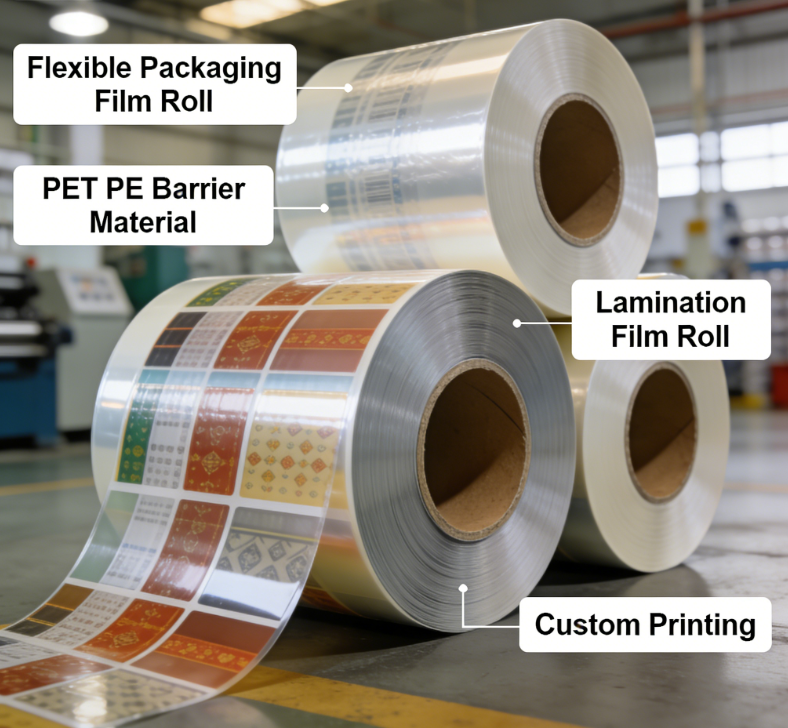
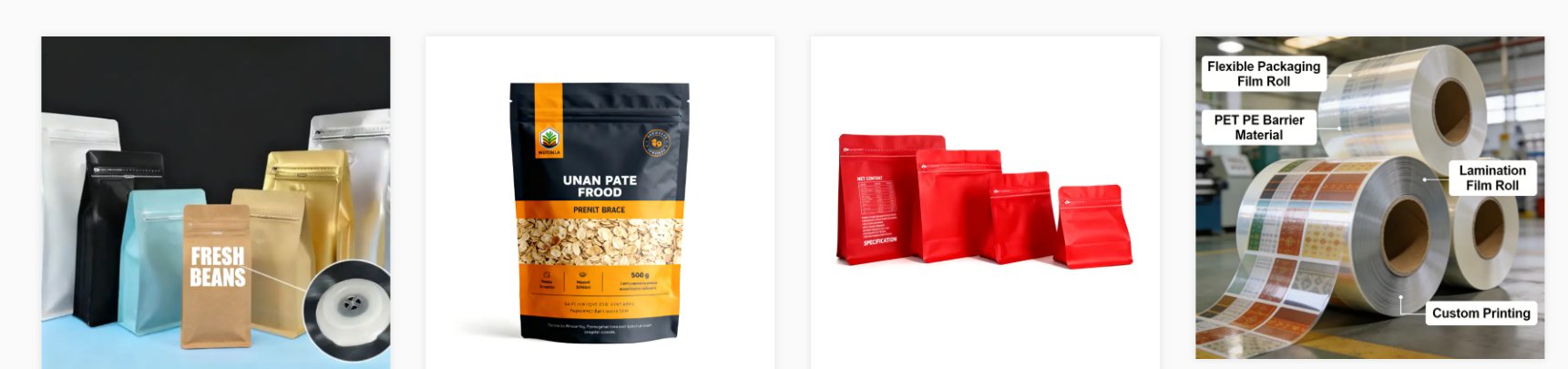
For food manufacturers, custom vacuum packaging bags are a strategic tool for brand differentiation and consumer communication. Printed vacuum packaging bags can carry logos, nutritional panels, cooking instructions, and barcodes directly on the package, eliminating the need for secondary labels.
5.1 Available Customization Dimensions
- Size & shape: Flat pouches, gusseted bags, stand-up pouches, three-side-seal, and four-side-seal configurations.
- Printing technology: Gravure (up to 10 colors), surface printing with matte, gloss, or metallic finishes.
- Barrier layer engineering: Tailored EVOH, PA, or aluminum oxide layers based on product sensitivity and target shelf life.
- Closure & features: Heat-seal, zipper re-closure, spout caps, and easy-peel tear notches.
Leading vacuum packaging bags manufacturers now offer OEM vacuum pouches with flexible minimum order quantities (MOQ) and stable delivery lead times. Custom printed vacuum pouches for food packaging are particularly popular in the premium meat, seafood, and ready-meal segments, where shelf appeal directly influences purchase decisions.
6. Vacuum Bags for Frozen Food Manufacturers
Vacuum bags for frozen food manufacturers must endure extreme temperatures (typically –20°C to 100°C) while preserving seal integrity and preventing freezer burn. Freezer burn—caused by moisture sublimation—leads to texture degradation, off-flavours, and weight loss. Vacuum packaging mitigates this by creating a moisture-tight barrier around the product.
Frozen-specific advantage: High-performance food vacuum bags reduce moisture loss during frozen storage by up to 85% compared to non-vacuum films, ensuring that products retain their original juiciness and texture after thawing. This is especially critical for bone-in meat, seafood, and prepared frozen meals.
For frozen applications, prioritize the following features:
- High puncture resistance: PA or multi-layer nylon construction to resist sharp bones and ice crystal protrusion.
- Low-temperature sealability: PE-based sealant layers that remain flexible and form strong seals at sub-zero temperatures.
- Exceptional moisture barrier: EVOH or aluminum-oxide layers to block water vapour transmission (WVTR ≤ 2 g/m²/24hr).
Many wholesale vacuum bags for food packaging suppliers now offer dedicated frozen-food grades with enhanced low-temperature impact resistance and anti-blocking additives to ensure smooth machine feeding even in cold environments.
7. How to Select a Reliable Vacuum Packaging Bags Manufacturer
When evaluating a vacuum packaging bags manufacturer or vacuum pouch supplier, food manufacturers should benchmark against five core operational pillars. These pillars directly address the procurement pain points of sealing reliability, material safety, barrier efficacy, production adaptability, and supply-chain stability.
| Pillar | Critical Requirement | Impact on Your Operation |
|---|---|---|
| Sealing Integrity | Leak-free seals under negative pressure; no residual air; consistent heat-seal strength | Prevents product spoilage and returns; ensures shelf-life promises are met |
| Material Compliance | Food-grade polymers; no odour or harmful migrant transfer | Meets international food-contact safety standards; protects brand reputation |
| Barrier Preservation | High O₂ and moisture barrier; resistance to aroma transmission | Directly correlates with extended shelf life and product freshness retention |
| Practical Adaptation | Uniform thickness; anti-stick surface; compatible with high-speed form-fill-seal lines | Minimises downtime; improves packaging efficiency and output consistency |
| Customisation & Delivery | Flexible size/thickness/printing; stable lead times; reasonable MOQ | Enables just-in-time production and seasonal SKU adjustments without overstocking |
Established manufacturers, such as Hangzhou Zhiwei Packaging Technology Co., Ltd. (with roots tracing back to 1989 in Wenzhou’s printing industry), operate 100,000-grade dust-free purification workshops to ensure consistent quality. They combine decades of flexible-packaging expertise with modern co-extrusion lines to deliver food grade vacuum bags that perform reliably under high-speed production conditions.
8. Sustainability and Emerging Trends in Vacuum Pouches
The industry is shifting toward mono-material and recyclable vacuum pouches without compromising barrier performance. Innovations include PE-based high-barrier structures that are fully recyclable in existing polyethylene streams, as well as bio-based EVOH alternatives derived from sugarcane. Additionally, digital printing is enabling short-run custom vacuum packaging bags with lower setup costs and reduced waste.
For food manufacturers, adopting sustainable vacuum seal bags not only meets regulatory and consumer expectations but also differentiates your brand in an increasingly eco-conscious marketplace. Collaborating with a vacuum pouch manufacturer that invests in R&D for sustainable materials ensures your packaging remains future-proof.